


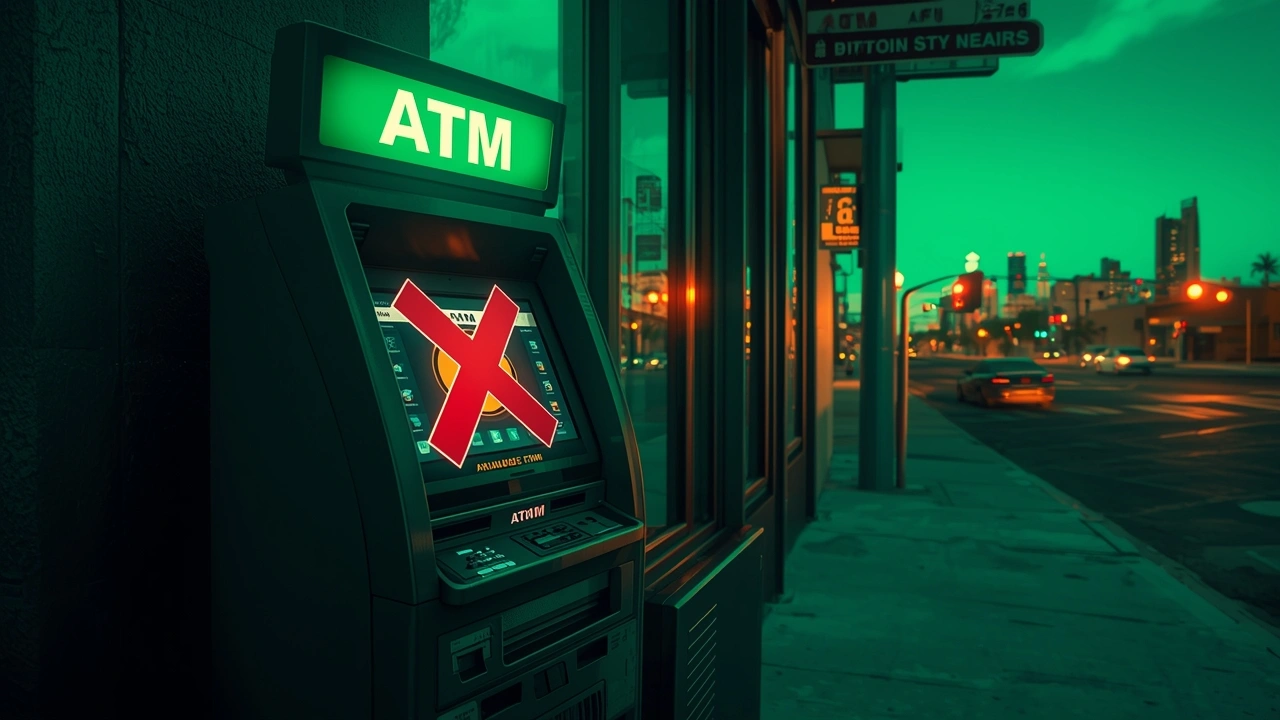
The Albuquerque city council in New Mexico passed an ordinance banning Bitcoin ATMs and cashier-facilitated cryptocurrency transactions within city limits. Operators and the businesses hosting the machines now have 45 days to remove them.
What the City Council Passed
The ordinance passed on Wednesday bans crypto kiosks along with cashier-facilitated virtual currency transactions at stores and other venues. It was co-sponsored by District 1 Councilor Stephanie Telles and District 7 Councilor Tammy Fiebelkorn.
The city will notify known operators and the retailers hosting their machines, who then get 45 days to take them out. Residents remain free to own, mine, and transfer crypto through ordinary online exchanges and personal wallets. The ban targets physical cash-to-crypto kiosks specifically, not the crypto market as a whole. The ordinance takes effect once the mayor signs it, and the 45-day clock starts from the date each operator receives formal notice.
The wording about "cashier-facilitated" deals is not accidental. At some stores, a clerk behind the counter could process a crypto purchase manually, without a machine at all, sidestepping rules written only for physical kiosks. The new ordinance closes that gap right away.
The Case Behind the Ban
Telles said 90% of crypto ATM transactions in Albuquerque are tied to fraud. She argued that high fees make the kiosks a bad deal for anyone legitimately exchanging or transferring currency, so the machines mostly attract scammers, organized crime and human traffickers who value speed, anonymity and irreversible payments.
"No one who legitimately exchanges or transmits virtual currency uses these kiosks, because the high fees make them a ripoff."
- Stephanie Telles, Albuquerque City Councilor, from a city council press release, September 2026
Fiebelkorn added that the city cannot wait for federal regulators to solve the problem while residents keep getting targeted in their own neighborhoods.
The difference from a bank transfer matters here. A traditional bank payment can often be stopped or disputed within a few days, and some transfers require identity checks on the recipient. A crypto kiosk transaction confirms on the blockchain within minutes and becomes essentially irreversible right after, which is exactly why scammers steer victims toward this channel once they're ready to pay.
Not the First Case Like This in the US
Albuquerque's move extends a string of bans at the state and city level.
- Indiana, Tennessee and Minnesota have already banned crypto ATMs statewide.
- Bitcoin Depot, once the largest North American operator, filed for Chapter 11 bankruptcy in May and pulled around 9,700 kiosks offline.
- Washington, D.C.'s attorney general banned the Athena Bitcoin network last year after reviewing seven of its kiosks.
- Over five months of review, 93% of deposits into those kiosks turned out to be tied to fraud, with a median victim age of 71.
Athena Bitcoin strongly disagreed with the findings at the time. Bitcoin Depot chief executive Alex Holmes cited transaction limits, and in some jurisdictions outright bans, among the reasons behind the bankruptcy.
At its peak, the company ran a network of nearly 10,000 machines across North America, so its collapse earlier this year showed how exposed this business is to any pushback from regulators. For local bans like Albuquerque's, that adds a further argument: if the largest player in the market couldn't withstand regulatory pressure and lawsuits, smaller operators have even less room to hold on.
The Scale of the Problem in Numbers
The FBI logged nearly 11,000 fraud complaints tied to crypto kiosks in 2024, worth more than $246 million combined. The mechanics are usually the same: someone deposits cash into the machine, it instantly converts the amount into cryptocurrency, and the funds move straight to a scammer's wallet.
That is why the debate isn't really about banning crypto itself, but about one specific channel where money moves out fastest with no way to reverse it. In typical schemes, scammers pose as government agents, bank staff or tech support and pressure the victim into rushing to the nearest kiosk with cash before there's time to call anyone for a second opinion.
Cash US dollars remain the most common way to fund these kiosks, and the asset on the other end of the transaction is most often Bitcoin. Facing regulatory pressure, some operators nationwide are already adding per-transaction limits and identity checks, but Albuquerque's council decided not to wait for those measures to prove themselves. Other US cities are already studying Albuquerque's approach for their own proposals, and similar ordinances could show up in more states within months.
At the federal level, crypto kiosk operators already have to register as money transmitters and file reports with the Treasury's financial intelligence unit. But enforcement of those rules, and whether a machine can even sit on a given street corner, falls to local authorities, which is why cities and counties increasingly write their own rules instead of waiting for a nationwide fix.



Comments
Your email address will not be published. Required fields are marked *