


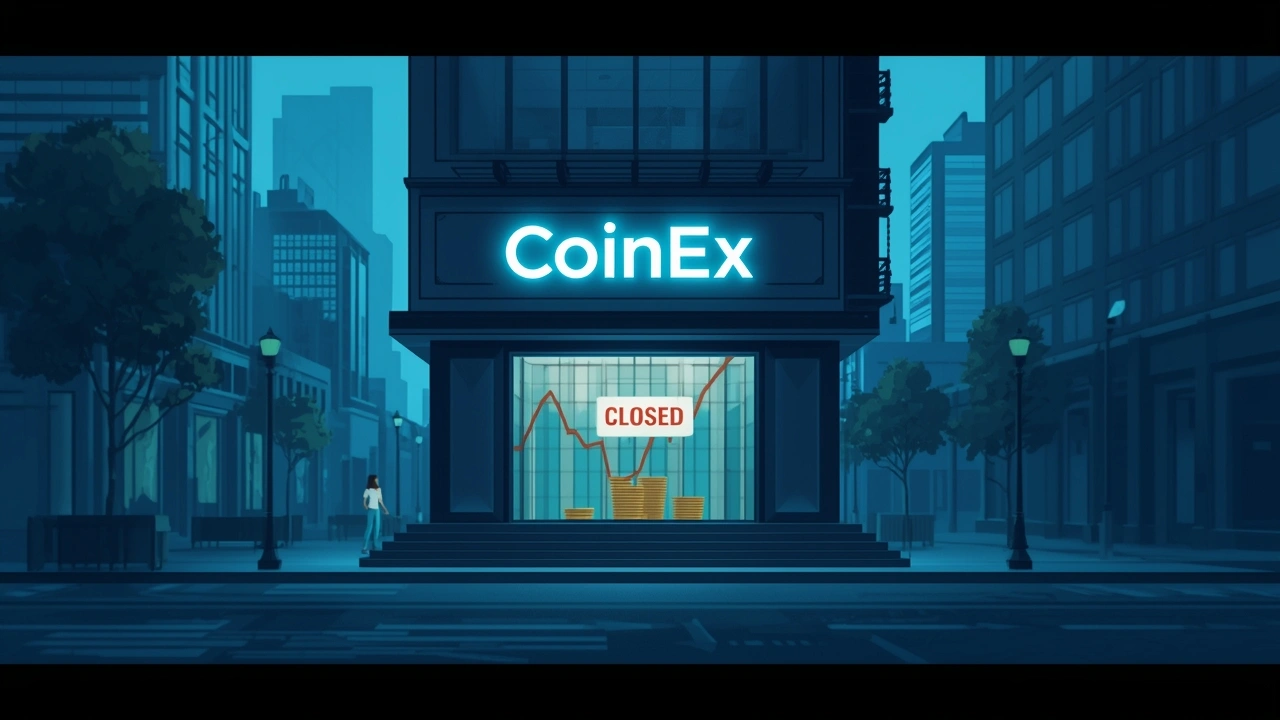
Crypto exchange CoinEx has announced it is shutting down after nine years in business. The reason is simple: trading volumes and liquidity keep falling, while compliance costs keep rising faster than revenue. Withdrawals will remain open until December 22, 2026, after which the platform will cease to exist. For former customers, this is mostly a logistics question now. The key part is figuring out what to move and when, while the system still works.
Why is CoinEx leaving the market?
On Monday, the CoinEx team said it was winding down the business due to a combination of factors. Trading volumes and liquidity on the platform had been shrinking for a long time, while regulatory compliance and security costs rose past what the company called reasonable limits. Regulators worldwide have tightened customer verification and transaction monitoring rules in recent years, and keeping up with that infrastructure now costs more even for large platforms.
In its better years, CoinEx actively grew its user base and added new trading pairs, focusing mostly on traders across Asia. Over the past few years, though, the exchange couldn't hold onto a spot among the industry leaders. According to CoinMarketCap, at the time of the announcement it ranked just 33rd by trading volume, at roughly $58 million per day. That's a modest figure for a platform with nine years of history behind it.
The centralized exchange market today is split among a handful of major players. Platforms like Binance soak up most of the liquidity and trading volume, making it harder for mid-sized and smaller exchanges to attract new users and keep existing ones. CoinEx ran straight into that problem. Traders simply kept moving to wherever order books were deeper, pair selection was wider and spreads were tighter on popular assets.
"After much reflection, I have come to accept a hard truth. CoinEx did not become one of the industry's leading exchanges, and the security and compliance risks of running a crypto exchange have become increasingly difficult to contain."
- Haipo Yang, CEO of CoinEx, from a post on X, September 15, 2026
How will the shutdown unfold step by step?
CoinEx laid out the process by date, with each stage narrowing what customers can do. New user registration is already closed, and referral payouts and other rewards have been canceled. Futures contracts moved into "reduce-only" mode. Traders can close existing positions but not open new ones.
After September 22, the exchange will stop accepting new orders and subscriptions for margin trading, lending, staking and other earn products, and onchain deposits will pause for every asset except CET. That means even users who parked funds in staking for passive income need to check the new terms and withdraw ahead of time. From September 29, any assets other than USDT will be automatically converted, so picking the timing of a sale yourself won't be an option anymore.
What happens to user funds and the CET token?
The key question for former customers is where their assets go once the December deadline hits. CoinEx says any unwithdrawn USDT will be handed over to an independent custodian, which will charge a monthly custody fee. That means the money won't disappear, but access to it will get slower and more expensive, with part of the balance eventually going toward the custodian's fees.
- The exchange will buy back CET at its original listing price of 0.005 USDT, slightly above what the token traded at on Monday before the news broke.
- CoinEx Wallet and CoinEx Vault will keep operating, since they don't technically depend on the exchange's infrastructure.
- Funds held in USDT will stay withdrawable right up to the December deadline, after which they move under the custodian's control.
- CET holders can either sell the token on the open market now or wait for the official buyback at a fixed price.
Is this part of a wider wave of exchange closures?
CoinEx isn't the first platform to leave the market this way, and it probably won't be the last. BitMart and AscendEX have already announced shutdowns this year, and derivatives exchange BitMEX is closing after 11 years in business. Even exchanges with years of history can't survive the combination of thin trading volumes and rising regulatory demands.
The broader backdrop isn't helping either. Bitcoin is trading around $78,000, well below this year's peak levels, and some investors have grown warier of smaller and mid-sized exchanges. For traders, that's a reason to check the reliability of centralized exchanges ahead of time, not after problems show up, and to avoid keeping all their assets on a single platform.
What should users do right now?
CoinEx customers should withdraw their assets early rather than waiting for the final days before the December 22 deadline. Technical glitches during a mass exodus from a closing exchange happen fairly often, so a little extra time doesn't hurt. It's also worth checking any shutdown-related emails only through CoinEx's official site and app, since news like this tends to trigger a wave of phishing attempts from scammers.
Anyone with assets scattered across several platforms might use this as a reason to review the exchanges they actually still use. One closed platform is a good excuse to drop the ones sitting untouched for months rather than leaving funds there "just in case".
Some Ukrainian traders also keep assets on similar international platforms. Anyone planning to exchange USDT for hryvnia after withdrawing from CoinEx should compare rates at verified exchangers ahead of time instead of scrambling at the last minute, when there won't be time left to pick a better offer.
CoinEx's story spans nearly nine years. It's a reminder of something simple: size and age alone don't guarantee an exchange a permanent spot in a market that keeps shrinking.



Comments
Your email address will not be published. Required fields are marked *