


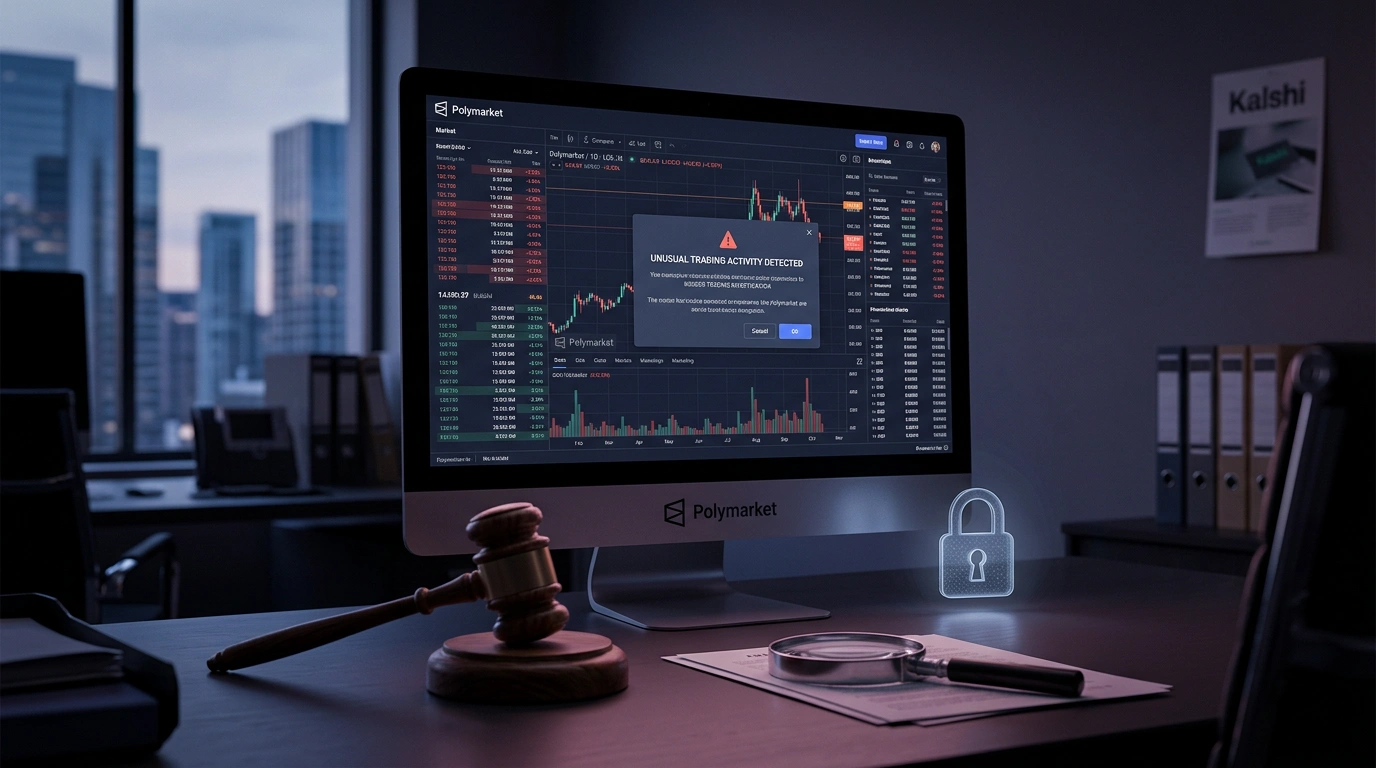
House Oversight Committee Chairman James Comer on May 22 sent official letters to Kalshi CEO Tarek Mansour and Polymarket CEO Shayne Coplan, demanding internal documents on insider trading practices. Comer stated that "this growing pattern of insider trading activity on prediction market platforms shows that Congressional action may be necessary." The same day, Polymarket disclosed a separate incident where roughly $700,000 was drained through a compromised internal wallet.
What House Oversight Committee Asked Kalshi and Polymarket
Comer's requests cover three areas. The first concerns KYC procedures. The congressman wants full documentation on user identity verification and standards for international clients. The second covers suspicious transaction monitoring systems and internal protocols for flagging unusual bets.
The third area is the most sensitive for both companies. The Committee demands all internal communications and decisions on markets tied to the Iran and Venezuela conflicts. These topics drew attention after several public accusations of trading on classified information. Comer also asks each platform to explain how it assessed reputational damage from past scandals and what concrete steps followed.
Prediction markets differ from traditional financial instruments by the nature of their assets. Bets here are tied to specific events, not prices. A small group with access to non-public information gains a disproportionate advantage over other participants. This Congressional probe targets the quality of information sources, not price manipulation.
Three Cases That Pushed Congress to Act
Months of scandals built the case for a formal investigation. The loudest case involves a U.S. Army soldier arrested for placing Polymarket bets on the timing of American military operations. According to investigators, he used classified information and earned around $410,000, marking the first documented case of state secrets used to trade on a crypto prediction platform.
The second episode involves Kalshi directly. The platform fined several U.S. lawmakers for betting on the outcomes of their own election campaigns. The fact that legislators were violating basic platform rules on a platform they now investigate adds an uncomfortable layer to the proceedings.
The third trigger was a New York Times investigation that found more than 80 potential insider trading instances on Polymarket over recent months. For Comer and his committee, this provided public justification for formal document requests to both companies.
Kalshi Responds With Lobbying. New Group and $22B Valuation at Stake
Kalshi met the Congressional probe with a prepared tactic. On May 22, the company announced the launch of "Americans for Fair Markets," a lobbying organization aimed at shaping a favorable view of prediction markets among lawmakers and arguing that the industry can self-regulate without direct government intervention.
Launching a lobby group right after a Congressional probe sends mixed signals. The company signals openness to regulatory dialogue, but Congress is used to these tactics and tends to read them critically. Kalshi publicly promotes its ability to catch bad actors, yet specific cases point to gaps in that system.
CEO Tarek Mansour now faces a difficult balance. In May 2026, Kalshi raised $1 billion at a $22 billion valuation, making it the most capitalized player in the prediction market space. Defending that valuation under active investigation is a very different challenge. Attorney Dan Boyle summed up the critics' core argument: "If they can catch this guy, why can't you catch another?" For holders of Bitcoin and other crypto assets, increased regulatory pressure on prediction platforms adds to the broader regulatory uncertainty around new financial products in the US.
Polymarket Takes a $700K Hit the Same Day
While Comer was sending letters, Polymarket dealt with a separate blow. A hacker compromised the private key of an internal wallet used for topping up user accounts and withdrew roughly $700,000. The Polymarket team confirmed the incident and said user funds remained safe.
Smart contracts and core infrastructure were not affected. The damage was contained to the technical top-up subsystem. But the timing is damaging: a Congressional probe and a hack on the same day create a double reputational blow exactly when Polymarket most needs to demonstrate reliability to Washington. In the public debate, each new security incident costs more in arguments than in dollars.
What This Congressional Probe Changes for Prediction Markets
Stricter KYC requirements are the most likely short-term result. Anonymous or semi-anonymous bets on sensitive topics will become harder to place. Markets on armed conflicts may face additional restrictions or fall outside the reach of US-regulated platforms.
There is also a longer-term angle. Regulation of prediction markets could end up legitimizing the sector for large institutional capital. Licensing rather than bans may be the format. Kalshi already holds a CFTC license for part of its product offering, giving it a competitive edge as the regulatory conversation unfolds.
Kalshi and Polymarket have repeatedly stated a preference for operating in a regulated environment. Congressional probe accelerates that transition, though not on terms either company would choose. How they respond to Comer's letters will set the tone for the broader regulatory discussion. If the documents reveal systemic gaps, Congress will have grounds for direct legislation. If the responses satisfy the Committee, prediction markets get a chance to set their own standards before the government imposes them. The bets are placed. Congress moves next.

Comments
Your email address will not be published. Required fields are marked *