


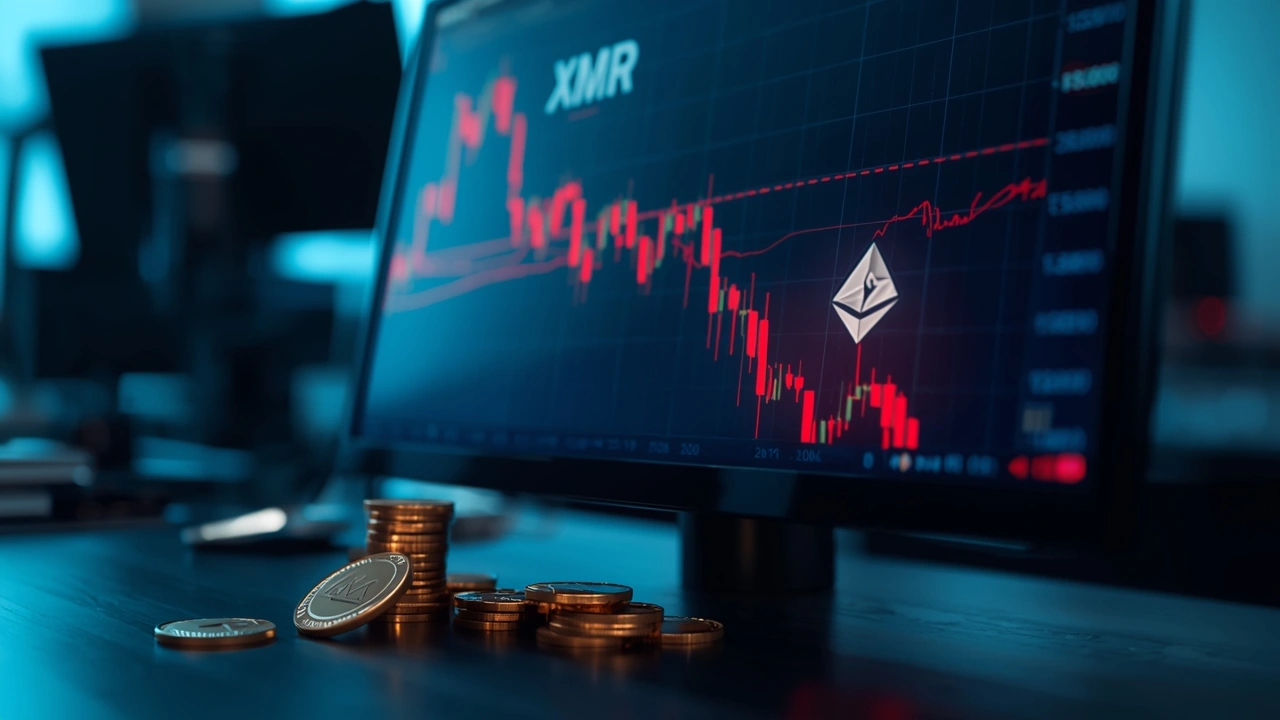
Wrapped Monero, a token called XMR1, lost more than 99% of its value in about half an hour on Friday. The token, which represents the coin on Hyperliquid, fell from $500 to $1 after an attacker drained the deployer wallet and dumped the tokens. Real Monero was not affected.
How the token lost almost everything in half an hour
XMR1 is issued by the cross-chain swap service Wagyu. Monero runs on its own blockchain, so it cannot trade natively on Hyperliquid. Wagyu fills that gap, and the scheme is simple. A user deposits Monero, receives XMR1 and can later redeem the real coin. The token's value rests on trust in the bridge.
According to Bitquery's analysis, early on Friday the account that deployed the token sent 5.2 million XMR1 to a newly created account. That account sold about 364,000 tokens to 388 buyers for $13.5 million and converted the proceeds into ETH. At the last check, about 7,350 ETH sat in three wallets. The new account got its first funds from the Tornado Cash mixer minutes before it was created.
On average buyers paid about $37 per token, and that figure shows how fast the quotes collapsed during the sale. Only 388 wallets met a drop that almost nobody could spot in time.
Where the key leaked from
Wagyu's founder, who goes by PerpetualCow, blamed the breach on the Icelandic hosting provider 1984.hosting. He says the XMR1 deployer key sat on an old server he had deleted, but the host apparently kept the logs and files.
"Lesson to learn here is that these hosting providers keep your data/logs even after you delete your server with them."
- PerpetualCow, Wagyu founder, from a post on X dated November 20, 2026
The company 1984 ehf, as the Icelandic outlet DV reports, said in a joint statement with CERT-IS (the national cybersecurity incident response team) that it suffered an extensive and serious cyberattack on its IT infrastructure. Early findings point to a well-organized and technically sophisticated attack, and more systems may be affected than confirmed so far. All services were shut down temporarily. The statement does not mention Wagyu or whether customer data was taken.
What the data shows and what it does not
Bitquery stresses that onchain data alone cannot prove whether the deployer key was actually stolen. There is another limit: the firm cannot see how much Monero backs the remaining XMR1, because the Monero side of the bridge is opaque. For a coin that hides senders and amounts, that is expected. But a holder of the wrapper cannot verify the reserve on their own.
There is a more worrying detail too. The same deployer account still controls nearly all ZEC1 tokens, Wagyu's wrapped Zcash, and in October the service already disclosed a separate data leak. The sources report no movement of funds in ZEC1.
Risks for holders of wrapped assets
PerpetualCow promised to refund everyone who lost money personally and to relaunch Wagyu later. He gave no timeline. These are the founder's words, not a guaranteed payout mechanism.
- A wrapper's price depends on the issuer's keys, not only on the underlying asset.
- The reserve behind a bridge, especially for privacy coins, cannot be verified onchain.
- With thin liquidity a token can collapse from $500 to $1 faster than a holder can react.
- Compensation depends on the founder's decision, not on contract terms.
For those who hold real Monero in their own wallet, nothing changed, because only the wrapper token turned out to be vulnerable.
What this means for the wrapped token market
A $13.5 million loss is small next to the recent multibillion-dollar hacks, but it hit the most fragile spot, a key on a forgotten server. The wrapped token market saw again that a token's reliability is set by the weakest point in its issuer's infrastructure. Before buying a wrapper, it makes sense to check three things: who holds the issuer's keys, whether there is a public reserve report and how deep the liquidity is.

Comments
Your email address will not be published. Required fields are marked *