


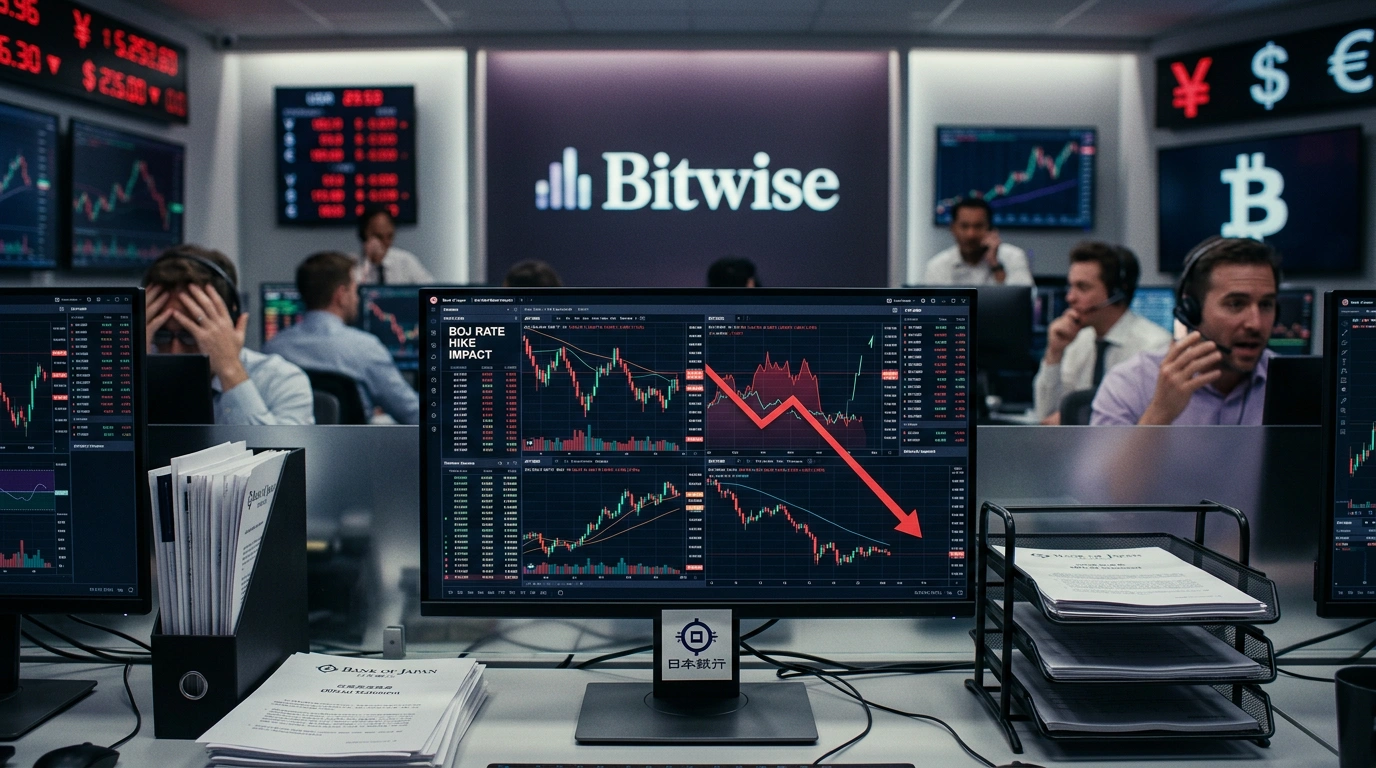
The Bank of Japan raised its overnight rate to 1.0% on Tuesday, June 16. The last time Japan held rates at this level was in 1995. Bitcoin dropped 2.5% from its local high at $67,250 to below $66,000 within hours. Traders are not focused on the daily move. The 30-day statistics after each of the previous BoJ hikes tell a more concrete story for BTC holders.
What BoJ Decided and Why It Happened Now
The regulator raised the overnight rate from 0.75% to 1.0%, citing persistent inflation pressure from energy prices and supply disruptions tied to the Middle East situation. This is the fourth hike since Japan began normalizing policy after nearly two decades of ultra-loose conditions.
The 1.0% level is symbolic. Japan last held rates here in September 1995. Andre Dragosch, European Head of Research at Bitwise, noted in a Tuesday post that BoJ rate-hiking cycles have historically coincided with US recessions. The only exception over the past 25 years was COVID-19.
Japan's central bank typically tightens policy late in the global cycle, when liquidity is already contracting worldwide. This is not a cause of recessions, but a shared symptom of the same macro cycle.
Four BoJ Hikes and Every Time Bitcoin Fell
Analysis of the previous four BoJ decisions shows a consistent pattern:
- March 2024: BTC lost 5.59% over the 30 days after the decision
- July 2024: the monthly drop reached 10.89%
- January 2025: the sharpest decline of this cycle, down 14.77%
- December 2025: the only positive exception, up 8.31%. The market was recovering from a deep autumn correction at that point and Bitcoin was heavily oversold
The average across four hikes is a 5.74% decline over 30 days. Remove the December exception and the average drop rises to 10.4%.
Yen Carry Trade: Where the Pressure on Bitcoin Comes From
Years of zero and negative rates made the yen the main currency for carry trades. The setup is simple: borrow yen cheaply, convert to dollars or higher-yielding assets, collect the spread. Bitcoin and tech stocks were popular targets for that capital.
Now the cost of yen borrowing is rising and traders are starting to close positions. Closing a position means selling risk assets. That selling pressure hits prices regardless of what is happening inside any specific project or network.
The sell-offs in July 2024 and January 2025 both coincided with moments when the yen strengthened sharply. In August 2024, USD/JPY fell below 142 and BTC crashed to $49,000 in a matter of days. The market remembers that episode clearly.
Three Price Scenarios from Analysts
From the $66,500 level, three potential downside zones emerge. The first and nearest is around $62,700. That is where Bitcoin could land if this hike produces the average result of the previous four decisions. The level also aligns with a technical demand zone on the weekly chart.
The second scenario, matching July 2024, puts the target at $59,200. The third mirrors the cycle's worst drawdown from January 2025 and implies a drop to $56,700. According to analysis by crypto analyst Gerla, full drawdown phases after BoJ hikes since March 2024 ranged from 26% to 38%. Theoretically that maps to levels between $49,000 and $54,000, though such outcomes require a full-blown selling wave rather than a local pullback.
Some analysts argue against a sharp decline. The current cycle differs from 2024: Bitcoin has already gone through a significant correction, the Bitcoin ETF market provides more stable demand, and BoJ telegraphed this move well in advance. Decrypt reported on Tuesday that there are no signs of meaningful market disruption from the BoJ decision so far.
What Traders Are Watching Next
The key indicator over the next month is USD/JPY. If the yen strengthens below 145 per dollar, carry trade unwinding will accelerate. Analysts are also tracking Japanese purchases of US Treasuries: if Japanese investors start repatriating capital, demand for US government paper falls and risk assets face an additional headwind.
For those looking to sell Bitcoin for dollars, the $62,000-$59,000 zone will be the first major test. That is where local lows formed during the previous BoJ-driven selling waves.
The next BoJ meeting is scheduled for late August 2026. If Japanese inflation data stays elevated, the market is already pricing in one more hike before year-end. That makes the external pressure on Bitcoin longer-lasting than a one-off shock.


Comments
Your email address will not be published. Required fields are marked *