


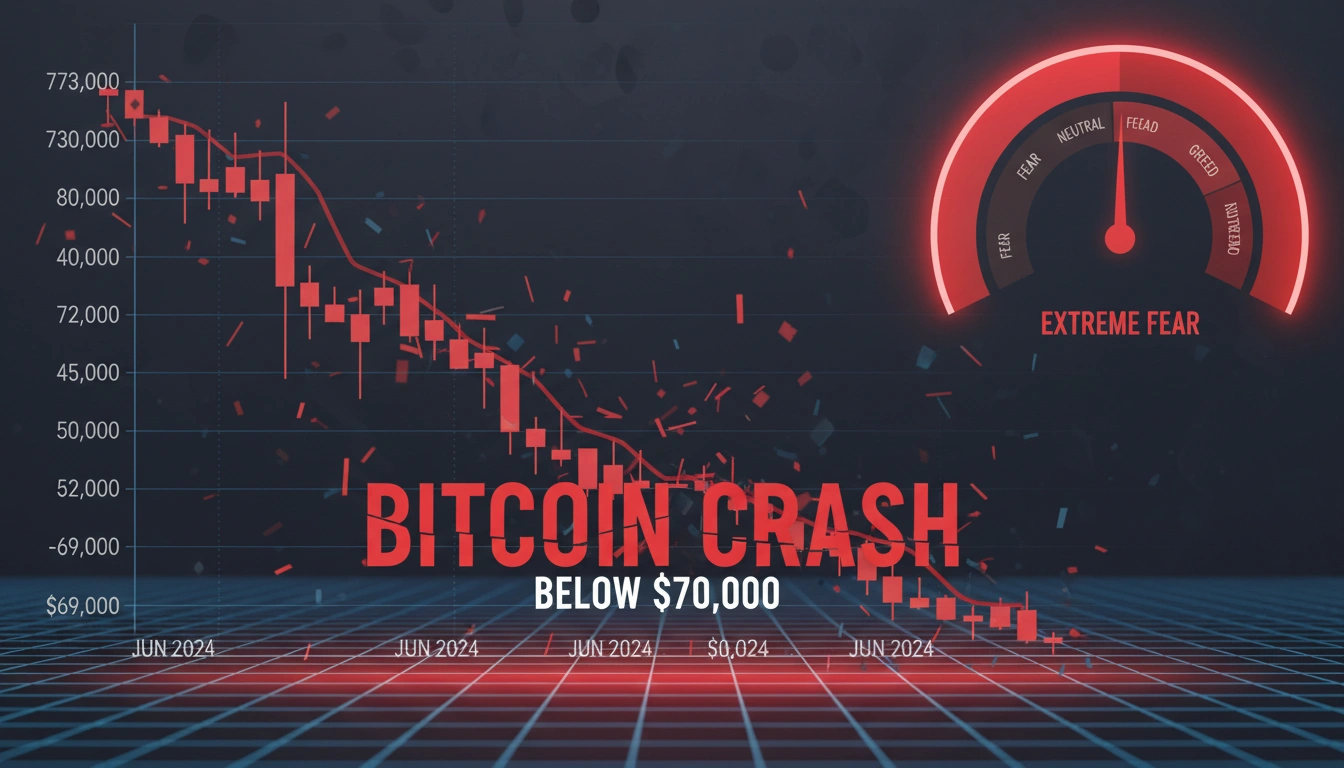
Bitcoin suffered a sharp sell-off on March 19, 2026, dropping to $69,200 during the Asian trading session. For the first time since early February, the leading cryptocurrency closed below the psychologically important $70,000 mark. The Fear & Greed Index by Alternative.me fell to 23 out of 100, entering the "extreme fear" zone and reaching its lowest reading since October 2025.
Sell-off in numbers: 24-hour snapshot
The downturn swept across the entire crypto market without exception. Bitcoin lost 5.55% of its value in 24 hours, settling at $69,971. Ethereum was hit even harder, declining 5.73%. Solana dropped 4.51%, while the total market capitalization contracted 4.8% to $2.49 trillion.
Daily trading volume surged to $122.5 billion - a spike that typically suggests mass liquidations rather than healthy rotation between assets. Open interest in derivatives contracted by $2.1 billion throughout the day as over-leveraged long positions were forcibly closed, adding further downward pressure on prices.
Macro pressure, not a crypto crisis
Specifically, the current decline was not triggered by any crypto-specific event. No exchange hacks, protocol failures, or surprise regulatory actions. The market is reacting purely to macroeconomic factors: hot Producer Price Index (PPI) data and Fed Chair Jerome Powell's remarks cast doubt on the prospects of interest rate cuts in 2026.
The sell-off is a continuation of the trend that began after the Fed's decision on March 18 to hold rates steady. Market expectations for monetary policy easing have weakened sharply, dampening appetite for risk assets across the board - from tech stocks to cryptocurrencies. Traders who had priced in at least two rate cuts before year-end are now reassessing their positions.
On-chain data: whales versus retail investors
Despite the widespread panic, on-chain metrics reveal a striking divergence between the behavior of large and small capital. Exchange inflows jumped 23% in 24 hours to 18,500 BTC, signaling mass selling by smaller holders rushing to lock in losses.
In parallel, whale wallets holding over 1,000 BTC added 4,200 coins precisely at the deepest point of the drawdown. Futures funding rates turned negative (-0.008%) for the first time in three weeks, pointing to a predominance of short positions - a typical indicator of retail capitulation.
- Exchange inflows: 18,500 BTC in 24 hours (+23%) - retail investors selling
- Whale purchases: +4,200 BTC added to wallets holding over 1,000 BTC
- Funding rate: -0.008% (negative for the first time in 3 weeks)
- Open interest: declined by $2.1B in 24 hours
Support levels and possible scenarios
The nearest key support level sits at $68,000. Analysts note that holding this level could lay the groundwork for a relief rally to $74,000-$75,000, as negative funding rates and mass long position closures create classic conditions for a short squeeze.
According to Coinglass data, when the Fear & Greed Index falls below 25, Bitcoin delivers an average 30-day return of approximately +18%. By comparison, buying during greed periods (index above 75) yields an average gain of just 2.3%. This makes the current moment potentially attractive for those considering buying Bitcoin with hryvnia with a medium-term horizon in mind.
Conclusion: panic or opportunity
The current decline is purely macroeconomic in nature. The absence of crypto-native negative events, active accumulation by whales, and steady stablecoin minting suggest that large capital views the situation as an opportunity to build positions rather than a signal to exit the market.
The confluence of negative funding rates, record declines in open interest, and whale buying creates what traders call "coiled spring potential." However, risks remain: if the $68,000 level is breached, the next support zone lies near $65,000. Macroeconomic uncertainty around the Fed's rate path remains the primary source of pressure, and any fresh inflation data could trigger another wave of selling.



Comments
Your email address will not be published. Required fields are marked *