


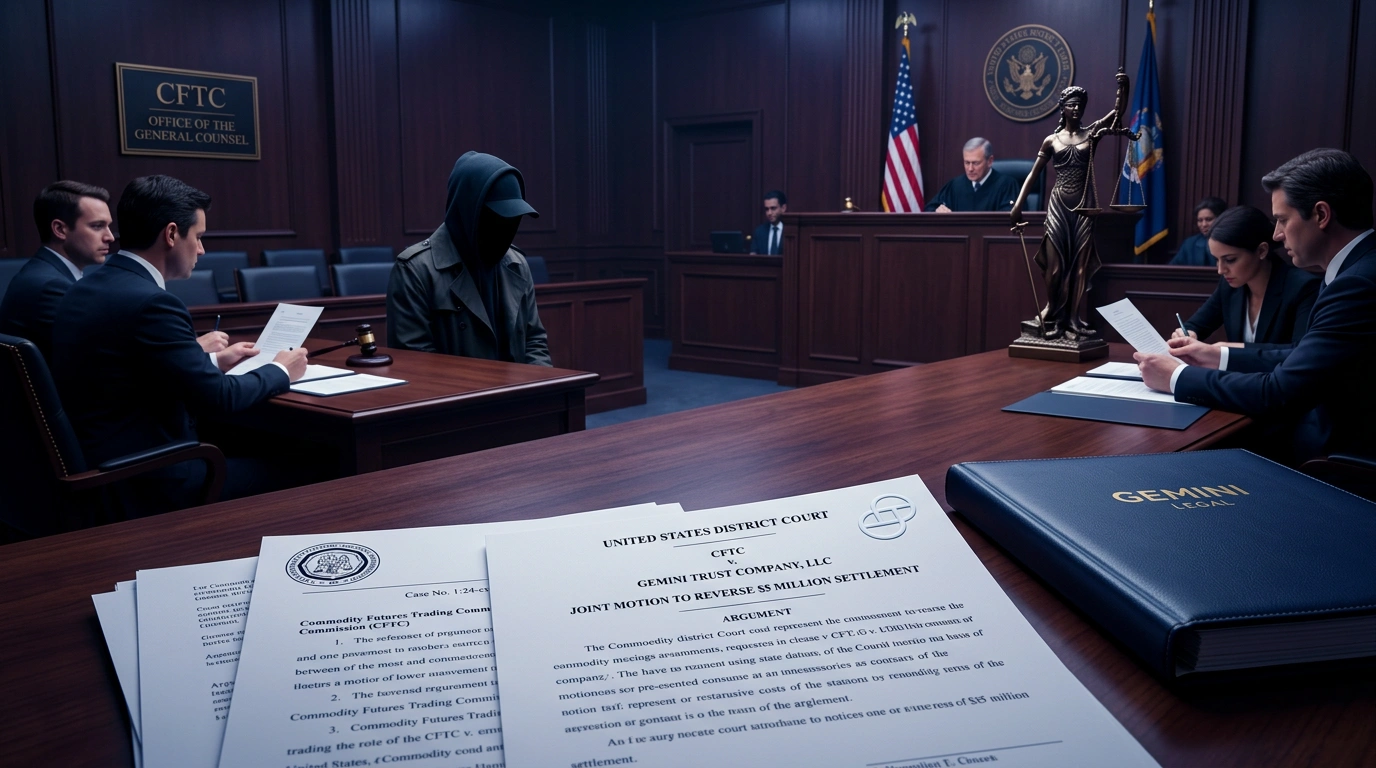
The US Commodity Futures Trading Commission (CFTC) and crypto exchange Gemini filed a joint motion in a Manhattan federal court on May 28, 2026, seeking to vacate a $5 million settlement reached in January 2025. The agency said the complaint, brought under the Biden administration, should not have been filed. The reason: the case relied on a whistleblower whose account was known to lack credibility.
Background on the Original Case
The investigation traced back to 2017, when Gemini sought CFTC approval for a Bitcoin futures contract listed on Cboe. The regulator was reviewing whether the Gemini exchange had genuine liquidity and real user demand before greenlighting the product.
The CFTC alleged that Gemini provided false or misleading information. According to the agency, the company inflated its trading activity metrics and distorted the appearance of user demand to look more favorable during the review. The formal charge centered on "false or misleading statements" related to the futures contract.
In January 2025, Gemini settled the case. The exchange paid a $5 million civil monetary penalty and accepted a consent order with an injunction barring it from making false or misleading statements to the CFTC. That injunction carried no expiration date and could trigger new sanctions with each potential violation.
Why the CFTC Changed Course
The joint motion frames the reversal in plain terms. The complaint "was largely based on a whistleblower's account known to be lacking in credibility." The agency added that the complaint "should not have been filed - and would not have been under current enforcement standards."
The CFTC asks the court to vacate all prospective obligations under the settlement, with the injunction being the primary target. The agency argues that enforcing the injunction against a company that has already paid its penalty "would not be equitable."
The financial picture for Gemini is mixed. The $5 million stays in the Treasury regardless. What changes is the removal of a standing legal risk: without the injunction, any statement Gemini makes to the regulator no longer carries the threat of automatic contempt of the prior consent order.
Donations, Nominations and a New CFTC
The move fits a pattern. Since early 2025, both the CFTC and the SEC have dropped or reversed enforcement actions against crypto companies filed under Biden. Earlier, CFTC suspended its own lawyers who publicly criticized Gemini and other exchanges.
The personal ties are direct. Tyler and Cameron Winklevoss, the co-founders and controlling shareholders of Gemini, each donated $1 million to Trump's 2024 presidential campaign. After Trump's election win, critics began tracking whether donors were receiving favorable regulatory outcomes.
One specific sequence drew attention. In September 2025, Brian Quintenz, Trump's original CFTC chair nominee, posted on X a message exchange with Gemini CEO Tyler Winklevoss. In those messages, Tyler had asked whether Quintenz would review the agency's case against the company if appointed. After the messages went public, Trump pulled Quintenz's nomination and backed Mike Selig instead, a former lawyer for several crypto firms who has taken a supportive stance toward the industry.
The CFTC's filing pushes back on any political interpretation. The agency says the case simply failed to meet evidentiary standards from the start, separate from any other considerations.
Implications for the Industry
Over recent months, the CFTC and SEC have closed cases against Coinbase, Kraken, and Ripple. The Gemini matter follows the same script, though this time the request to dismiss came jointly from both sides. For Gemini specifically, losing the open-ended injunction matters more than the money question: the company can now communicate with the regulator without the standing threat of breaching a prior court order.



Comments
Your email address will not be published. Required fields are marked *