


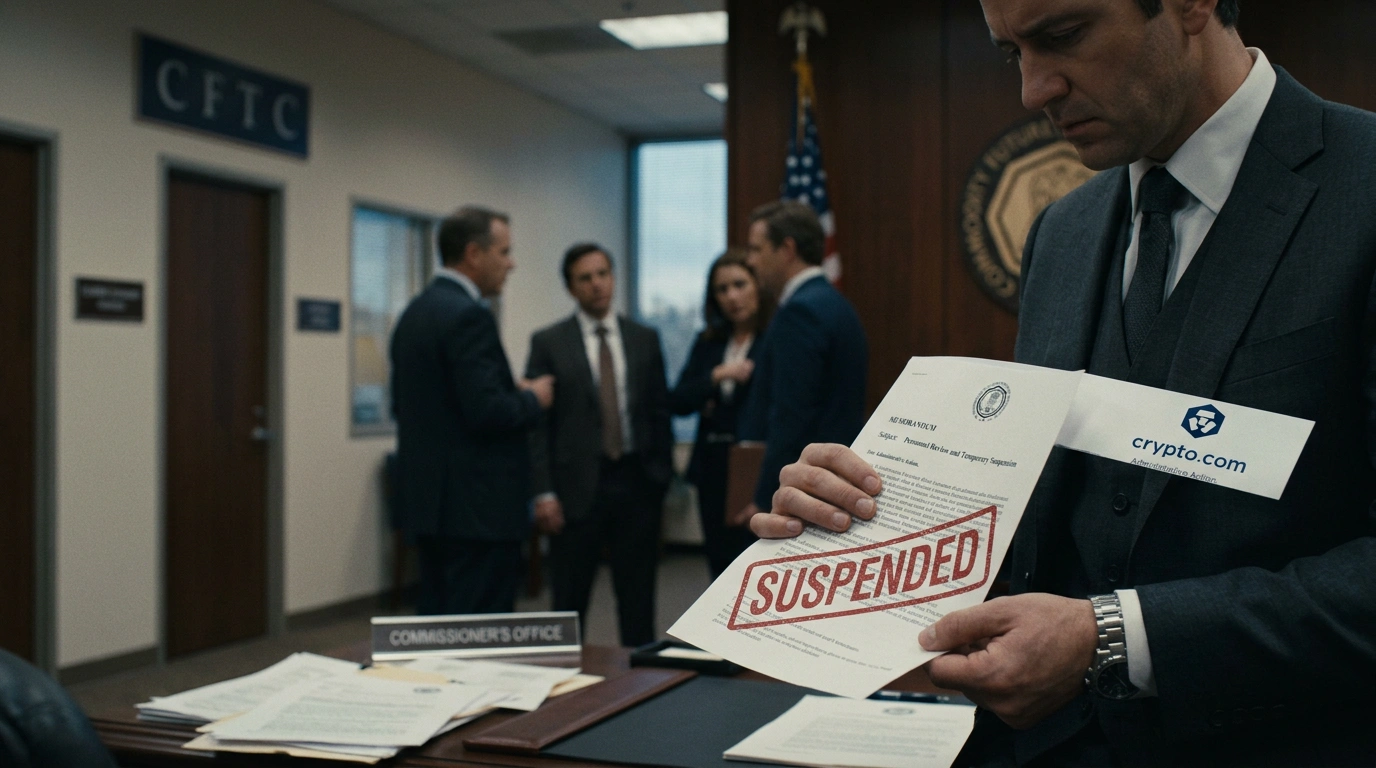
The New York Times has published an investigation into the internal workings of the U.S. Commodity Futures Trading Commission. Career lawyers at the agency raised legitimate concerns about three crypto platforms and were suspended from their positions. The platforms they objected to received all the approvals they sought.
What is the CFTC and why does it oversee prediction markets?
The CFTC is the American regulator for commodity and derivatives markets. Its responsibilities include oversight of futures on Bitcoin and Ethereum, as well as prediction markets. Founded in 1974, the agency has long been regarded as a technical, relatively nonpolitical regulator in Washington.
Prediction markets allow users to bet real money on the outcomes of events: elections, sports matches, central bank decisions. Because these are technically derivatives contracts, they fall under the CFTC's jurisdiction. Polymarket and Kalshi are the largest such platforms in the U.S. Together with Crypto.com and a Gemini affiliate, they ended up at the center of the scandal the NYT described.
The core issue is direct. The CFTC is required to review new platforms before granting approvals. Several career lawyers at the agency did exactly that. They were then punished for it.
What did the NYT investigation find?
NYT reporters interviewed current and former CFTC staff. Career lawyers had flagged specific concerns about each of the three companies. They believed Crypto.com treated small bettors unfairly. Polymarket lacked adequate fraud protections. Gemini Titan, a Gemini affiliate, had not completed its required regulatory review at the time its application was pushed through for approval.
Despite those warnings, then-acting CFTC chair Caroline Pham and her senior counsel personally intervened. Each company got what it wanted.
By the end of 2025, two officials who had raised concerns were placed on administrative leave and subjected to internal investigation. Three more who had enforced crypto laws faced the same outcome. None of them were told what they had done wrong. NYT quoted current and former staff: the message was clear. Do not cause trouble for these industries.
Why these three companies specifically?
All three platforms have documented ties to the Trump family, which the NYT laid out in detail.
- Crypto.com is a business partner of Trump Media, the president's media company.
- Polymarket received investment from 1789 Capital, a venture fund backed by Donald Trump Jr.
- Gemini's founders funded American Bitcoin Corp, which Eric Trump co-founded.
Each company gave the CFTC reason for closer scrutiny. That scrutiny is exactly what career agency staff are there to provide. Their job is to apply procedures consistently, regardless of who backs a given project.
The White House responded officially. Spokesman Davis Ingle said: "President Trump only acts in the best interests of the American public. There are no conflicts of interest." Polymarket, Crypto.com and Gemini did not respond to comment requests from NYT or CoinTelegraph by publication time.
What happened to the officials who left?
The "revolving door" between regulator and industry is unusually well-documented in this case. After leaving the CFTC, Caroline Pham joined MoonPay, a crypto firm that is a partner of Polymarket. Her senior counsel, Brigitte Weyls, became general counsel at Gemini Titan, the same firm whose application she had helped approve while at the CFTC.
Current CFTC chair Michael Selig previously worked as a corporate lawyer representing crypto firms. He is the agency's sole acting commissioner. The House Agriculture Committee, which oversees the CFTC, recently warned Trump that the agency cannot function properly with only one member. Four commissioner seats remain empty.
Enforcement has also dropped sharply. Under the Biden administration, the CFTC initiated more than 80 crypto cases per year. Under Trump, the number fell to two in a comparable period. At least five active crypto investigations were closed without public explanation. Both new cases target small operators, not major platforms.
What does this mean for market participants?
For retail traders and those using crypto derivatives, this has direct practical weight. The U.S. crypto derivatives market is the largest in the world. The CFTC is specifically responsible for protecting smaller participants from fraud and unfair terms. If the regulator opened investigations against its own lawyers for doing their jobs, the question of who is actually being protected becomes harder to answer.
The NYT investigation showed how regulatory capture works in practice. Not through outright corruption, but through steady replacement of independent voices with cooperative ones, removal of dissenters, and movement of key officials into the industry they once oversaw.
If the next U.S. administration appoints new CFTC commissioners, closed cases may be reopened. The market received a reminder: a permissive regulatory environment today does not mean stable rules tomorrow. The number of independent commissioners and the transparency of the regulator matter as much as the rules themselves.

Comments
Your email address will not be published. Required fields are marked *