


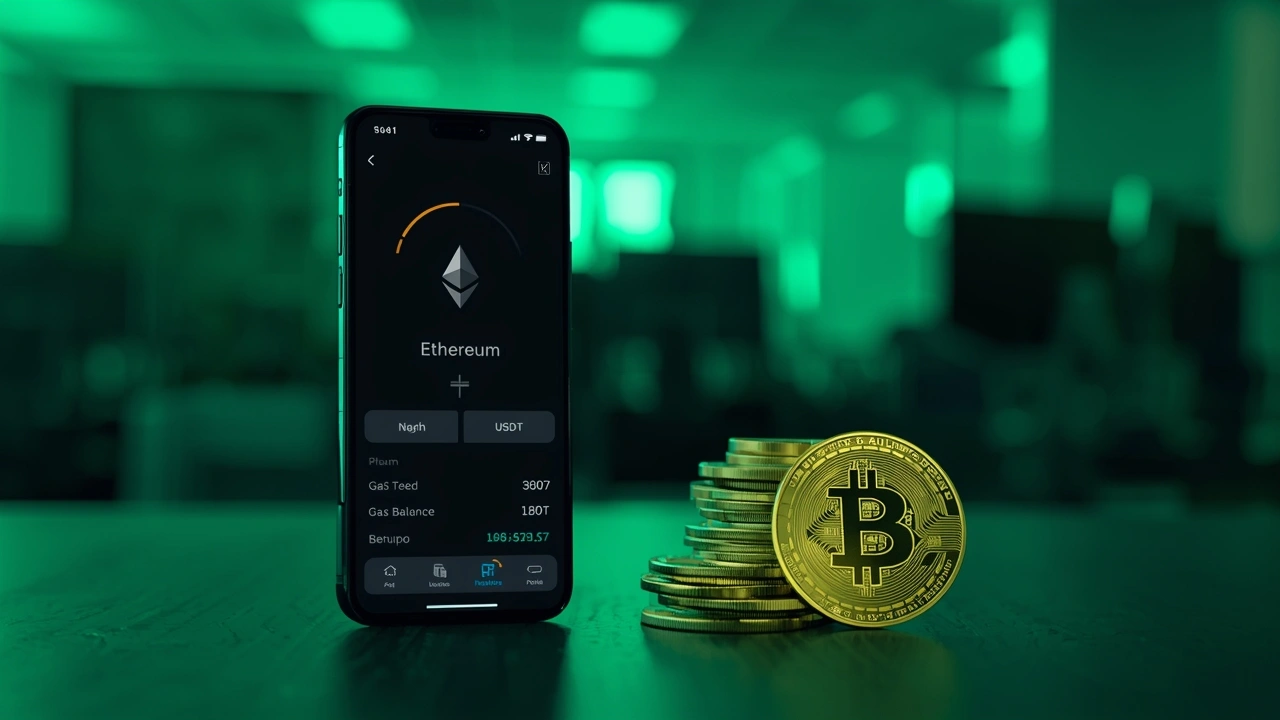
Ethereum is closing in on a major shift in how fees get paid. Soon a wallet holding only USDT could cover gas. ETH in the balance would stop being required.
What happened
Ethereum calls this fee gas, the charge for any action on the network, from a simple transfer to a smart contract call, and no transaction goes through without it. The abbreviation EIP stands for Ethereum Improvement Proposal, the standard format developers use to propose and debate network changes before they land in code. On Sunday, September 5, Ethereum co-founder Vitalik Buterin wrote on X that work on proposal EIP-8141 had moved further than it looked from the outside. The document, called "Frame Transactions," has sat as a draft since January 2026. According to CoinDesk, the feature was locked into the scope of the upcoming Hegotá network upgrade a month earlier, and Buterin says work on the details has moved quickly since. The formal EIP text remains a draft in the meantime, as developers keep working out details before the specification is finalized. CoinDesk and Decrypt both covered the story the same day, which is unusual for a document with no release date.
"A lot of important progress on Frames (EIP-8141) has been quietly happening over the last few months. Highly recommend reading this, also the updated EIP."
- Vitalik Buterin, Ethereum co-founder, from a post on X, September 5, 2026
How "frames" work
The idea sounds simple on paper. A single transaction splits into a sequence of up to 64 separate steps, called frames. One frame checks the owner's signature. Another decides who actually covers the fee. The rest carry out whatever the user wanted to do in the first place: a transfer, a swap, adding to a stake. Each step is an ordinary smart contract call, with no special protocol extensions attached. Swapping USDT for ETH on a decentralized exchange, for example, would work like this: the first frame confirms the wallet owner really signed the transaction, the second pays the fee in USDT, and the third executes the swap itself.
A similar approach has existed since 2023 through the ERC-4337 standard, but those transactions run through a separate, parallel mempool and depend on third-party bundler operators who charge their own fee for the service. Frames run directly in Ethereum's regular public mempool, so nodes can check each step against the protocol's standard rules without any extra infrastructure on the side. That could mean lower transaction costs, since the layer of paid bundlers between the user and the network disappears. No new wallet type is needed for any of this: the spec defines "default code" that gives ordinary wallets the same abilities without deploying a smart contract, covering millions of addresses that already exist on the network today.
Why it matters for regular users
The simplest consequence hits wallets holding nothing but stablecoins. Why keep ETH around if the whole operation is about USDT? Until now, a transaction went nowhere without at least a small amount of ETH, no matter how much USDT sat in the balance. That pushed users to buy a few extra dollars of ether separately, say by buying ETH with hryvnia, just to cover gas. With Frames, that fee could come straight out of whatever token is already there.
- a wallet holding USDT pays its own fee, no separate swap into ETH required
- an app could cover gas costs entirely for new users who haven't bought any crypto yet
- several actions bundle into one transaction, so a failed swap no longer leaves a token with a leftover spending approval
- a wallet's key can be rotated without moving funds to a new address
That last point about spending approvals sounds technical, but it is exactly how attackers drain wallets in practice. A user approves an app to spend tokens once, forgets about it, and months later that approval gets used without their knowledge. Bundled frames remove this problem by design, since an unfinished action simply cancels as a whole. Plenty of exchange users buy stablecoins specifically to send them somewhere right away. Frames remove the last barrier in that path, since there is no longer a need to think separately about ETH for the fee. That includes popular wallets like MetaMask. Adopting the new setup would not require installing a separate smart wallet or migrating to a new address.
There's also a shield against quantum computers
The authors frame Frames as more than a flexible way to pay gas. They describe it as a "native off-ramp" from the elliptic-curve cryptography Ethereum relies on today, ahead of the point where quantum computers can break it. Today an ECDSA signature takes up just a few dozen bytes, which is part of why the network can process millions of transactions a day. Co-author Matt Garnett, who writes under the name lightclient, noted that post-quantum signatures run several kilobytes each, a very different load on the network, which will eventually force a move toward signature aggregation regardless. In Garnett's words, frames "should be the last transaction type we need for accounts." The topic reaches beyond Ethereum. The same week, the G7 called on the wider crypto industry to prepare for the quantum threat ahead of time rather than wait until it becomes real.
What comes next
EIP-8141 is still a draft, even though the feature is already accounted for in Hegotá's scope. There is no exact date yet for when frames would reach mainnet. Buterin pointed to a testnet run by the ethrex client, where Frames pairs with FOCIL, a censorship-resistance mechanism. Together they let privacy protocols run without relayers, which normally see transaction details before they are confirmed. The idea of removing ETH from the required setup for gas builds on what started with the ERC-4337 standard back in 2023, only this time it gets built directly into the network's base layer instead of a layer on top of it. Same-day attention from several major outlets suggests the proposal has moved past being a purely academic exercise and become part of the active debate over Ethereum's roadmap.
Comments
Your email address will not be published. Required fields are marked *