


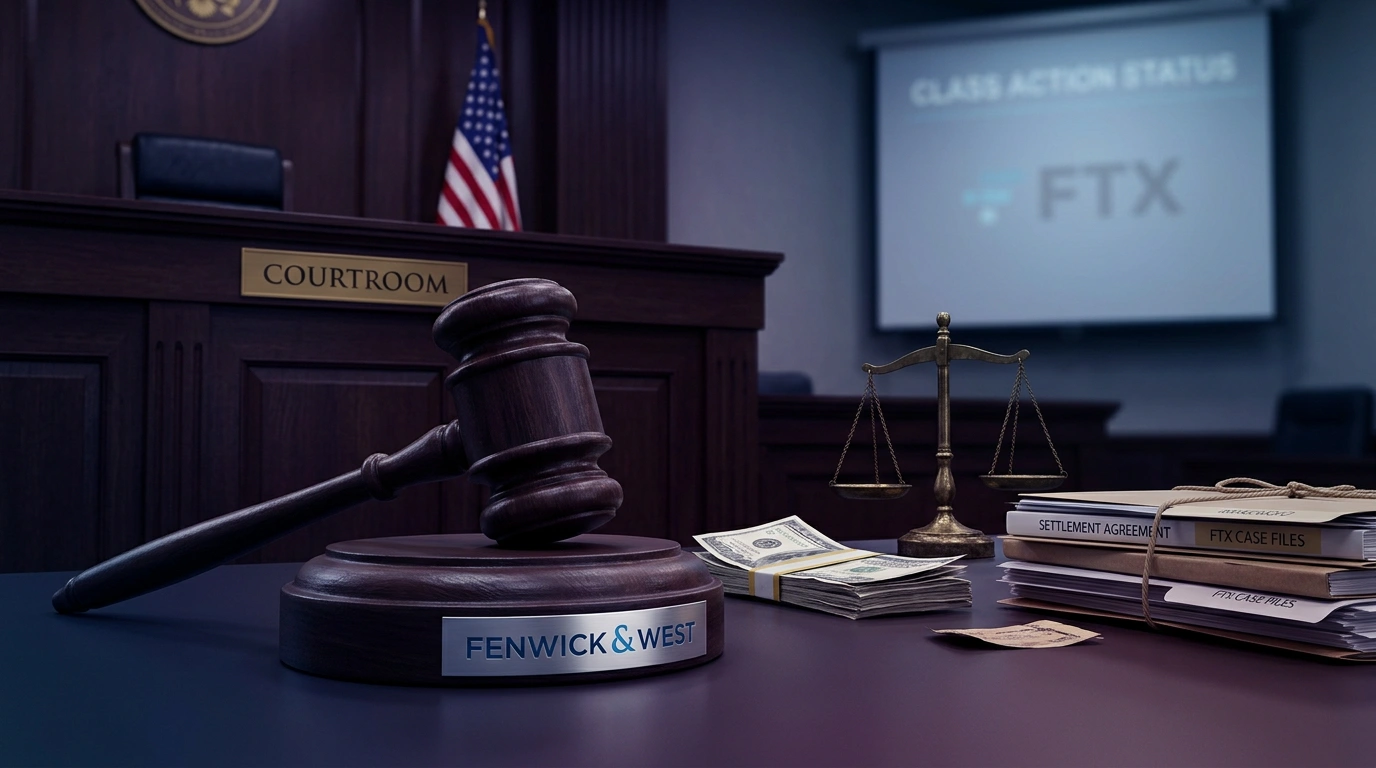
Fenwick & West LLP, which served as FTX's main outside legal counsel from the exchange's earliest years, agreed to pay $54 million to former customers under a 2023 class action lawsuit. Court filings were made public on May 23, 2026. The parties reached a settlement in February, but it still needs a federal judge's approval before taking effect.
Settlement Terms and Background
The class action was filed in 2023 by former FTX customers who lost funds when the exchange collapsed in November 2022. The collapse wiped out billions in customer assets. FTX founder Sam Bankman-Fried was later sentenced to 25 years in prison. Legal liability for outside advisors became a separate front in the broader effort to recover losses for customers and creditors.
Under the terms of the agreement, Fenwick will pay $54 million without admitting wrongdoing. The firm initially sought to have the case dismissed entirely. After the court denied that motion, the parties reached a settlement in February 2026. The distribution plan has not been disclosed yet. A federal judge must formally approve the terms before any payments go out. A portion of the amount will cover legal fees for plaintiffs' attorneys, as is standard in class action cases. Fenwick has not publicly commented on the settlement.
The FTX Recovery Trust, which oversees asset distribution for the bankrupt exchange's creditors, will add the $54 million to its broader payout pool. As of early 2026, the Trust had returned more than $11 billion to creditors and customers through bankruptcy proceedings.
What Plaintiffs Alleged Against the Law Firm
The core claim in the lawsuit: Fenwick & West did not simply provide legal services to FTX, it actively helped the exchange carry out fraud through its role in building corporate structures. Plaintiffs drew on the original complaint, which described the firm's role as:
"A key and crucial role in the most important aspects of why and how the FTX fraud was accomplished."
- from the 2023 class action complaint against Fenwick & West LLP
The first line of allegations centered on corporate structure. The firm's lawyers allegedly helped FTX build a web of legal entities that obscured the movement of customer funds between the exchange and its affiliated hedge fund, Alameda Research. Through that mechanism, customer funds ended up in places they were never supposed to be.
The second line of allegations concerned licensing. Fenwick counseled FTX on how to structure its operations to avoid obtaining money transmitter licenses in various US states. Fewer licenses meant less regulatory scrutiny over FTX's payment operations. The firm had worked with FTX since the exchange's corporate formation and early acquisitions, giving it access to internal documentation throughout. That is why plaintiffs argued the firm knew, or should have known, about the misuse of funds.
The $525M Lawsuit Is Still Pending
Alongside the class action, Fenwick faces a separate legal proceeding where plaintiffs are seeking $525 million. The claims are grounded in the same allegations about the firm's role in FTX's collapse, but cover a broader set of grievances and seek significantly larger damages. No ruling has been issued.
The $54 million class action settlement does not directly affect the second case. The two proceedings have different legal foundations, different plaintiffs, and different damages calculations. Some market observers suggested the smaller settlement could improve Fenwick's negotiating position in the larger case. Neither party confirmed this publicly.
Fenwick is not the only FTX advisor facing legal pressure. Audit firms, banks, and other legal consultants who worked with the exchange have all faced lawsuits. Most of those cases have been settled out of court or are still working through the legal system.
What FTX Creditors Have Received
The FTX Recovery Trust started paying first-priority creditors in 2024. That group received recoveries at or above 100% of their filed claims. Total returned funds surpassed $11 billion, making the FTX bankruptcy one of the highest-recovery collapses in the crypto industry's history.
Some creditors criticized the Trust's approach to selling recovered assets. The Trust sold Bitcoin and other digital assets below current market prices. After FTX's 2022 collapse, BTC prices rose sharply. Creditors who received dollar-value payouts at lower prices effectively got less than if the assets had been held and sold at current market rates.
The $54 million from Fenwick & West will add to that pool. Whether the firm will also settle the separate $525 million lawsuit or take it to a court decision remains to be seen.


Comments
Your email address will not be published. Required fields are marked *