


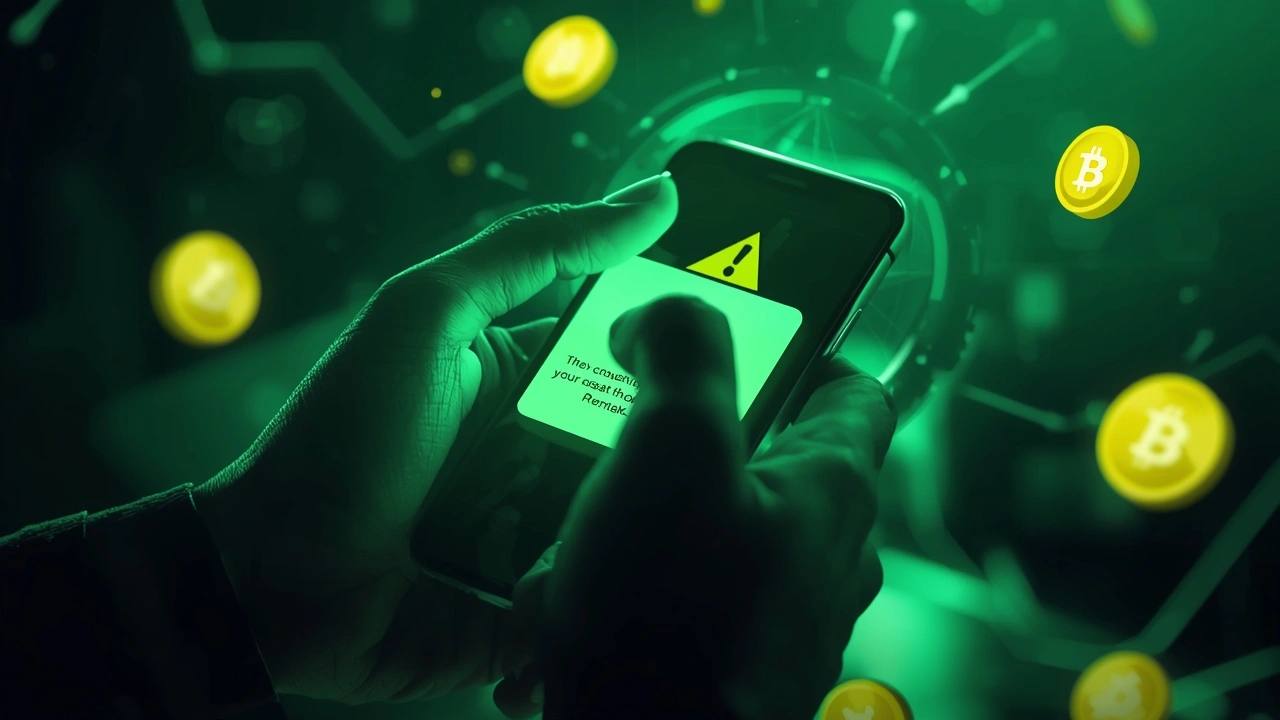
MetaMask just updated its wallet protections. New warnings now catch scammers before money moves. The reason is simple: victims often ignored the old warnings.
What Actually Changed in the Wallet
The MetaMask team rolled out new warnings across its mobile app and browser extension. The system now flags suspicious transfers, lookalike addresses, and signs of investment or romance scams. Warnings appear before a user even confirms a transaction.
A separate feature called Added Protection automatically reverts a transaction if it doesn't match what the preview showed. It launches first on the browser extension. Mobile support comes later.
Old-style warnings only suggested caution, and the final call always stayed with the user. Now part of that decision shifts to the system itself, buying the person extra time to think.
Why Now
According to Martin Peko, Staff Product Manager at MetaMask, victims of investment scams rarely paid attention to old warnings. They either trusted the recipient too much or were being coached by the scammer in real time.
"They either trusted the recipient far more than usual, or they were being actively coached past it."
- Martin Peko, Staff Product Manager, in an interview with Decrypt
So the team went further than a warning. They added an automatic reversal of suspicious transactions. Another new addition routes users straight to support from that same screen if they're unsure.
Before, the system would simply block the suspicious action and stop there. Now the user sees a button to reach live support right away, instead of being left alone with a warning.
How the Wallet Spots a Scam
One goal is fighting address poisoning. Scammers send a tiny transfer from a wallet whose address visually resembles one the person has dealt with before. The trick is simple. The user copies the wrong address from their transaction history and sends money straight to the scammer.
MetaMask's security partner, Blockaid, handles the detection. It uses language models and classifiers to scan websites, social feeds, and onchain data in real time. The system looks for phishing, scams, and malicious transactions across several sources at once.
Warnings used to be static. The same message showed up for every situation. Now they adapt to the specific transfer, including data about the token and the recipient's address.
Attacks are getting more sophisticated too. Peko said scammers are using AI themselves to scale personalized scams and disguise malicious transactions as ordinary transfers. A static list of known scam addresses just isn't enough anymore.
The first-time recipient warning makes sense too. Most scam schemes end with a one-off transfer to an address the person has never dealt with before. Regular transfers to familiar addresses, by contrast, rarely raise a flag.
Crypto Scams Are Growing, and Regulators Are Paying Attention
This update didn't come out of nowhere. In July, US authorities seized more than $25 million in crypto tied to investment and romance schemes that prosecutors said defrauded thousands of victims across the US and Canada.
Earlier this month, the Secret Service froze $52.8 million in crypto linked to Xinbi Guarantee, a Telegram marketplace that supplied services to scammers. That gives a sense of the scale MetaMask is up against.
Romance scams often stretch across weeks or even months of conversation before the victim is asked to send money. By then the person is emotionally invested, so a single on-screen warning rarely lands at the right moment.
The update also lands as Consensys prepares to split its business. The company plans to separate MetaMask's consumer side from its institutional products by the end of 2026.
The new warnings cover three main scenarios:
- transfers to a lookalike address of a known wallet
- signs of an investment or romance scam
- a first-time transfer to an unfamiliar address
What This Means for Everyday Users
The practical advice is simple. Don't brush off a warning just because the other person seems trustworthy. MetaMask supports Ethereum and dozens of other networks, so an attack can come through any of them.
If someone rushes a transfer or promises a "guaranteed" return, that alone is a reason to stop and verify the recipient's address separately, rather than trust an on-screen message.
For larger holdings, it's worth considering a hardware wallet as an extra layer of protection. MetaMask's new features don't replace caution, they just buy more time to use it.
Wallets are still racing scammers on speed, not just technology. The earlier a warning shows up, the better the odds someone actually stops and thinks.

Comments
Your email address will not be published. Required fields are marked *