


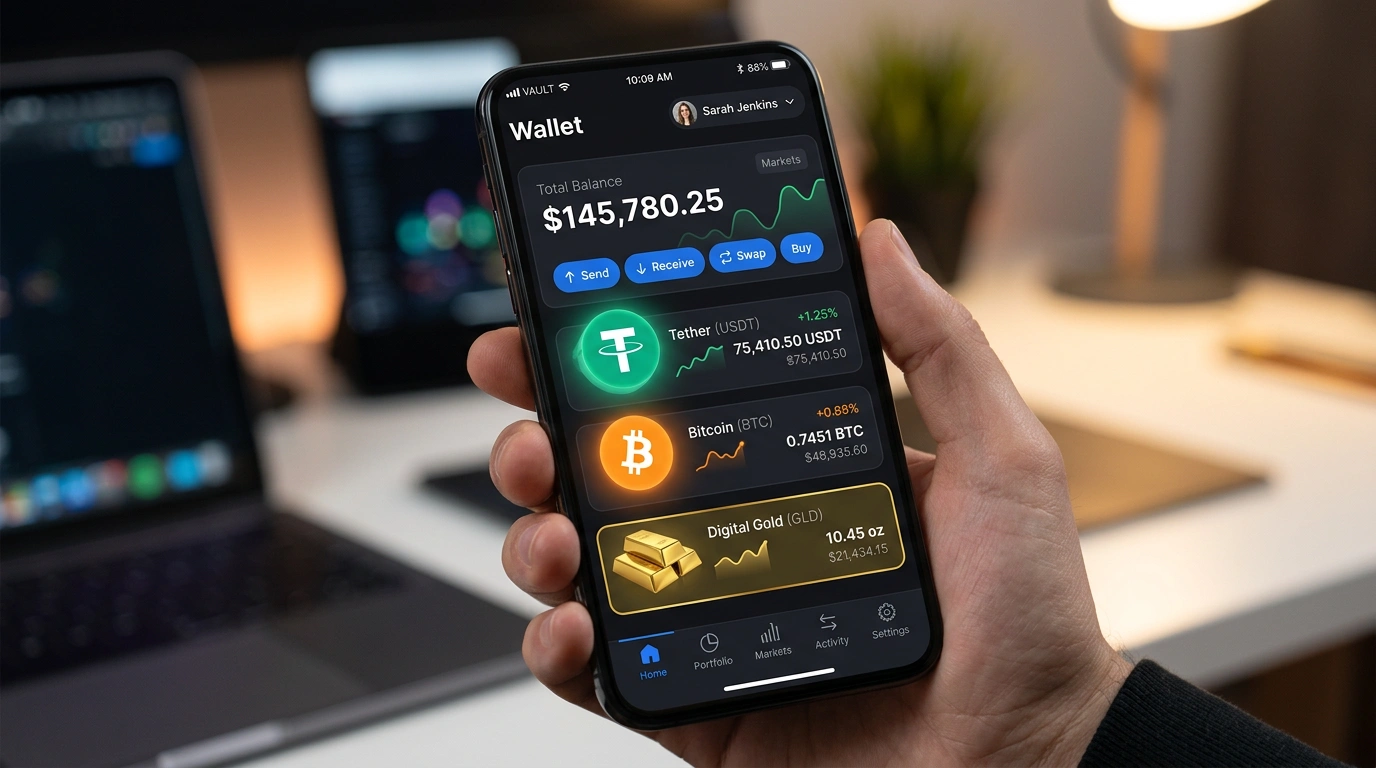
Tether launched its own crypto wallet on April 14 - tether.wallet. The app supports self-custody and stores four assets: USDT, Bitcoin, the gold-backed XAUT token, and the dollar-pegged USAT. Until now, USDT holders stored tokens exclusively through third-party apps.
Four assets, one app
That lineup is unusual for a product from a single issuer.
- USDT - the largest stablecoin by market capitalization
- XAUT - Tether's tokenized gold: 1 token equals 1 troy ounce of physical metal
- USAT - a new dollar-pegged asset from the company
- Bitcoin - the only asset in the list outside Tether's own product line
Putting USDT and XAUT under one interface is a solid pitch for people holding both dollar reserves and gold. Most wallets support XAUT only as an ERC-20 token with no direct issuer connection. Here you get the official product from the token creator.
Addresses you can actually read
A standard crypto address looks like this: "0x742d35Cc6634C0532925a3b844Bc454e4438f44e". One wrong character and your funds are gone - with no way to get them back. tether.wallet replaces that with readable handles like "name.wallet".
The concept mirrors ENS - Ethereum Name Service. The difference: ENS requires buying a domain and paying gas fees. Here it appears to be built in at no extra cost. For users who fear making address errors, that is a real reduction in risk. Experienced users can keep working with standard addresses as before.
Self-custody and cloud backup - drawing the line
"Not your keys, not your coins." The FTX and Celsius collapses made that lesson concrete: companies used customer funds, and users got nothing back. Tether built the wallet around self-custody - keys live only on the user's device, and the company has no access.
The cloud backup is a voluntary safety net. If a phone breaks or gets stolen and the seed phrase exists only on paper - funds may be gone for good. A cloud backup solves that, but it adds another exposure point: an encrypted copy sitting on a third-party server.
Tether handled the tension through choice. Skip the cloud for maximum independence, or turn it on as insurance against losing your device. Both modes ship in the same app and serve different users without forcing either side into a compromise.
Why Tether wants a direct line to token holders
Until now, Tether controlled USDT issuance but not storage. Tokens reached users through MetaMask, Trust Wallet, Ledger and dozens of other products. The company now wants direct access to that audience without a layer in between.
$144B in USDT circulation means millions of holders across 200+ countries. Users who want to exchange USDT to UAH typically park tokens in a wallet or exchange before converting. tether.wallet slots directly into that flow. Tether gains engagement data and brand touchpoints. Users get another option.
Does the market need another wallet
But is there room for a new player? MetaMask crossed 30 million active users. Trust Wallet from Binance hit over 170 million downloads. The field is packed. tether.wallet is not trying to fight everyone at once - the focus is USDT and XAUT holders as the core audience.
That is a narrow but large niche. USDT is held by far more people than any other crypto asset after Bitcoin. If email-style addresses genuinely lower the barrier for new users, the product earns its place. If not, it stays a solution mainly for those already loyal to the Tether brand.
The first months will decide
Tether released the wallet without a big marketing push or partnership announcements. The product just appeared. That is either confidence that the USDT brand carries itself, or a bet on organic growth.
Two questions will define the outcome. First, whether USDT holders actually switch from their current tools to tether.wallet. Second, and more broadly, if the largest stablecoin issuer is now also building wallets - where does infrastructure end and competition with its own partners begin. The next few months will show.



Comments
Your email address will not be published. Required fields are marked *