


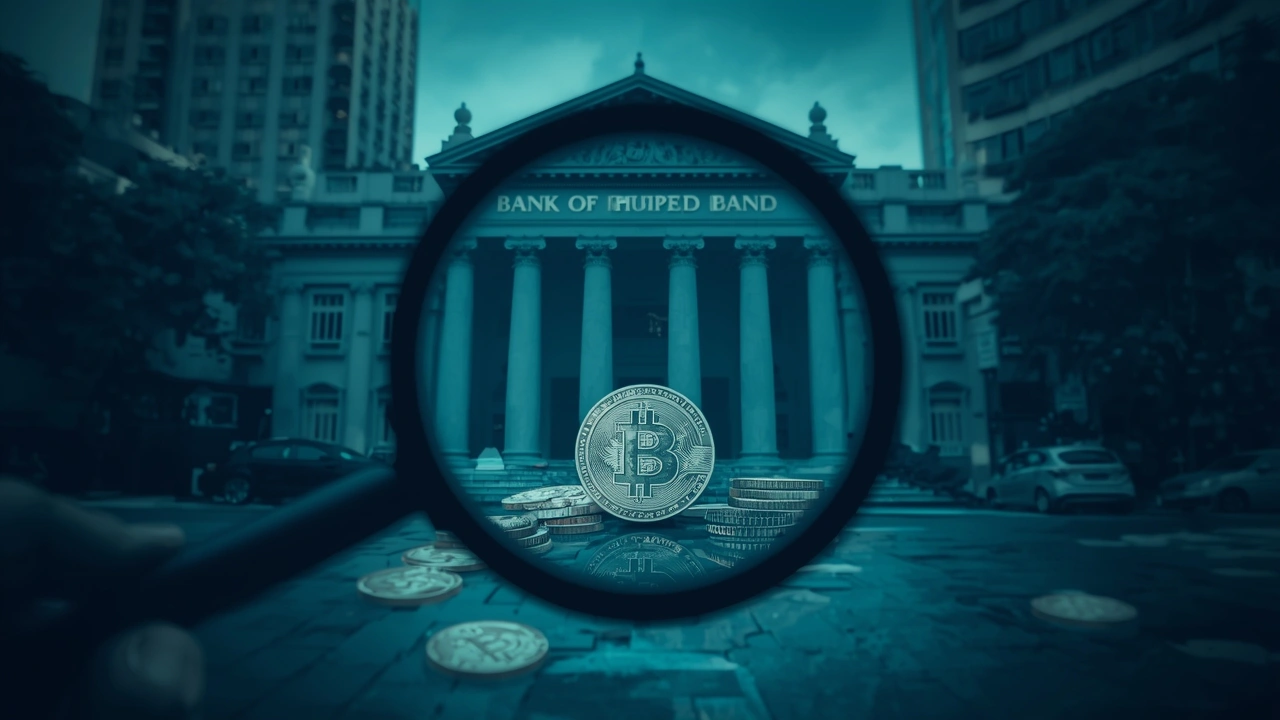
The Bank of Thailand is stepping up surveillance of stablecoin transactions, aiming the bulk of its effort at USDT. The audit will touch traders, the country's largest exchange Bitkub, and anyone moving large amounts of cash through the kingdom's gray economy.
What the Bank of Thailand is rolling out
Thailand's central bank, working with the country's Securities and Exchange Commission, is launching an audit of high-volume stablecoin transactions. The focus falls on USDT, cash transactions and currency exchanges, the channels regulators say illicit financial flows tend to move through. The push follows a wave of scam call centers linked to Chinese-affiliated criminal networks. Scam losses in Thailand hit 115 billion baht, or roughly $3.4 billion, in 2025, with more than 173 million suspicious calls and texts recorded.
"The measures we are implementing are not short-term fixes. They require the continuous deployment of multiple parallel strategies."
- Vitai Ratanakorn, Governor of the Bank of Thailand, from a statement to local outlet The Nation, July 11, 2026
How this hits USDT trading
The USDT-baht pair is the most popular instrument on Bitkub, Thailand's largest crypto exchange, which handles about $26 million in daily volume, with nearly 40% of that coming from forex trades involving USDT. Stablecoins became a convenient way to move large sums thanks to near-instant cross-border settlement, and that same speed is now drawing regulatory attention.
A similar reliance on stablecoin-fiat pairs shows up in other markets too. In Ukraine, the USDT-hryvnia pair remains one of the most popular directions whenever users decide to sell USDT for hryvnia on P2P platforms or through exchange offices.
What changes for traders and exchanges
Compliance duties now stretch across cash networks, currency exchange points, gold bullion trading, and separately, "suspicious stablecoin transactions." Large cash transactions will require a source-of-funds declaration, and swapping large volumes of big banknotes for smaller ones without a clear business reason will get flagged for monitoring. Cash deposits above 5 million baht, roughly $150,000, will require full disclosure.
For an ordinary trader, that means longer checks on large transfers and a likely uptick in requests about the origin of funds from exchanges and banks. Small trades stay untouched directly, but the oversight logic now reaches across the whole chain: cash, exchange offices, stablecoins.
Risks of overreach
Thailand already has recent experience with campaigns like this, and it wasn't always a clean win. In 2025, the country's banks froze three million accounts as part of a crackdown on mule accounts and gray capital, but thousands of ordinary people and legitimate businesses got caught in the net alongside real scammers.
- Crypto trading stays legal in Thailand, though stablecoin and crypto asset payments remain banned by the central bank.
- Rules for crypto businesses keep tightening on a rolling basis, not as a one-off.
- The 2025 wave already earned the local media label of a "scammer crackdown gone wrong."
- The new round of checks raises the risk that legitimate USDT users get swept up again.
What comes next
The Bank of Thailand stresses that this isn't a one-quarter project but ongoing monitoring across several fronts at once. For traders, that reads less as a warning and more as a cue to get used to longer checks rather than expect rules to ease anytime soon.
USDT trading in the country remains legal for now, with no caps on transaction size introduced yet. The direction of oversight is already clear, and the coming months will show whether Thailand becomes the next market where stablecoins end up under a central bank's tightened watch.



Comments
Your email address will not be published. Required fields are marked *