


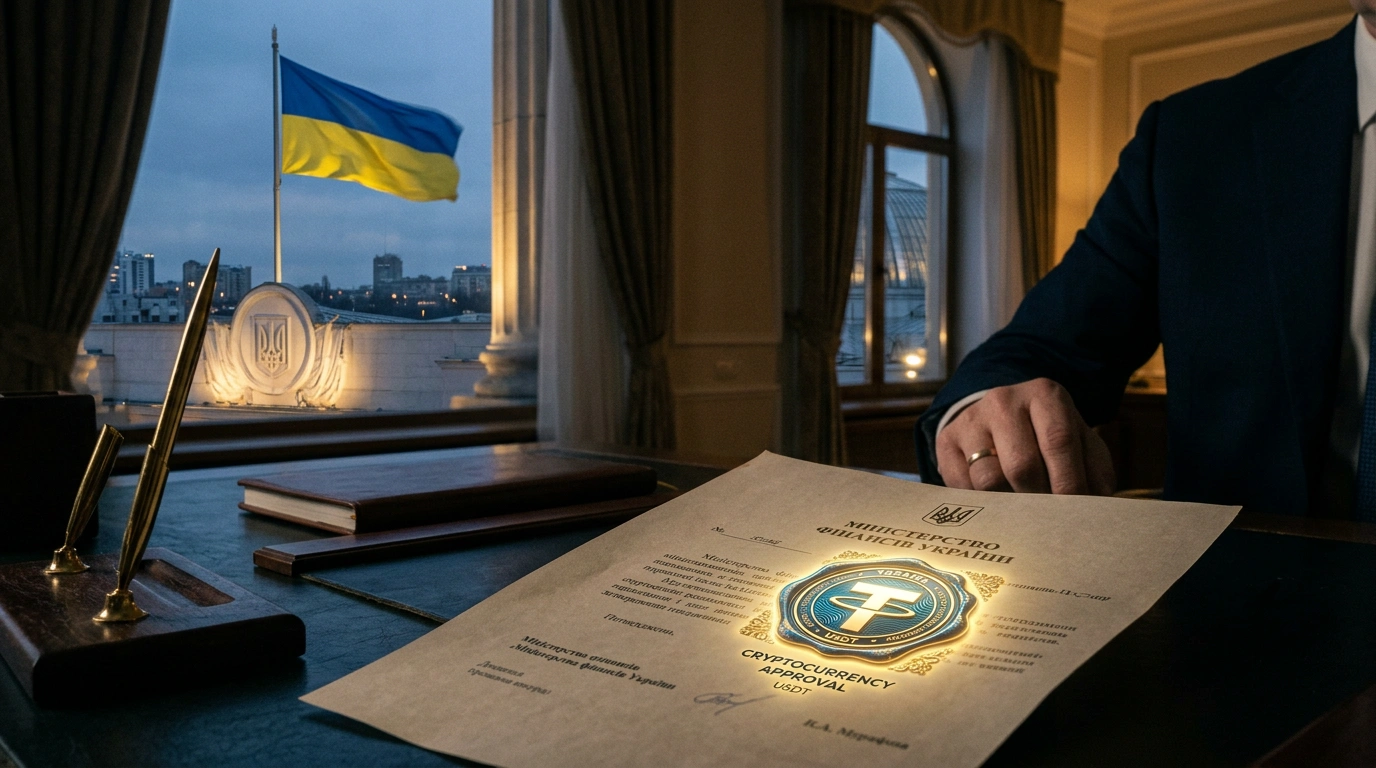
On June 29, 2026, Ukraine's Prosecutor General's Office confirmed a first for the country: seized cryptocurrency has officially passed into state management. Over $8.3 million in USDT now sits in a wallet held by ARMA, the National Agency for Finding, Tracing and Management of Assets. Before this, seized crypto in Ukrainian criminal cases simply froze in legal limbo with no one managing it.
How Were Seized Crypto Assets Handled Before?
To grasp the scale of this change, picture the old approach. Courts could freeze a suspect's wallet, but that was about as far as the process went. Who holds the private keys? Who is responsible if the asset loses value? Where does custody end and management begin? The law did not say. Here is what the new process looks like:
- Seizure: prosecutors or a court order a freeze on the suspect's wallets.
- After that, the assets entered a grey area: frozen but without a designated custodian until a verdict.
- Transfer to ARMA: after the 2025 reform, the agency gained the right to take digital assets under management before a court verdict takes legal effect.
- ARMA opens a dedicated wallet, accepts the funds, and is accountable for their safekeeping until a court decision.
Ukraine's 2025 ARMA overhaul was driven partly by external pressure: old questions about the agency's governance had been blocking the release of hundreds of millions of euros in EU support. After the reform, that funding resumed.
Where Did the USDT Come From?
According to the State Bureau of Investigations, the funds are tied to a member of an international hacking group. The group targeted businesses and individuals across Europe and the US: breaking into corporate networks, stealing confidential data and demanding ransom payments. Proceeds were laundered in Ukraine through real estate, cars and other high-value assets.
Total victim losses are estimated at over $100 million. Four suspects, including the alleged organizer, are in custody. Authorities seized more than $11.1 million in assets total: properties, vehicles, $1 million in cash and USDT valued at $8.3 million.
Why Does This Matter for Ukraine's Crypto Market?
Ukraine is no small player in crypto. Chainalysis data shows $206.3 billion in crypto transaction volume flowing through Ukrainian addresses between mid-2024 and mid-2025, ranking the country fourth in Europe. Public officials hold an estimated $2.8 billion in Bitcoin according to asset declarations, and a strategic crypto reserve has been discussed at the government level.
With crypto activity at this scale, the absence of any mechanism for managing seized digital assets was a real gap. The UK's Royal United Services Institute estimated that tightening crypto rules could recover at least $10 billion for Ukraine through restitution and shutting down laundering pipelines. The ARMA precedent fills that gap at the operational level. Funds no longer sit unmanaged.
What Changes for Crypto Users in Ukraine?
Right now, nothing changes directly for holders of USDT or BTC. No new restrictions. The precedent does send a clear message: the state has confirmed the technical and legal capacity to treat digital assets the same as conventional property. That will push the legislative timeline forward.
Ukraine legalized virtual assets in 2022. A regulatory bill aligning the market with EU standards has passed its first reading in parliament. For anyone regularly looking to sell USDT for hryvnia through P2P platforms or exchange services, the practical note is this: documentation of asset origin will become more relevant as the regulatory framework takes shape.
What Comes Next?
ARMA already manages hundreds of millions in seized traditional assets. The first successful USDT case will likely push lawmakers to clarify the rules: how long the agency can hold seized crypto, whether it can sell assets to limit price-drop exposure, and how wallet custody is audited. These rules should be in statute, not built case by case through prosecutorial practice.
The regulatory bill is awaiting its second parliamentary reading. If it passes, Ukraine will have a full crypto regulatory framework aligned with EU standards. The ARMA case with $8.3 million in USDT proved the operational capacity is there. The legal framework is still being built, but the first step is done.



Comments
Your email address will not be published. Required fields are marked *