


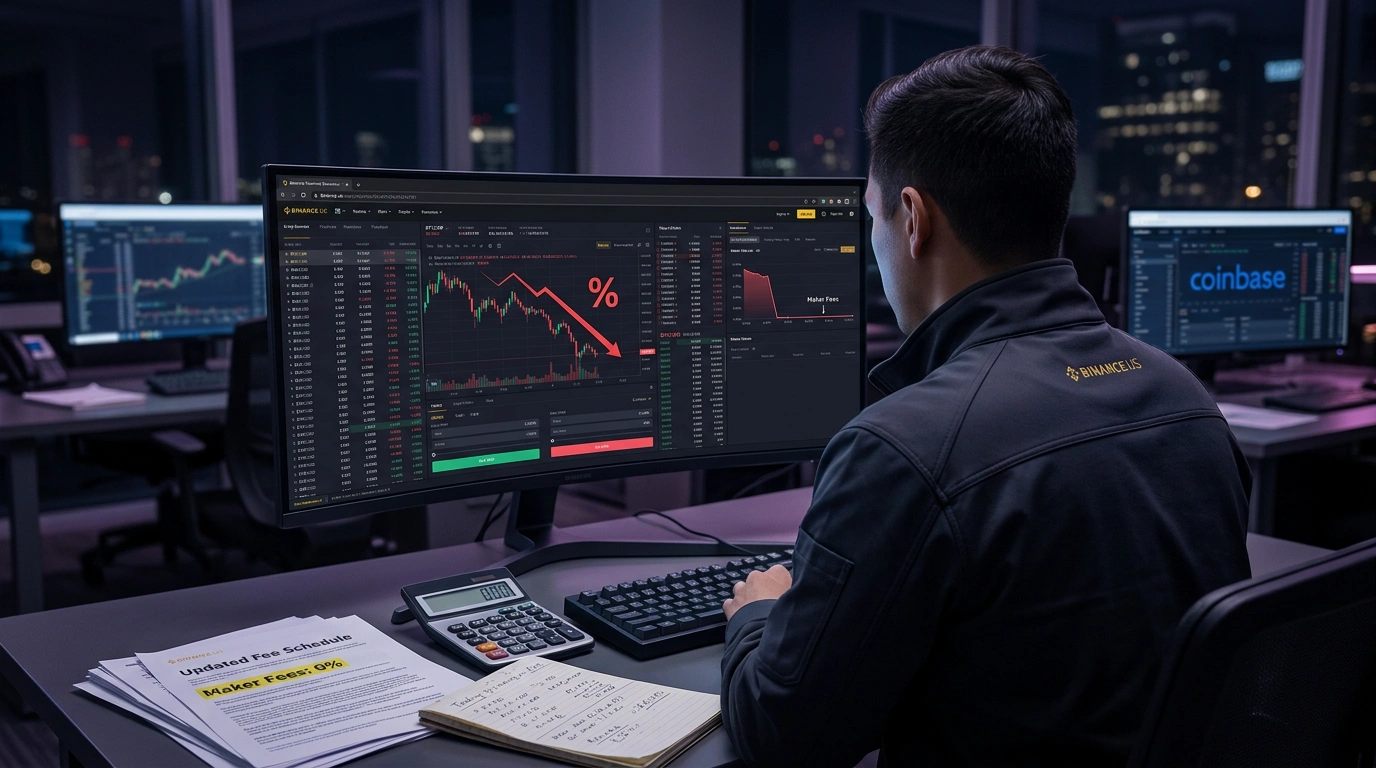
Binance.US cut maker fees to 0% and taker fees to 0.02% across all spot trading pairs for every user, with no volume minimums and no subscription requirements. The company says this translates to a 98% cost reduction for retail traders compared to competitors like Coinbase. The change took effect immediately.
The New Fee Structure: What Changed
Before this move, Binance.US ran a tiered fee system where rates dropped as monthly trading volume grew. Now there is one structure for everyone: 0% for makers, 0.02% for takers. No portfolio minimums, no paid tiers.
Binance had previously offered zero fees on select pairs such as BTC/USDT. That logic now covers the entire trading list. The exchange also completed a SOC 2 Type II audit, a security and process control certification that the company said supports the new pricing model.
The change follows the appointment of Stephen Gregory as the new CEO. It is the first major public move from the new management team after several months of platform reorganization.
98% Cheaper Than Coinbase: How the Numbers Compare
The current fee scene among major US crypto exchanges: Coinbase charges 0.40-0.60% for retail clients at lower volumes, Kraken runs 0.25-0.40% with volume-based discounts. Charles Schwab, one of the largest US brokerages, announced spot Bitcoin and Ethereum trading is coming in the next few weeks at 75 basis points (0.75%) per transaction.
Binance.US's 0.02% taker rate is a level that global crypto exchanges typically reserve for VIP clients with monthly volumes of $10-50 million. Now it is available from the first trade.
Why Now: Rebuilding After the $4.3B Settlement
Binance.US is a separate legal entity and operates independently from the global Binance platform. In 2023, the global Binance company reached a $4.3 billion settlement with US authorities over anti-money laundering and sanctions violations. Founder Changpeng Zhao pleaded guilty to a felony charge and stepped down as CEO.
Since then, Binance.US has spent roughly two years rebuilding client and regulator trust. The SOC 2 Type II audit and new CEO are part of that process. Zero maker fees give the platform a concrete argument for traders who moved to Coinbase or Kraken in 2023 and 2024 to take another look.
TradFi Arrives Late: Schwab's 0.75% Is Already Outpaced
The rate Schwab is offering its audience, 0.75%, is already more than 37 times the Binance.US taker fee. For a brokerage serving decades-long retail investors, that pricing makes internal sense. For crypto-native traders, it means higher costs than even the old tiered schedules at most exchanges.
This is a race to the bottom, and Binance.US fired the starting gun. Pressure on Coinbase and Kraken to cut fees will grow in the coming months if Binance.US holds its volumes. Traders who sell Bitcoin for dollars on US platforms will see these lower transaction costs directly in their statements.
What Happens Next in the CEX Market
The equity markets went through the same shift when Robinhood introduced zero-commission trading around 2015. Within a few years Charles Schwab, TD Ameritrade, and Fidelity all followed. The logic was the same: volume and cross-sell products cover costs better than commission margins.
The crypto CEX space is at the start of that same transition. Binance.US made the first public move. If the platform holds clients and grows volumes, other players will face pressure to match or explain why their service costs 20 to 30 times more. The competitive impact on exchange revenues will become clearer once Q2 results come in.
Comments
Your email address will not be published. Required fields are marked *