


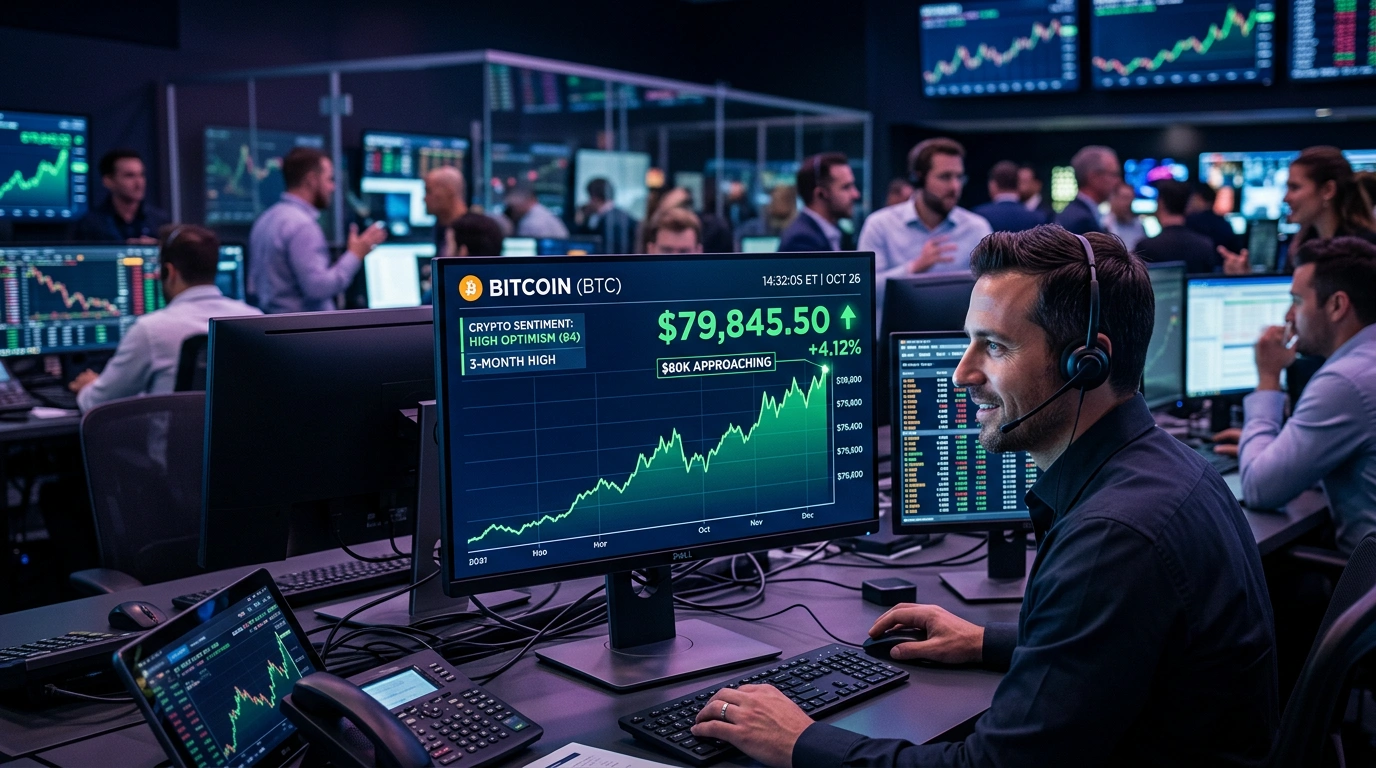
Over 20 hours from Tuesday to Wednesday, Bitcoin gained nearly 6% and pushed close to $79,400. The Crypto Fear & Greed Index jumped 14 points in a single day and reached 46 out of 100, its highest reading since January 18. Short sellers took the biggest hit, while those who bought BTC below $70,000 now have a window to take profits.
What Drove the Move
CryptoQuant analysts pinpointed the driver clearly: the rally was "completely driven by demand" in the perpetual futures market. Buying pressure in perps outpaced sellers and pulled the spot price higher. Short-term traders who positioned for a correction faced another round of forced liquidations.
There is an important caveat. Spot demand, according to the same platform, is not growing but slowly contracting. This separates the current move from a classic bull cycle start, where spot and derivatives move together. A rally sustained only by perps traders can reverse quickly once they begin closing long positions.
The broader picture adds uncertainty. US-Iran negotiations over the Strait of Hormuz remain unresolved. Bitcoin is ignoring geopolitics for now, but that could shift. Ethereum added around 3% and Solana rose 3.5%. Gains across altcoins suggest a broad sentiment shift rather than an isolated BTC move.
Who Is Actually Buying
Over the past 30 days, more than 300,000 Bitcoin moved into long-term holder wallets. This shows that buyers from the lower range are not selling into the rally near $80,000. Strategy alone purchased 53,000 BTC in the same period, accounting for roughly one in six coins that shifted to long-term holders.
CryptoQuant put it simply: "Bitcoin supply is moving into stronger hands." Institutional buyers act as a buffer between current price levels and selling pressure from short-term participants. When large holders do not sell near $80,000, the supply available on the open market shrinks, which supports the price technically.
Still, there are two distinct demand types at play. Institutional demand means long-term positions and corporate treasury reserves. Perps demand from traders is shorter-lived and more prone to sharp reversals. While institutional buying grows and derivatives dominate price discovery, the setup remains fragile.
Two Speeds: Institutions Buy, Retail Waits
A reading of 46 on the Fear & Greed Index still sits in the "Fear" zone. For context: on February 23, after the Trump administration announced 15% global tariffs, the index hit an all-time low of 5 out of 100 while Bitcoin fell to $63,000. Climbing from 5 to 46 over two months is a real shift, but it is not yet a signal of broad retail participation returning.
Bitwise chief investment officer Matt Hougan pointed to a clear gap between two trends. Institutional adoption of Bitcoin keeps accelerating and the regulatory picture in Washington is improving, yet retail traders are coming back far more slowly than in previous market cycles. The Fear & Greed Index relies heavily on retail-driven metrics (Google search volume and social media activity). With retail participation still muted, the index simply cannot push past 70+.
That explains the current market paradox. BTC has recovered 22% from the February low, yet broad sentiment remains cautious rather than optimistic. A sustained close above $80,000 across several sessions would be the real confirmation signal.
Where the Risks Are
The first risk is straightforward. A rally without spot demand rests on shaky ground. If perps traders start booking gains, price can drop fast and without warning. The second risk sits at the $80,000 level itself, where stop orders and break-even sell orders from holders who bought during the decline are concentrated.
- Rally is driven mainly by derivatives demand without spot market support
- Retail activity has not recovered despite a 22% gain from the February low
- Holding above $80,000 requires spot buyers to step in, not just perps traders
- Macro risks remain in play (US tariff tensions, Hormuz situation, Fed rate expectations)
What the Move Means for BTC Holders
Bitcoin in the $77,000-$80,000 range opens a window for those who entered positions at lower levels. Those looking to exchange Bitcoin for hryvnia are looking at a level 22% above the February low in dollar terms, with an even larger gain in UAH given currency dynamics over the same period.
Exchange volumes typically pick up as BTC approaches key psychological levels. The next few trading sessions will show whether the market has enough strength to hold above $80,000 or whether price returns to consolidation in the $73,000-$77,000 band.

Comments
Your email address will not be published. Required fields are marked *