


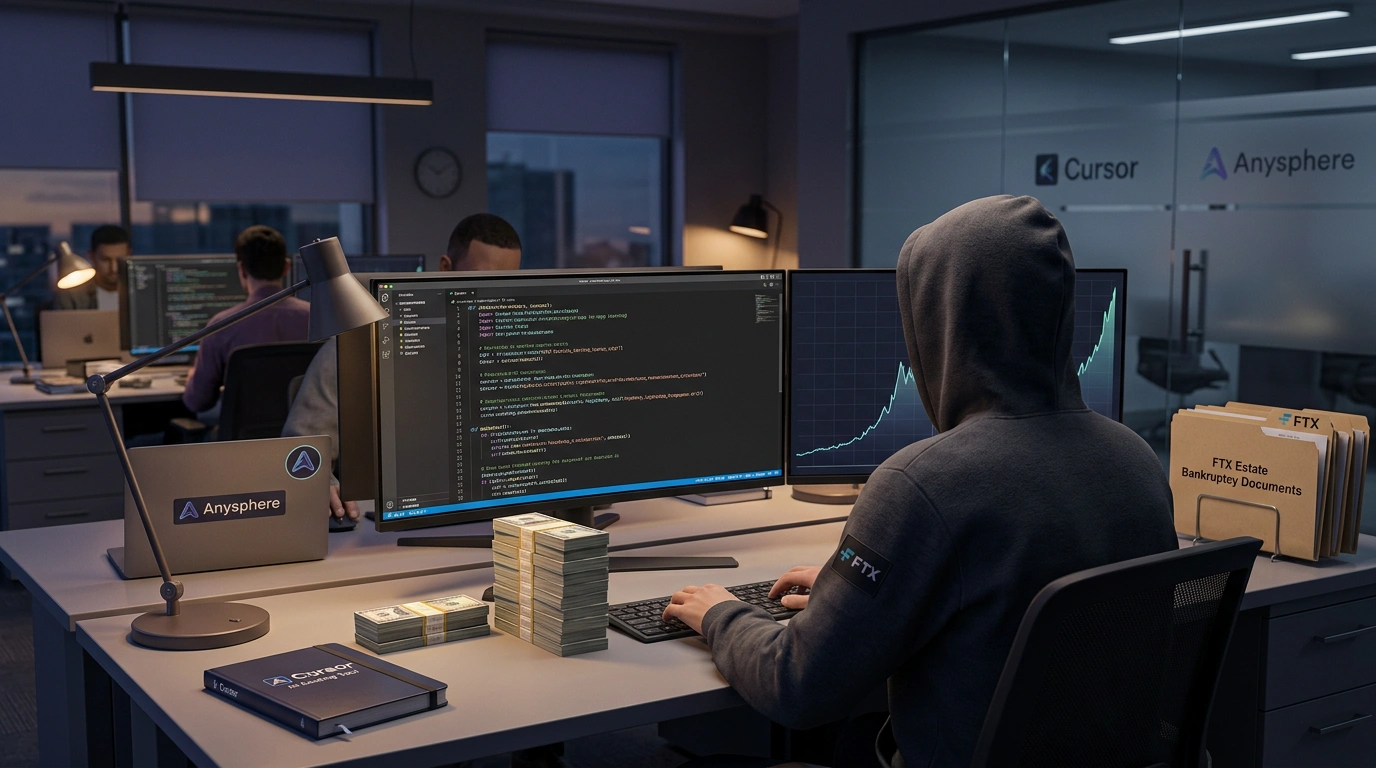
The FTX bankruptcy estate sold its stake in Anysphere, the company behind AI code editor Cursor, for $200,000 in 2023. That same stake is now valued at around $3 billion after a series of funding rounds involving SpaceX-linked investors. The gap between the sale price and today's valuation is approximately 15,000x, making this one of the most documented cases of asset underpricing in a major crypto bankruptcy proceeding.
How FTX Ventures Got Into Anysphere
In 2021-2022, FTX Ventures built an aggressive portfolio across crypto projects, AI startups, gaming, and fintech. The unit deployed capital at the early stage, often without pro-rata rights in future rounds or standard protective provisions. Anysphere at that point was a small developer team building an AI-assisted code editor for technical users. No meaningful revenue, no public profile. A standard early-stage bet with an uncertain exit timeline.
On November 11, 2022, FTX filed for Chapter 11 bankruptcy. The entire FTX Ventures portfolio, including the Anysphere stake, passed to a bankruptcy estate managed by John Ray. The portfolio contained more than 400 startup positions. The estate's job was to turn those assets into cash for creditors on a court-mandated schedule.
$200,000 for an Asset Now Worth $3 Billion
In 2023, the estate put the Anysphere stake on the block alongside dozens of other startup positions. Cursor had a modest developer following at the time: the AI coding tool boom had not yet materialized, and GitHub Copilot had just opened mass access. Anysphere was outside most investor radars.
The stake sold for $200,000. Buyers at distressed-asset auctions hold a structural advantage: they understand the sector better than the administrator, competition among bidders is thin, and the seller is under pressure to close. According to CoinTelegraph, the same stake now carries a valuation of around $3 billion. That is a 15,000x return in three years for whoever made the purchase.
How Anysphere Became a Multi-Billion Company
Cursor is built on a VS Code fork and integrates large language models directly into the editing workflow. Developers can describe a task in plain language, receive working code, refactor entire files on request, and debug without leaving the editor. As GPT and Claude model quality improved through 2023-2024, Cursor spread rapidly across engineering teams of all sizes.
Notable funding rounds came in 2024-2025. Then investors linked to SpaceX participated, and according to CoinTelegraph, that involvement drove the valuation to the level where the old FTX stake is now worth around $3 billion. The company now competes directly with GitHub Copilot from Microsoft in one of the fastest-growing software categories.
Why Bankruptcy Estates Underprice Assets
Bankruptcy administrators have a fiduciary duty to creditors, but that duty centers on speed of recovery, not long-term value maximization. Holding an illiquid startup stake for three to four years while waiting for growth does not satisfy that duty, and can draw complaints from creditors who want cash now. The incentive structure is built for liquidation speed.
The auction market for these assets amplifies the problem. An early-stage stake in a private company has no market price. The pool of buyers is small: distressed-asset funds with sector knowledge and patience. Competition among them is limited, so price is set by negotiation with one or two parties rather than by a real market.
- Time constraints: court timelines prevent administrators from waiting for stronger buyer competition.
- No price reference: private stakes have no public quotation, leaving valuation to the buyer.
- Scale: 400+ assets in one portfolio make deep analysis of each position impractical.
- Thin competition: bankruptcy auctions for venture stakes rarely attract more than two or three bidders.
What FTX Creditors Got and What the Numbers Leave Out
FTX creditors officially received payouts exceeding 100% of their original dollar-denominated claims. The estate called this a successful outcome. But that figure is calculated against claim values from the 2022 filing date, not against what the portfolio could be worth today. The total value lost to below-market early sales, including Anysphere, does not appear in any official recovery report.
The case has drawn attention from attorneys who work in crypto insolvency. Discussions are now focused on mechanisms that would let creditors vote to retain high-potential assets instead of forcing immediate sales at any price. No jurisdiction has put this into practice yet, but the next major crypto bankruptcy may face different expectations from creditors who watched this case closely.
For liquid assets like Bitcoin, the FTX estate process worked reasonably: sales happened near market prices. The structural failure concentrates in private venture stakes, where no pricing market exists and the buyer always enters the transaction with more information than the seller.

Comments
Your email address will not be published. Required fields are marked *