


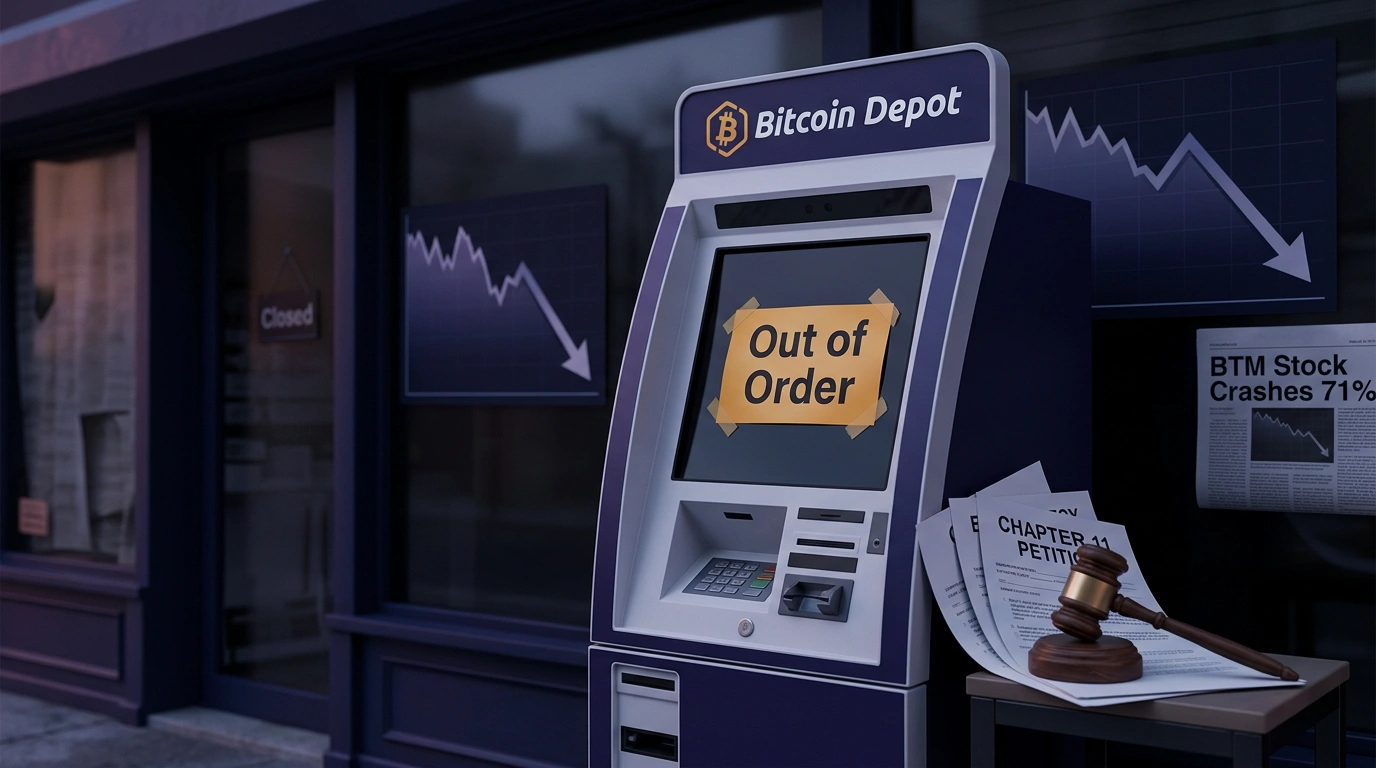
Bitcoin Depot, one of the largest Bitcoin ATM operators in the United States, filed for Chapter 11 bankruptcy protection in federal court in Texas on May 18, 2026. A network of more than 9,000 kiosks has already been taken offline. Shares of BTM fell 71% in premarket trading. The Atlanta-based company attributed the filing to mounting regulatory pressure and financial strain that made its business model unsustainable.
The Filing: Proceedings, Structure, and Timeline
The case is being handled by the US Bankruptcy Court for the Southern District of Texas. According to the company, the goal of the process is an orderly wind-down alongside a sale of its assets. The first court hearing is scheduled for Tuesday, May 19, at 7:00 pm UTC.
Vinson & Elkins is serving as legal adviser, and Portage Point Partners is overseeing restructuring efforts. Canadian subsidiaries are included in the proceedings through a parallel process. Remaining international entities are expected to wind down under local laws.
As of August 2025, Bitcoin Depot's network spanned more than 9,000 locations across North America, giving it one of the largest market shares in the sector. All kiosks were taken offline ahead of the first court hearing.
BTM Down 71% and Management's Position
CEO Alex Holmes stated that in recent years the company tightened anti-fraud protections, including stricter identity checks and lower transaction limits. Even so, growing compliance demands and enforcement actions made the business model, in his words, "unsustainable."
The market reacted sharply. BTM shares on Nasdaq lost 71% in premarket trading, reflecting near-total destruction of the company's public equity value. Investors holding the stock face difficult recovery conditions in a Chapter 11 proceeding.
The Regulatory Pressure That Broke the Business Model
The traditional model for Bitcoin ATM operators rested on two pillars: a relatively permissive regulatory environment and transaction fees in the 10-20% range. That margin covered machine maintenance, cash handling, retail location agreements, and basic compliance costs.
US states began compressing both pillars at once. New consumer protection standards are limiting fees and expanding operator liability for fraud losses incurred by customers. Tennessee became the second US state to introduce criminal liability for operators in April 2026. Canada is considering an outright ban on crypto ATMs over fraud complaints.
For Bitcoin Depot, this was not a hypothetical scenario. The company spent years upgrading its compliance standards, but the pace of regulatory change outran its ability to adapt.
Sector Risks: Bitcoin Depot Is Not the Last
- Roshan Dharia, CEO of restructuring firm Echo Base, does not soften his forecast: Bitcoin Depot's bankruptcy is "likely a preview of what the broader crypto ATM industry will face in the US over the next several years."
- Smaller operators with less capital are even more exposed. They cannot absorb the legal and technical costs of new compliance requirements without cutting their networks.
- Larger surviving operators will gain market share, but the regulatory risk does not go away. The next round of state legislation could hit them just as hard.
- Coin Cloud filed for bankruptcy in 2023. Bitcoin Depot is the largest operator to collapse so far. The direction of the sector is clear.
What Changes for Users Who Relied on Bitcoin ATMs
Cash-to-crypto via a physical kiosk remains attractive for those without a bank account or who want to avoid exposing banking details. After Bitcoin Depot's exit, that option becomes less available in smaller US cities where the company ran the densest coverage.
Other operators continue to function, but redistributing Bitcoin Depot's customers will take time. P2P markets and online exchanges are the main alternatives, though they require identity verification and a bank account or card, something ATMs did not.
The bankruptcy will accelerate consolidation in the sector. Surviving operators will likely operate under tighter oversight and offer less anonymity to customers. The market will take on a more formal shape, but some of the accessibility that originally made Bitcoin ATMs popular will be lost.



Comments
Your email address will not be published. Required fields are marked *