


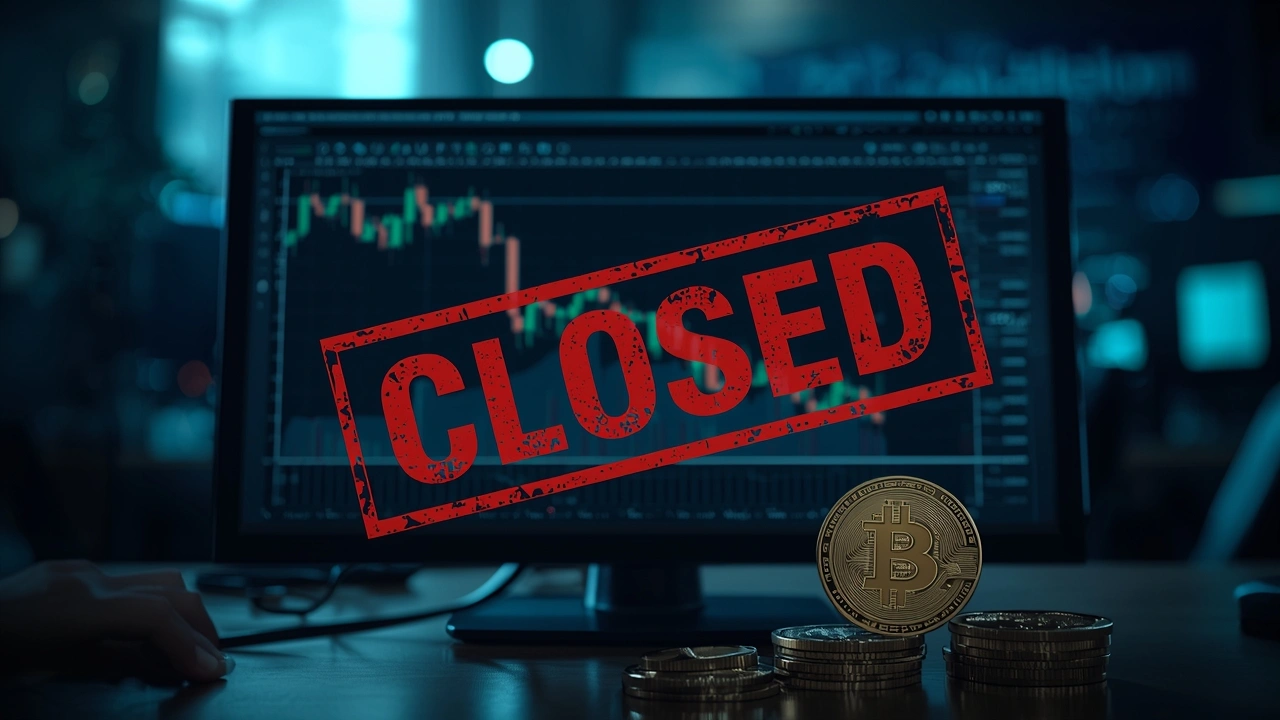
Bitwise is liquidating its Dogecoin ETF (BWOW) on October 14, 2026, less than a year after launch. The move directly affects the fund's shareholders and doubles as a test for dozens of similar niche crypto ETFs that various issuers brought to US exchanges over the past year on the wave of simplified commodity fund listings.
What Bitwise decided
The Bitwise Dogecoin ETF started trading on NYSE Arca under the ticker BWOW on November 25, 2025. On Thursday, September 11, 2026, the company announced the fund's closure and laid out an exact liquidation timeline. The last trading day for BWOW shares falls on October 14. Through the end of that session, holders can still sell their shares on the open market at the prevailing price.
After the exchange closes, Bitwise will convert the fund's Dogecoin position into cash and stop creating new shares starting October 15. Net asset value per share will be locked in on October 21, and payouts to holders who did not sell earlier are expected around October 22 through their brokers or other financial intermediaries. This process is standard for US ETF liquidations and requires no extra action from investors.
The company clarified that redemption happens automatically through investors' brokerage accounts and does not require separate claims. Funds will land in the same account that held the BWOW shares. For holders of large positions, that removes any non-payment risk, though the payout amount is tied to Dogecoin's price on the record date, not on the day the closure was announced.
Why the fund never gathered capital
According to Bitwise itself, BWOW held about $688,000 in net assets as of September 9. For a listed exchange-traded fund, that is a critically thin base. Market makers and brokers typically set internal liquidity thresholds below which quoting an instrument stops making economic sense, and the issuer itself loses more on fees than it earns managing such a tiny portfolio.
Running a standalone ETF costs an issuer at least several hundred thousand dollars a year just in audit fees, custody, and exchange charges. With $688,000 in assets, even a token management fee cannot cover a tenth of those costs, turning the fund's continued operation into a straightforward loss for Bitwise.
The problem is compounded by the fact that large index providers rarely add such niche instruments to their model portfolios, so the main source of fresh capital for such funds was retail interest in the meme coin itself. Once social media attention to Dogecoin cooled, new money flowing into BWOW nearly stopped.
In its closure notice, Bitwise said it was adjusting its product lineup to match real investor demand. A similar signal came from much larger funds: three days earlier, spot Bitcoin ETFs recorded $449 million in outflows, showing that capital is turning cautious even in the most liquid crypto instruments on the US market. Given that backdrop, a microscopic DOGE fund had little chance of drawing fresh money.
What it says about demand for meme coin ETFs
The faster listing path became possible after US exchanges updated rules for commodity trusts in late 2025, letting issuers bring new crypto ETFs to market without a lengthy individual approval for each asset. That opened the door not just for Dogecoin but for dozens of lesser-known tokens, though the rule only addressed launch speed, not guaranteed demand.
Dozens of issuers rushed to fill the gap after the success of spot funds tracking Bitcoin and Ethereum. Dogecoin, despite its multi-million social media following and status as the best-known meme coin, ended up among the assets where that bet did not pay off.
The gap with flagship products is telling. Spot Bitcoin ETFs keep pulling in hundreds of millions of dollars in single weeks even during pullbacks, while BWOW never crossed even $1 million in assets during its ten months of trading. Other issuers of niche altcoin products have faced the same struggle, including major names such as Grayscale or 21Shares. They also run lineups of dozens of small funds, some of which trade with minimal volume.
In the end, the 2025 launch wave gave the market more than a dozen narrowly focused ETFs on individual altcoins, and only a small fraction of them gathered assets comparable to classic equity or bond exchange-traded funds. The rest sit at the edge of profitability and risk repeating BWOW's fate in coming quarters.
"We are optimizing our product lineup to meet evolving investor needs."
- Bitwise, BWOW fund closure notice, September 11, 2026
Risks for other niche funds
BWOW's fate raises questions about the future of other products launched by smaller issuers during 2025's listing wave. Most of them share a similar set of vulnerabilities.
- Assets under management below a few million dollars make maintaining a listing uneconomical for market makers.
- Management fees on such a small asset base fail to cover an issuer's operating costs.
- Demand for meme coin products tracks social media hype cycles rather than steady institutional interest.
- Thin secondary markets make it harder for large holders to exit without a significant spread cost.
Issuers that launched such funds on the 2025 hype wave now face a choice. Either ramp up marketing budgets to attract new investors, or admit the losses and wind the product down, following Bitwise's example.
What comes next
Bitwise is not the only issuer that tested the limits of demand for altcoin products beyond Bitcoin and Ethereum, and it is unlikely to be the last to admit a failed bet. The coming months will show whether the company stops at its Dogecoin fund or reviews the rest of its niche lineup as well.
For the market, BWOW's closure has already become a reference point. If other small crypto ETFs' assets also stay stuck in the low hundreds of thousands, a wave of quiet liquidations that draw little attention from large investors could continue through the end of 2026. If that scenario plays out, the next round of closures could hit funds tracking lesser-known altcoins that launched purely to round out an issuer's catalog rather than to meet real investor demand. For DOGE holders outside exchange-traded funds, nothing changes: the cryptocurrency keeps trading on its usual venues regardless of the fate of one paper instrument on NYSE Arca.


Comments
Your email address will not be published. Required fields are marked *