


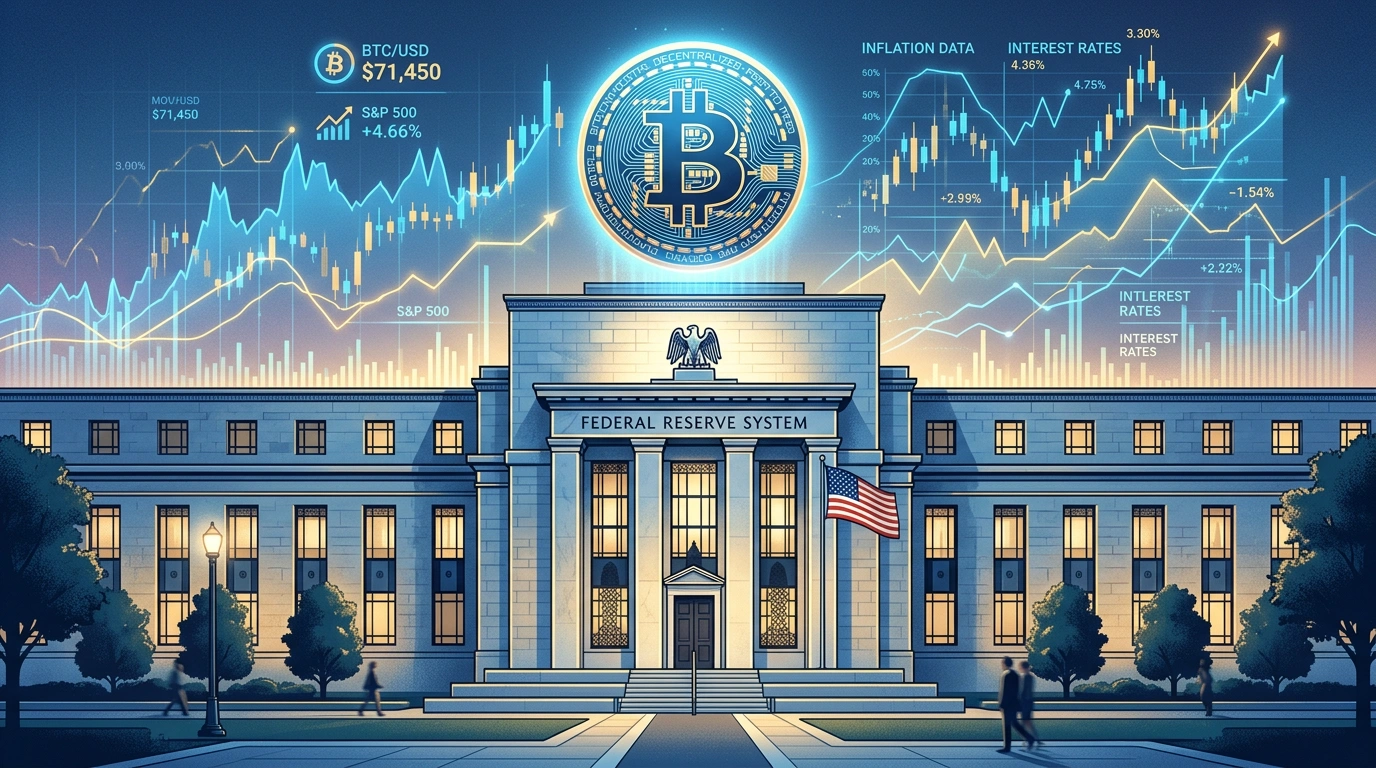
Bitcoin holds near $71,000 as global markets turn their attention to the Federal Reserve meeting on March 17-18, 2026. This is the first FOMC meeting where the regulator must factor in the consequences of the military conflict with Iran, oil prices surging above $100 per barrel, and the Trump administration's 15% global tariffs. The decision will be announced on March 18 at 2:00 PM ET, followed by Jerome Powell's press conference at 2:30 PM.
What markets expect from the Fed
The CME FedWatch tool shows over 92% probability that the Federal Open Market Committee will leave rates unchanged. Core PCE inflation remains at 2.8%, well above the Fed's 2% target, leaving little justification for a cut. At the same time, January's Consumer Price Index fell to 2.4% year-over-year, its lowest level in more than four years, creating a mixed picture.
Analysts highlight three components of the meeting that will have the greatest market impact. First, the updated dot plot with each FOMC member's projection for the future rate path. Second, the Summary of Economic Projections with revised GDP, unemployment, and inflation estimates reflecting new geopolitical realities. Third, Powell's press conference, which traders traditionally consider more market-moving than the statement itself.
Three scenarios for Bitcoin
The current median dot plot projects just one 25-basis-point rate cut by the end of 2026. If tariff-driven inflation and rising oil prices push the regulator to remove this cut from its projection, Bitcoin could lose 8 to 12% over the following week, potentially retesting the $65,000 support level.
The base case scenario with one cut maintained would trigger a typical 3-5% market correction, with the price likely settling in the $70,000-$72,000 range after a brief dip. The most optimistic outcome - the addition of a second cut to projections - could push Bitcoin above $75,000 with a potential test of the $80,000 mark.
The "sell the news" pattern
Historical data works against short-term buyers. Bitcoin declined after seven out of eight FOMC meetings throughout 2025. The only exception was the May meeting, when the price rose by 15%. The most recent meeting in January 2026, where rates were also held steady, triggered a 7.3% drop, from $90,400 to $83,383 within 48 hours of the announcement.
This pattern forms regardless of the decision's nature. Traders holding leveraged positions tend to take profits or reduce risk immediately after the announcement. The bottom typically forms approximately two days after the decision is published, creating a potential window for strategic entries.
Geopolitical backdrop: Iran, oil, and tariffs
The meeting takes place against an unprecedented confluence of macroeconomic factors. The US-Israeli conflict with Iran, which began on February 28, has pushed oil above $100 per barrel. The Strait of Hormuz, which handles approximately 20% of global oil supply, is effectively blocked - as of March 10, no tanker ships had passed through it. This brings the world closer to a major energy crisis that will inevitably affect the Fed's monetary policy decisions.
Trump's 15% global tariffs add further inflationary pressure. These factors put the Fed in a difficult position: cutting rates would stimulate the economy but would also fuel inflation that is already above target. Ethereum trades near $2,091 as a result of this backdrop, while total crypto market capitalization stands at approximately $2.39 trillion.
Fed leadership change and long-term implications
Investors are also watching the upcoming change at the helm of the Fed. Jerome Powell's term expires on May 23, 2026. Among potential candidates to replace him is Kevin Warsh, a former Fed Board of Governors member who is perceived as more hawkish on monetary policy but supportive of financial breakthrough and digital assets.
Those planning to exchange Bitcoin for dollars should consider not only the short-term reaction to the meeting but also the prospect of a policy shift under new leadership. Cumulative inflows into spot Bitcoin ETFs have exceeded $55 billion since their launch in January 2024, reflecting sustained institutional interest despite short-term fluctuations. The Fear and Greed Index has been in the Extreme Fear zone for three consecutive weeks - the March 17-18 meeting will determine whether the market gets grounds for recovery.


Comments
Your email address will not be published. Required fields are marked *