


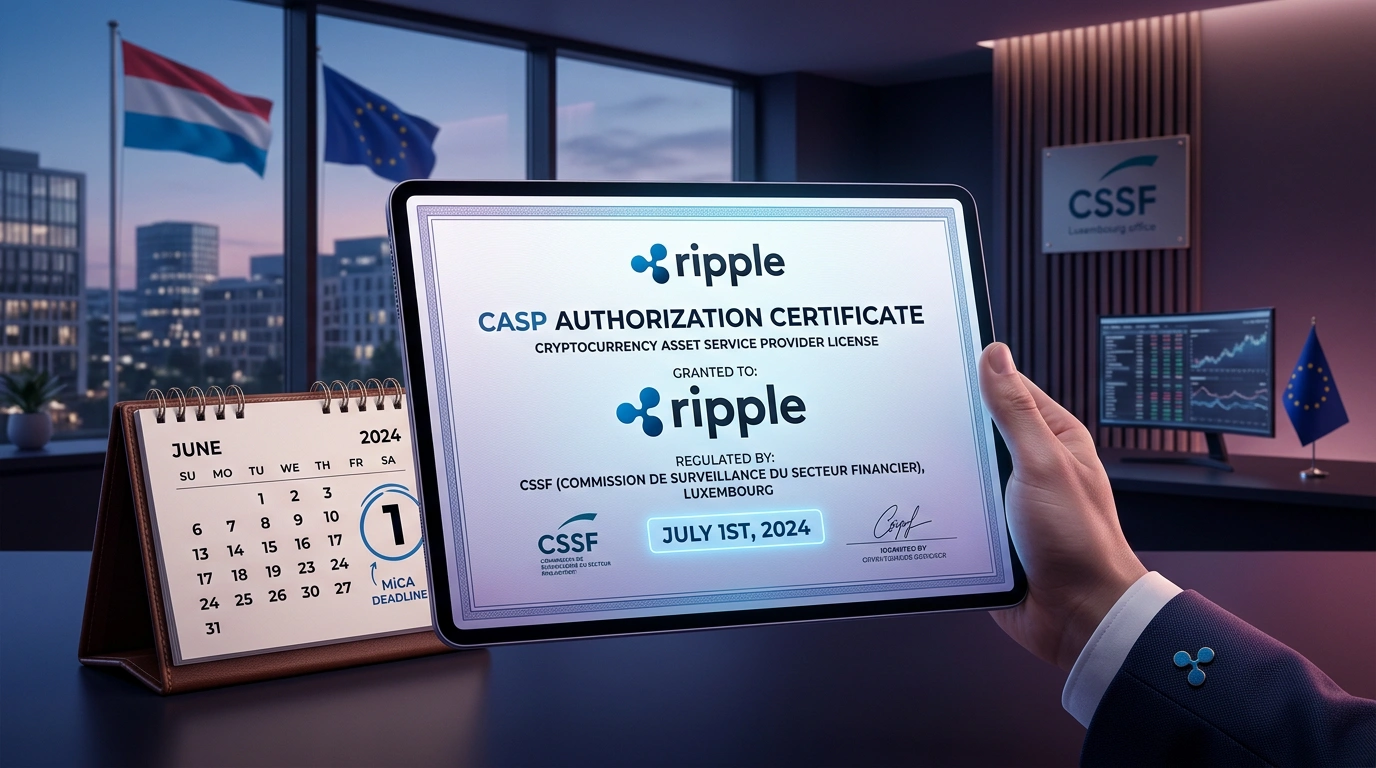
Luxembourg's financial regulator CSSF granted Ripple preliminary approval for a CASP license under MiCA on June 23, eight days before the July 1 deadline when the EU begins fully enforcing new rules for crypto service providers. Ripple is among the companies that got there first.
What Is CASP and Why Does It Matter After July 1?
CASP stands for Crypto Asset Service Provider. It is the official license category under MiCA that allows companies to offer crypto services across the EU. Without it, a company cannot legally serve EU clients after July 1, 2026, unless it holds a transitional authorization in a specific member state.
The stakes are practical. A company without CASP or a valid transitional permit cannot onboard new EU clients, faces potential fines, and may need to halt operations. The window is closing, and firms that skipped the paperwork are running out of room to maneuver.
Ripple already holds an EMI (Electronic Money Institution) license in Luxembourg, issued in February 2026. That license covers cross-border payments and electronic money services across the European Economic Area. But EMI does not cover crypto trading or custody. Those fall under the CASP mandate.
CASP closes that gap. Once finalized, Ripple can provide the full range of crypto asset services across the EU without separate registration in each of the 27 member states. One audit at a home regulator replaces dozens. For a business serving clients in Poland, the Netherlands, France, and Spain at the same time, the difference in cost and speed is real.
How Does MiCA's Single Passport System Work?
The single passport is MiCA's core benefit for cross-border business. Here is how it works:
- One regulator, thirty markets. A company picks its home regulator in one EU member state, gets licensed there, and can then operate legally across the entire EEA.
- Luxembourg and Ireland have become the most popular registration hubs. The CSSF is known for clear procedures and a predictable review timeline.
- The review covers financial stability, client asset protection, governance structures, and cybersecurity.
- Licensing runs in two stages. First comes preliminary approval, then final authorization. Most companies that clear the first stage receive the second as well.
Ripple cleared the first stage. CSSF reviewed the application and confirmed the company meets core requirements. The final decision is still ahead, but regulators rarely reverse course after preliminary approval when the applicant stays in compliance. For the market, CSSF's sign-off is already a clear signal.
What Does the EMI Plus CASP Combination Give Ripple?
EMI covers the payment side. CASP adds the crypto asset side. Together, Ripple said in its June 23 press release, they will let clients connect a "full crypto asset and stablecoins payments infrastructure through a single integration" without building separate solutions for each product category.
"MiCA has helped to unlock a new wave of institutional digital assets adoption, and we are seeing that demand accelerate across the region."
- Cassie Craddock, Managing Director UK and Europe, from Ripple's press release, June 23, 2026
Ripple targets banks, fintechs, and large payment platforms, not retail traders. For those clients, the absence of a single EU-licensed provider covering both payments and crypto assets had been a genuine barrier to adoption. Some banks in the EU are required by internal policy to work only with licensed partners in their own jurisdiction. Before MiCA, that meant either skipping crypto services altogether or hunting for separate providers in each country.
Globally, Ripple already holds more than 75 regulatory licenses across different jurisdictions, including a UK FCA license obtained in January 2026. The Luxembourg CASP will add full access to the world's largest regulated market to that list.
Why Not Everyone Will Make the July 1 Cut
The deadline pushed dozens of companies toward faster licensing. Not all are on track. Binance, the world's largest exchange by trading volume, is still awaiting MiCA approval according to media reports, and Greek regulators may be preparing to reject its application. That would mean restricted operations in Greece after July 1.
For users of a platform that loses its application, the fallout could include limited access to new features and potential requirements to move accounts or assets to alternative platforms. No final decision from Greek authorities has been confirmed, but the risk alone shapes how big players plan their next moves.
MiCA is not a rubber stamp. Regulators are checking companies in earnest. Ripple chose Luxembourg and started the process early, so CSSF confirmed compliance before the deadline arrived. That head start over competitors still waiting for decisions is not trivial.
XRP and EU Institutional Demand
For users buying and selling XRP through exchange offices, Ripple's corporate licensing does not directly move the price. But regulatory clarity reads as a positive signal to the market. Institutional clients are more willing to build products on XRP Ledger and Ripple's settlement protocol when the provider holds clear legal standing in key jurisdictions.
Ripple's long-term bet on the EU makes sense. The 27-nation bloc generates a large share of global fintech transaction volume. A MiCA passport shifts Ripple from a regional player to a participant in the single market.
If the final CASP authorization comes through in the next few weeks, Ripple can launch a full service package for banks and fintechs across thirty countries at once. That scale was simply not achievable before MiCA.



Comments
Your email address will not be published. Required fields are marked *