


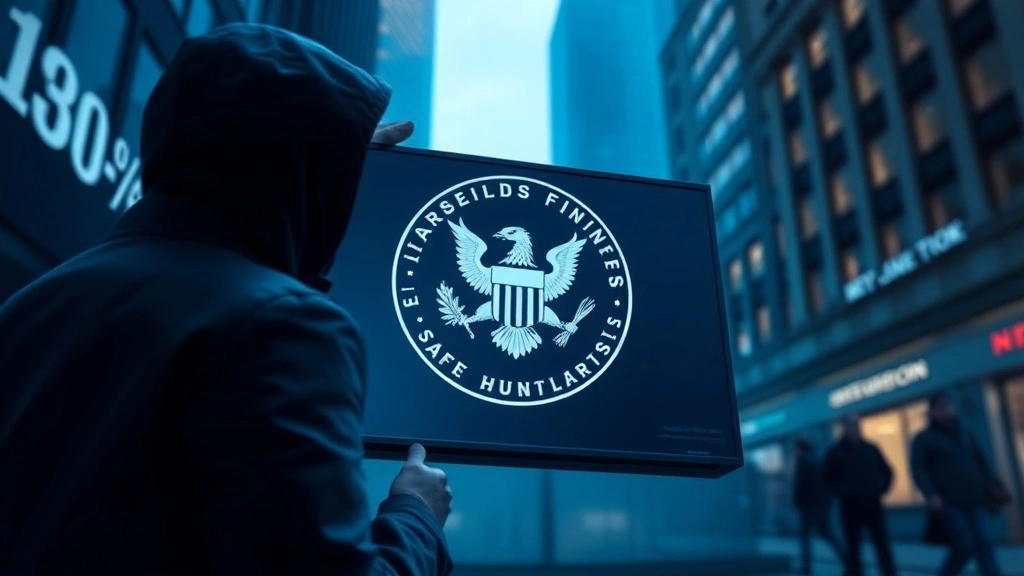
The U.S. Securities and Exchange Commission updated its regulatory agenda on July 7, penciling in the long-promised "Regulation Crypto" proposal for a potential release this month. The headline number: companies would be able to raise up to $75 million through crypto-asset investment contracts without registering as securities, with the shield covering several market categories at once.
SEC Chair Paul Atkins first promised the rule back in January and pushed the timeline in March, and now the proposal has finally landed on the agency's formal agenda. Congress's CLARITY Act, still stuck in the Senate, is the broader path that pushed the SEC to move on its own. For U.S. crypto startups, this is the first major rulemaking effort of this scale under Atkins' entire tenure.
Three scenarios at the core of the proposal
Regulation Crypto builds protection around three situations. In the first, young companies worth up to $5 million would get four years to experiment with crypto assets without registration requirements. In the second, entrepreneurs could raise up to $75 million through investment contracts tied to certain crypto assets. The third covers tokens whose creators have stopped "essential managerial efforts" on a project and effectively handed control to the community. Legally, this scenario rests on the Howey test, which courts have used for decades to decide whether an asset counts as a security. If a network is genuinely decentralized, the asset falls outside that definition and the token no longer needs to be registered.
Atkins first laid out these numbers in March, and they have barely changed since. The SEC frames them as an attempt to give startups clear rules for raising capital in crypto assets while keeping oversight of the market. The $75 million figure did not come out of nowhere. The SEC already lets ordinary, non-crypto companies raise a similar amount under the simplified Regulation A+ process, so the agency is effectively extending a proven mechanism to a new industry.
Four months from promise to agenda
The document's path shows typical SEC caution. In January, Atkins spoke of "coming weeks." In March, concrete limits appeared. In July, the proposal finally landed a spot on the formal agenda, though it is still under review at the White House Office of Information and Regulatory Affairs. That is the last formal stage before the proposal goes out for public comment. That economic-impact review alone typically takes anywhere from a few weeks to several months, depending on how complex the document is.
"To deliver on President Trump's goal to ensure that the United States is the crypto capital of the world, we are embracing innovation to bring more products onshore, creating clear rules of the road for capital raising with crypto assets, and providing clarity as to how market participants can custody and facilitate trading of tokenized securities onchain."
- Paul Atkins, SEC Chair, from the agency's official statement, July 7, 2026
The document's formal status matters here. The SEC has issued years of guidance and staff statements on crypto assets, but those carry no force of law and can shift easily once new leadership arrives. A full rule, by contrast, requires a much more involved process to undo, giving businesses a longer planning horizon.
SEC versus Congress: who moves first
Regulation Crypto is not the only path to reform. The broader CLARITY Act could legalize most crypto activity in one stroke, but it has been stuck in the Senate for over a year. Market participants broadly agree that if the bill does not pass by August, its chances of becoming law this year will effectively disappear once the November midterms take over the calendar. The CLARITY Act covers not just securities but also commodity-like crypto markets under the CFTC's watch, so its passage would deliver a far broader legal foundation than Regulation Crypto's narrower shield.
The SEC decided not to wait on Congress. The agency already published its own digital-asset "taxonomy" earlier this year and is working in parallel on separate rules for custody and market structure. The industry has spent years asking for exactly this kind of split between the SEC and the CFTC, so market participants are treating any movement here as a signal rather than a done deal.
Risks that could push the timeline back
A July release does not mean a finished rule this summer. Several factors could stretch the process out by months, and this proposal's own history already shows how far the SEC's optimistic timelines can drift from reality.
- The proposal is still under White House review, and any delay there automatically shifts the schedule.
- Atkins has already pushed the timeline twice, from January's "coming weeks" to what is effectively summer now, so another slip would not be unusual.
- Once published, the proposal enters a public comment period. It is not yet a binding rule.
- If the CLARITY Act fails in the Senate, Regulation Crypto becomes the SEC's only dedicated crypto document, raising the stakes on every detail.
- Even an adopted rule stays exposed to lawsuits from market participants unhappy with where the exemption lines are drawn.
No single factor here is decisive on its own, but together they explain why the path from promise to an actual rule at the SEC tends to run longer than the market expects.
Who benefits from the reform already
Formally, Regulation Crypto is about U.S. securities law, not exchange rates. But lower legal risk for startups affects the infrastructure they build too. That applies above all to projects built on Ethereum, where tokenized securities are already being tested by large issuers, and to the underlying liquidity of Bitcoin, which remains the main benchmark institutional investors use to price industry risk. Legal certainty lowers the cost of launching new products for exchanges and wallet developers alike, since both handle these assets directly.
The SEC already released its digital-asset taxonomy earlier in 2026 and is working in parallel on custody rules for tokenized securities. Regulation Crypto would become the third piece of that package and, by the agency's own design, should remove some of the uncertainty that has kept companies away from the U.S. market over litigation risk. By comparison, the current cap under Regulation Crowdfunding, the most common tool for startups without a crypto angle, sits at just $5 million a year, ten times lower than the new crypto threshold.
What comes next
Even in an optimistic scenario, the proposal needs several more months to move from publication to a final rule, since SEC comment periods typically run 60 to 90 days. For the market, that means no instant effect, just a gradual decline in the regulatory risk premium tied to working with crypto startups in the United States. The SEC is working on a separate market-structure proposal at the same time, so the industry will only see the full regulatory picture once both documents are out.
If the CLARITY Act fails in the Senate before August, Regulation Crypto will remain the main practical tool for legalizing crypto fundraising in the country, at least until the next legislative cycle after the November elections. For projects already preparing to show the SEC they have dropped essential managerial efforts over their own token, the July text becomes the first official benchmark for checking their own decentralization strategy against.



Comments
Your email address will not be published. Required fields are marked *