


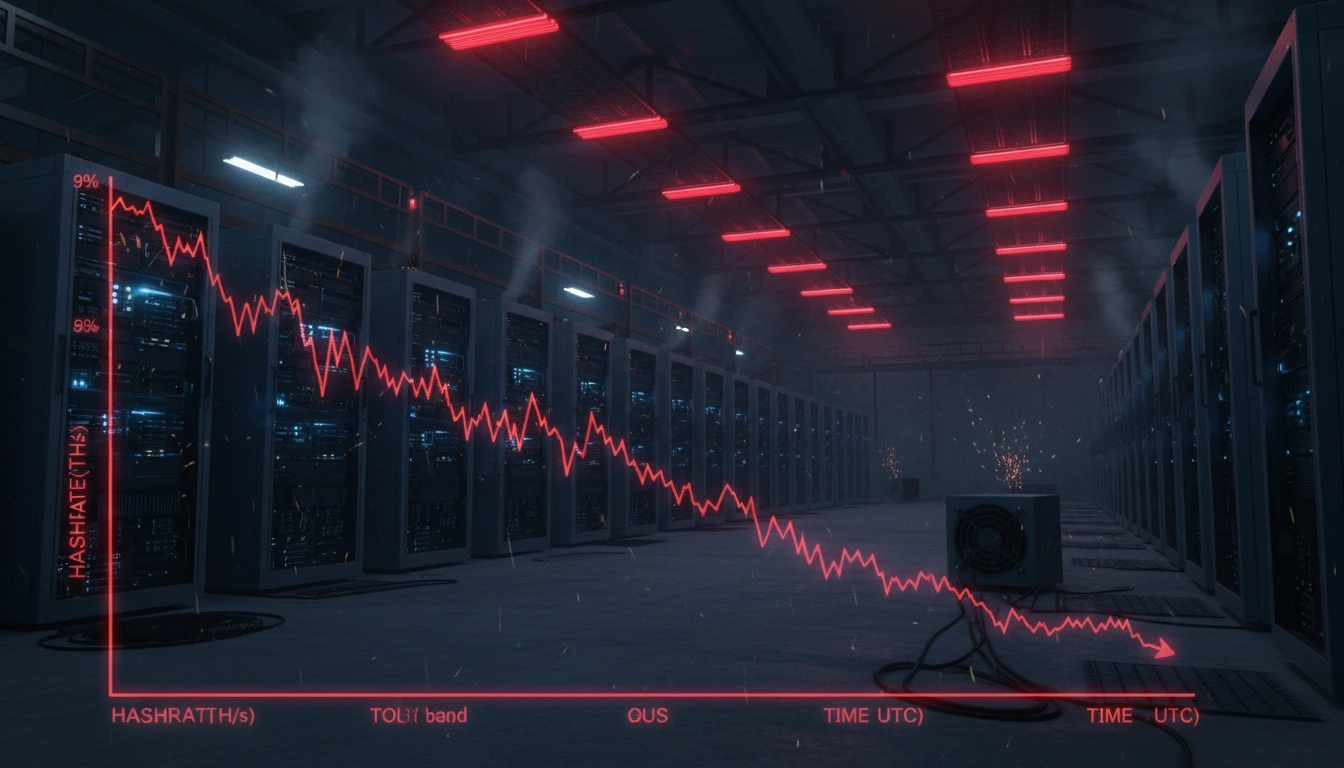
The cost of producing a single Bitcoin has reached $88,000, while the market price hovers around $69,200. This means miners are losing approximately $19,000 on every coin they produce. On Saturday, March 22, network difficulty dropped by 7.76% - the second-largest decline of 2026, signaling a massive exodus of miners from the network.
Production costs far exceed revenue
According to Checkonchain's difficulty regression model, the average cost of producing one bitcoin in March 2026 is approximately $88,000. At the current market price of around $69,200, miners are recording a loss of $19,000 for every BTC mined - a gap of more than 27% between expenses and revenue.
The hashprice metric - a key indicator of mining profitability, has fallen to $33.30 per petahash per second per day. This is only a few dollars above the all-time low of $28, recorded on February 23 during Winter Storm Fern. For most mining equipment, the current hashprice level means operating at or below the breakeven point.
Network difficulty sees sharp decline
Bitcoin mining difficulty dropped 7.76% to 133.79 trillion. This marks the second-largest negative adjustment of 2026, following February's 11.16% plunge caused by Winter Storm Fern in North America. The metric is now roughly 10% below where it started the year and well below the all-time high of 155 trillion reached in November 2025.
The network's hashrate has retreated to approximately 903-948 EH/s depending on the data source. For comparison, in late 2025 the network reached the historic milestone of 1 zetahash per second for the first time. Since then, computing power has declined by nearly 10%, reflecting the scale of the crisis among miners.
Geopolitics hit energy costs hard
The primary driver behind rising production costs is a sharp increase in electricity prices. Geopolitical tensions in the Middle East, oil prices above $100 per barrel, and the effective closure of the Strait of Hormuz have significantly raised energy costs worldwide. For mining farms, where electricity accounts for 60-80% of operational expenses, this has become a critical factor.
Facilities in regions with unstable energy supplies and those without long-term fixed-rate electricity contracts have been particularly affected. Many were already operating at the edge of profitability since February, and March's tariff increases have definitively pushed their operations into the red.
Miners pivot to AI and HPC
Unprofitable economics are forcing miners to seek alternative revenue sources. An increasing number of companies are repurposing their data centers for artificial intelligence and high-performance computing (HPC) needs, where margins are significantly higher and not dependent on cryptocurrency market volatility.
In parallel, miners who remain on the network are forced to sell Bitcoin for dollars even at a loss to cover operational expenses, rent, equipment maintenance, and salaries. This creates additional price pressure as the volume of coins flowing onto exchanges increases, as we previously analyzed in our review of Bitcoin's drop below $70,000.
Hash Ribbon signal and outlook
The Hash Ribbon indicator, which tracks miner capitulation through hashrate changes, is already flashing a capitulation signal. Historically, such moments have often coincided with the formation of price bottoms. After similar periods of miner stress, Bitcoin's price has typically shown significant growth over the following 6-12 months.
However, the current situation also has a positive side for those who remain in the game. Falling difficulty and hashrate mean less competition for block rewards. If the BTC price stabilizes or rises and energy costs decrease, the margins of surviving miners could recover fairly quickly. For now, the market is in a stress phase that requires either a price recovery or a normalization of energy costs.



Comments
Your email address will not be published. Required fields are marked *