


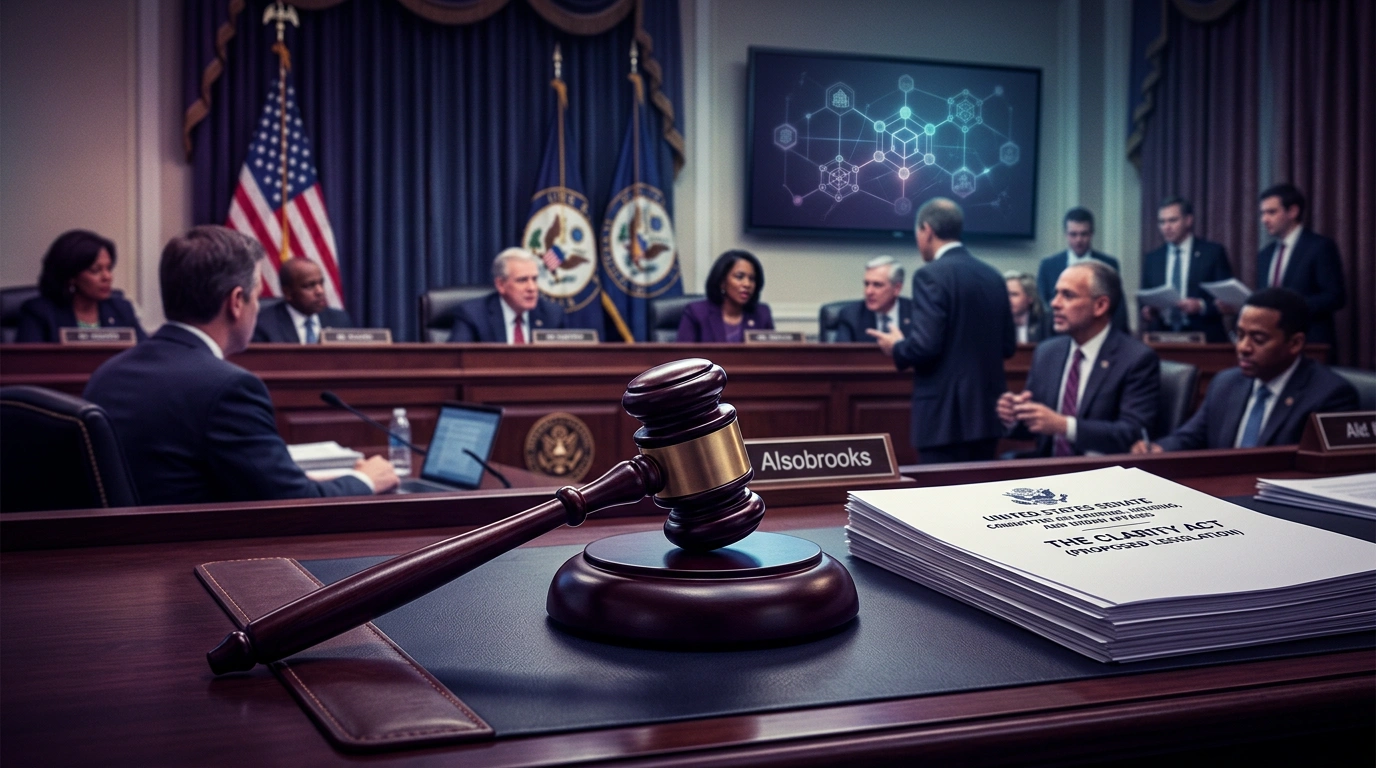
The US Senate Banking Committee voted on May 14 to advance the CLARITY Act to the full Senate floor. All Republican committee members voted yes, joined by two Democrats: Ruben Gallego of Arizona and Angela Alsobrooks of Maryland. Both had previously said they would only back the bill after an agreement limiting the Trump family's crypto business interests was reached. No such agreement came. They voted yes anyway. For crypto markets, this is the most significant regulatory development of 2026 so far.
Why Two Democrats Crossed the Aisle
Alsobrooks' office credited the vote to "good faith negotiations" that continued through the day of the hearing. Gallego was more direct: he backed the bill in committee but warned his floor vote could change if ethics guardrails covering elected officials with crypto interests aren't locked in before the Senate floor vote. The Trump family is tied to several crypto ventures. World Liberty Financial raised capital from foreign partners, and the meme coin launched two days before Trump's inauguration peaked at around $80 billion in market cap.
Stand With Crypto said it would score senators' committee votes in its lawmaker ratings. Coinbase backs Fairshake, a super PAC planning to spend over $100 million in the 2026 midterms. That financial pressure helps explain why both senators voted yes without a completed deal.
What US Crypto Legalization Means for Markets
If signed into law, the CLARITY Act would formally legalize most crypto activity in the United States. That removes the legal gray zone that kept large institutional funds from building open positions in Bitcoin and other assets. Exchanges and trading desks could expand product lines without facing SEC or CFTC action over unclear token classifications.
The effect for individual traders and crypto holders is less direct but still real. Greater legal certainty cuts systemic risk for exchanges, which indirectly improves platform stability and reduces the chance of sudden account closures driven by regulatory pressure.
Two Amendments That Never Got a Vote
Committee Chair Tim Scott (R-SC) declined to hold votes on two amendments. The first dealt with stablecoin yield: the banking lobby has long argued that holders of USDT and similar tokens should not earn interest paid directly by the issuer, since that competes with bank deposits. The second would have strengthened law enforcement tools for dealing with DeFi protocols. Scott blamed technical drafting errors in the amendment text, yet he allowed other votes at the same session with the same technical issues.
Sen. Elizabeth Warren (D-MA), the committee's top Democrat, called out the inconsistency directly. She said law enforcement officials and community banks were not given a fair hearing. Both questions will resurface when the bill reaches the Senate floor.
Seven Democrats Needed for the Floor Vote
Clearing a filibuster requires 60 votes. Republicans hold 53 seats, so at least seven Democrats must cross over on the floor. Gallego and Alsobrooks are conditionally on board, but the rest of the Democratic committee members voted against the bill. The ethics negotiations around elected officials who hold or promote crypto assets are the main sticking point.
Gallego set out his conditions clearly. If an agreement covering elected officials doesn't come together before the floor vote, he has said he will vote no. That puts the bill's fate in the hands of talks that haven't concluded yet.
Two Questions That Will Drive Markets
Markets responded with quiet optimism. Bitcoin is holding above $80,000, though drawing a direct line between the committee vote and the price move is difficult. Two outcomes will shape market direction in the weeks ahead.
The first is whether both sides agree on ethics restrictions for crypto-holding officials and when the floor vote gets scheduled. The second is how the stablecoin yield question gets resolved, since it directly affects how USDT and similar assets compete against traditional bank products. As long as both remain open, markets will react to every new detail out of the negotiations.

Comments
Your email address will not be published. Required fields are marked *