


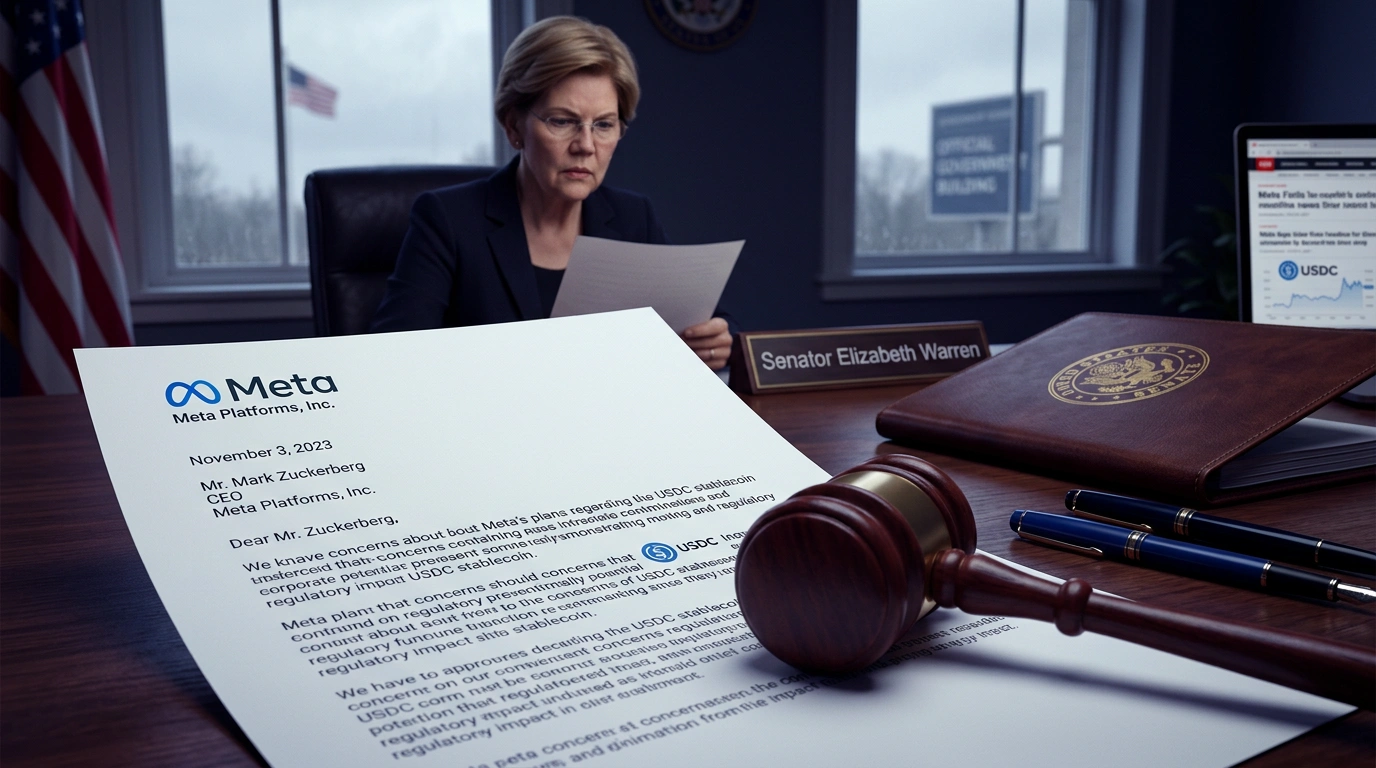
Massachusetts Senator Elizabeth Warren sent a letter to Meta CEO Mark Zuckerberg on May 7, demanding full transparency on the company's stablecoin integration plans. The request came one week after Meta quietly launched pilot payments for creators in the Philippines and Colombia.
Four Questions, One Deadline: May 20
Warren called Meta's lack of transparency "deeply troubling," pointing to the company's previous failed attempt with Libra in 2019. She set a deadline: respond by May 20.
The letter asks for specific details on four points. First: the planned launch date or expansion timeline for the stablecoin program. Second: which third-party stablecoins may be part of the program. Third: what privacy guardrails are in place. Fourth: whether Meta intends to become its own stablecoin issuer.
Warren serves as ranking member of the Senate Banking Committee, which oversees the SEC and the Federal Reserve. The same committee is currently working through the CLARITY Act - a bill that would establish a comprehensive framework for digital assets in the US, including stablecoin oversight.
The April USDC Pilot That Started It All
In April, Meta rolled out pilot payments in USDC - a dollar-pegged stablecoin - for a small group of creators in the Philippines and Colombia. The program let eligible creators receive part of their content monetization revenue in digital currency rather than via traditional banking channels.
Warren described this as a "small and focused trial" and argued that Congress must understand the scope of any potential expansion before passing related legislation. Meta has not publicly disclosed technical details of the pilot or confirmed any plans for a broader rollout.
Libra, Diem, and Why Congress Doesn't Trust Meta on Payments
In 2019, Facebook - now Meta - announced Libra, a proposed global stablecoin that would function as an alternative financial network. The regulatory response was swift and coordinated: the US Congress, the Bank for International Settlements, the EU, and the G7 all pushed back. The project was renamed Diem and scaled back significantly.
Diem did not survive either. In 2022, Meta sold the project's assets to Silvergate Bank and exited the stablecoin business entirely. Warren cites this history as evidence that Meta requires heightened scrutiny on any return to payment services: a company that could not safely launch Libra after years of preparation should not receive the benefit of the doubt on a new stablecoin initiative.
Warren has consistently opposed Big Tech expanding into banking. The USDC pilot gave her the first concrete trigger to raise the issue in formal correspondence with the company's CEO.
CLARITY Act: Committee Markup on May 14
The Senate Banking Committee has scheduled a markup session for the CLARITY Act on May 14. The bill, which would create a regulatory framework for digital assets in the US, had stalled in the chamber for months due to disagreements between the crypto industry and traditional banking groups.
Last week, both sides announced a deal on a key sticking point: how to handle stablecoin yield. That compromise cleared the way for the May 14 markup session. Some crypto advocates cautioned that other issues in the bill remain unresolved, including provisions on conflicts of interest and ethics requirements.
Warren's May 20 deadline for Meta falls six days after the May 14 committee session. If Zuckerberg responds within that window, the letter could feed directly into debates about how tech companies should be treated under any new stablecoin framework. If Meta does not respond, that silence becomes its own political story ahead of a potential Senate floor vote.



Comments
Your email address will not be published. Required fields are marked *