



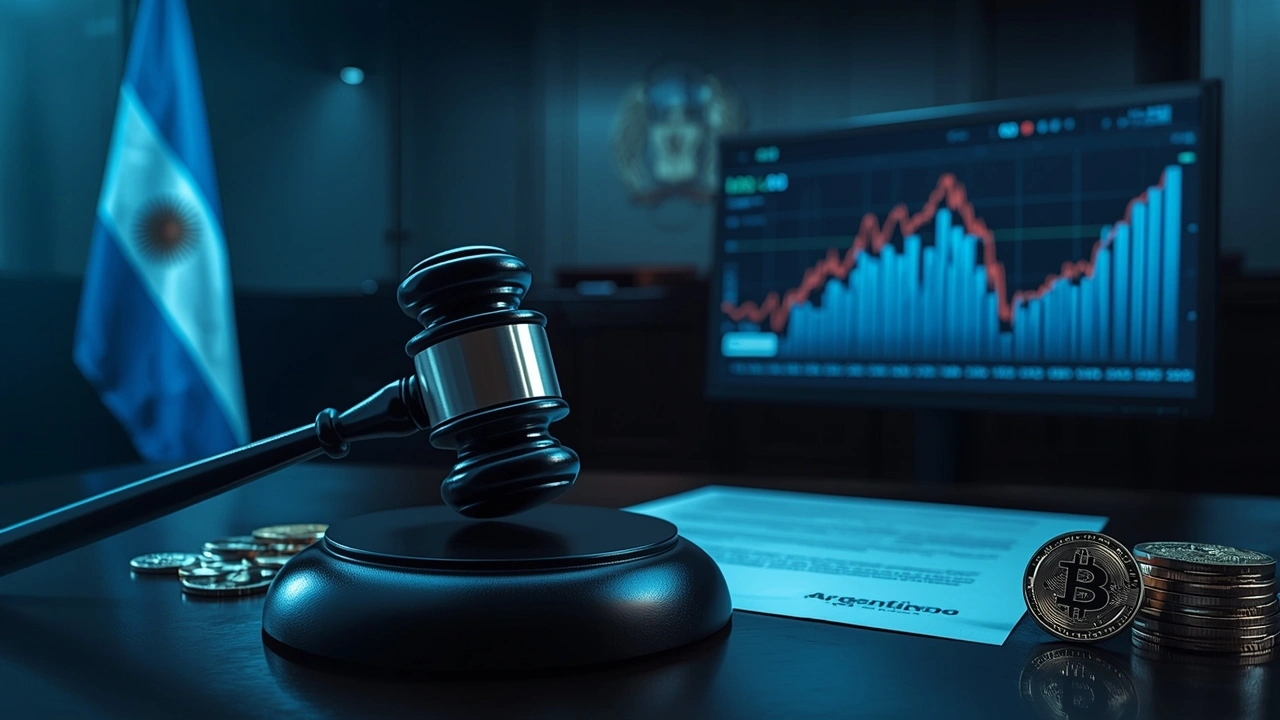
New York Attorney General Letitia James has asked a court to order the founders of NovaTech to pay $1.37 billion. The defendants, married couple Cynthia and Eddy Petion, left the United States, so the question is not only the amount but who will collect it.
The motion was filed in New York County Supreme Court on Thursday, October 23. It builds on an August 2025 default judgment: the Petions never answered the lawsuit, and the court found them liable without hearing the case on its merits.
What makes up the $1.37 billion
In numbers, the demand has two parts. About $1.13 billion is sought as the return of investor funds, and another $232.5 million is interest. Separately, the state asks for roughly $6.15 million over the earlier scheme run by the same promoters, AWS Mining.
The default judgment already bars the Petions from the securities, commodities and crypto industries. Now the court has to decide how much they owe.
By the attorney general's count, more than 11,000 New Yorkers lost tens of millions of dollars in NovaTech and AWS Mining. That is only a slice of the victims, since investors numbered in the hundreds of thousands worldwide.
Of $1.16 billion, 2% reached trading
According to payment processor CoinPayments, investors deposited about $1.16 billion in crypto into NovaTech's wallets between August 2019 and May 2023. Cynthia Petion was the only authorized user on the account.
The platform sent just under $26 million to its trading provider B2Broker, or 2.2% of deposits. It lost about $18.2 million of that. Even the small slice that actually went to work shrank by roughly 70%.
Weekly payouts and recruiting bonuses, the state says, were paid from newcomers' deposits. There was no profit to pay investors from.
Prayer groups and a promise of 140% a year
NovaTech presented itself as a registered hedge fund broker licensed to trade crypto in the US. According to the attorney general, that was false. The platform advertised returns of 2% to 4% a week, which is over 140% a year.
For comparison, JPMorgan analysts this month forecast just 10% a year for bitcoin over a decade for the first time. A gap of fourteen times should have raised flags, but the scheme did not run on numbers.
Recruitment went through prayer groups, social media and WhatsApp chats. Ads ran in Haitian Creole with religious messaging, aimed mainly at Haitian and other immigrant communities.
The earlier scheme followed the same pattern. AWS Mining promised 15-20% a month from crypto mining and collapsed in 2019. In a WhatsApp chat, Cynthia Petion admitted, according to the filing, that she made at least $3 million from it.
Promoters will return 0.4% of the sum
At the same time, the state settled with four of the scheme's top promoters: Martin Zizi, Frantz Ciceron, Ricardo Roy Sr. and James Corbett. Together they will pay nearly $6 million for the benefit of victims and are permanently barred from these industries.
Run the math and $6 million against $1.37 billion is about 0.4%. For people who handed over their savings, that is closer to a gesture than compensation.
"These scammers targeted immigrant and religious communities with the promise of a better life but instead robbed them of their life savings."
- Letitia James, New York Attorney General, from the attorney general's statement of October 23, 2026
Can the money be collected
This is where the main difficulty sits. The Petions are outside the US, so a New York court ruling will not bring money back by itself. Cointelegraph asked the attorney general's office how funds would be collected and distributed to victims, but had no reply by publication.
Three scenarios look possible.
- The court approves the full sum, but only the assets the state can actually reach are recovered.
- The court sets a lower figure than the attorney general requests, and the gap between the demand and real payouts widens.
- More settlements. The state keeps negotiating with promoters, as it already did with four.
There is also a parallel track. Two months after the state's lawsuit, in August 2024, the SEC charged the Petions and others over what it called a $650 million fraud. The figures in the two cases differ, and the courts still have to reconcile them.
For Ukrainian users this is a useful reference point. Promises of a few percent per week regularly appear on the P2P market too, where settlements run in USDT. The Bitcoin price or mining has nothing to do with it: if payouts come from new deposits, the scheme works only while people keep arriving.
What comes next in court
NovaTech collected money for four years, and returning it will take much longer. The next step belongs to the New York court, which has to set the final amount.
After that, the state needs to find the Petions' assets abroad. That will decide how much of the $1.37 billion reaches victims, and whether it ends up above the $6 million already secured through settlements.


Comments
Your email address will not be published. Required fields are marked *