


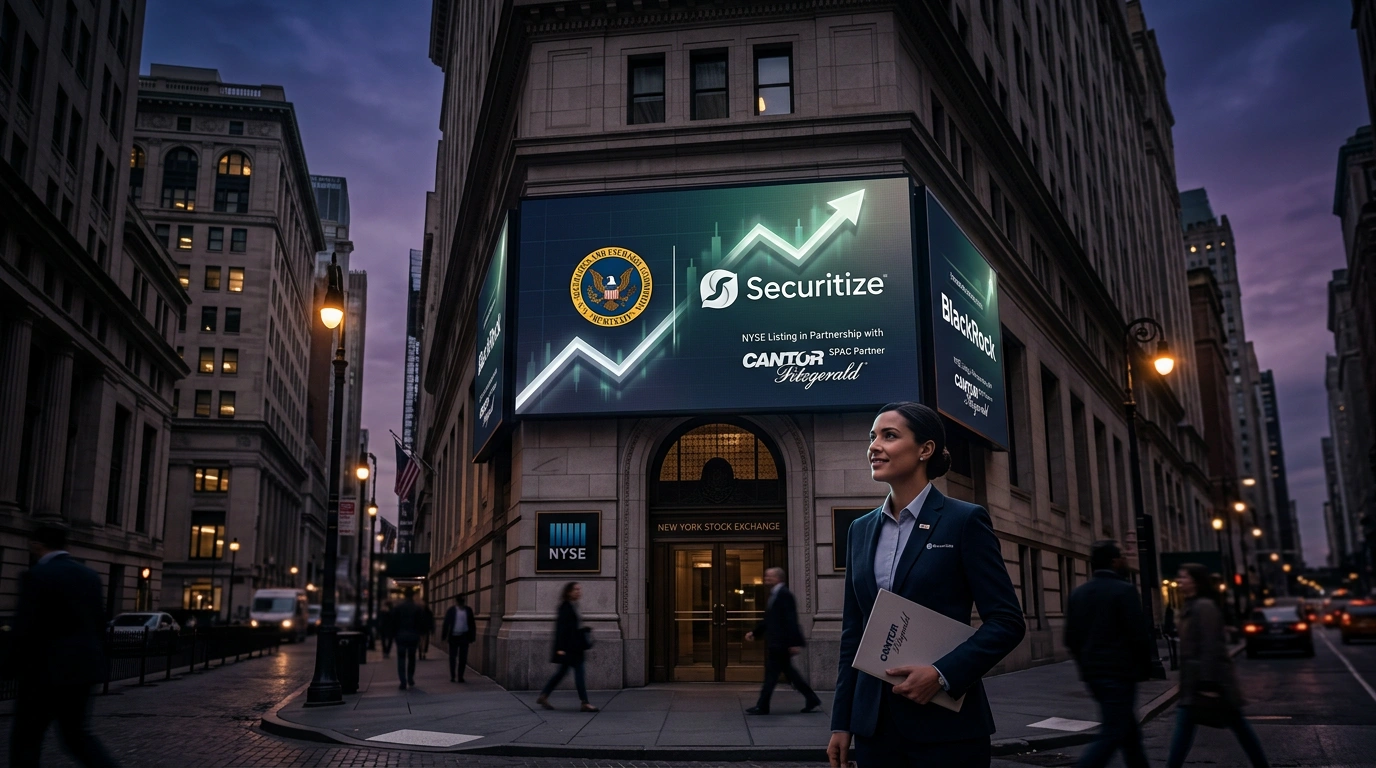
The SEC declared effective the Form S-4 registration statement filed jointly by Cantor Equity Partners II and Securitize on Friday, June 6. The move clears the final regulatory hurdle for the largest real-world asset tokenization platform to go public on the New York Stock Exchange. Shareholders vote on June 29.
What the SEC Approved
The regulator declared effective the Form S-4 filed by Cantor Equity Partners II and Securitize. Cantor Equity Partners II is a publicly traded SPAC sponsored by an affiliate of Cantor Fitzgerald. The SPAC structure lets a private company go public by merging with an already-listed shell entity, skipping the traditional IPO process.
Form S-4 is the standard registration form for merger transactions. The SEC declaring it effective signals that the disclosed information meets the regulator's requirements for shareholder review. Cantor Equity Partners II previously traded on Nasdaq as CEPT. If shareholders approve the merger on June 29, the combined entity will list on the NYSE under ticker SECZ, doing business as Securitize Corp.
"This is another important milestone for Securitize and for the broader institutional adoption of tokenization."
- Carlos Domingo, CEO and co-founder of Securitize, company press release, June 8, 2026
Securitize: $4 Billion in Assets and a BlackRock Partnership
Securitize holds the top market share among real-world asset tokenization platforms. The company manages $4 billion in assets. Its tokenized fund partners include Apollo, BlackRock, BNY, and VanEck, some of the largest asset managers in the world.
First-quarter 2026 revenue came in at $19.5 million, up 39% from the same period a year earlier. In March, the NYSE signed a memorandum of understanding with Securitize as part of a broader effort to build blockchain-based settlement infrastructure for Wall Street equities trading. No comparable arrangement between a traditional exchange and a tokenization platform currently exists in the US.
The RWA Market Hit $32 Billion in May
Total on-chain value of tokenized real-world assets reached a record $32 billion in May 2026, excluding stablecoins. That is a 220% gain over the prior 12 months. A year ago the figure barely cleared $10 billion.
The market is concentrated. US Treasuries account for nearly half of all tokenized RWAs on-chain. Tokenized commodities hold a 16% share. Tokenized equities remain a small piece: 4.8% of the total, or roughly $1.5 billion.
According to RWA.xyz, Ethereum and its layer-2 networks control more than 60% of the tokenization market. Institutional counterparties favor networks with a proven track record and clear legal precedent. Despite price pressure on the asset itself in 2026, demand for Ethereum as a settlement rail in the RWA segment keeps growing.
SECZ: The First Public Tokenization Ticker
Before Securitize, public investors had no direct equity exposure to the growth of the RWA market. Securitize's tokenized funds are accessible only to accredited investors. SECZ changes that.
Competing tokenization platforms are all still private. A public listing gives Securitize fresh access to equity capital markets and raises its profile with regulators at a time when the US framework for RWA markets is still taking shape. The June 29 shareholder vote is the last formal step before SECZ appears on the exchange.



Comments
Your email address will not be published. Required fields are marked *