


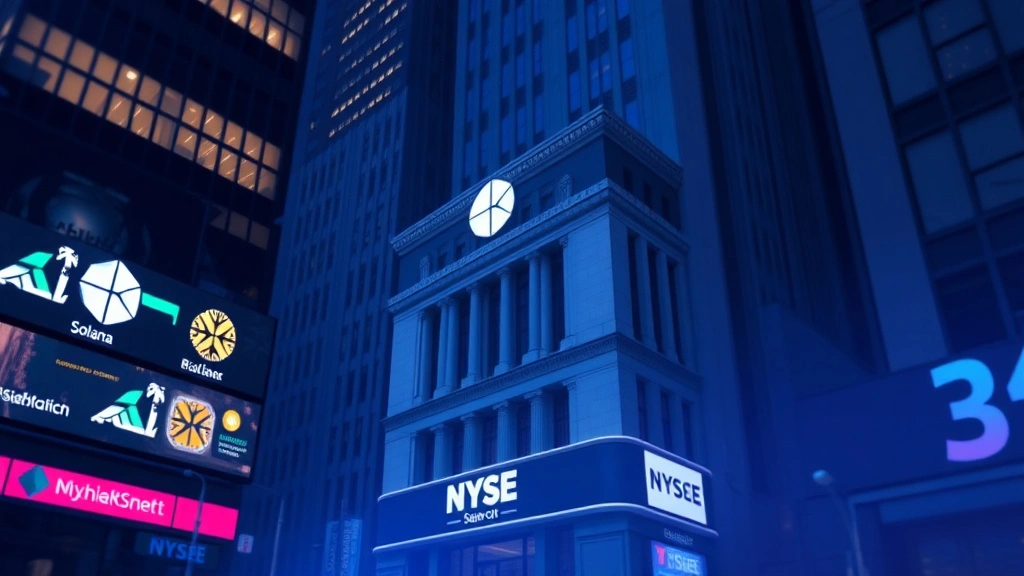
Securitize took its shares public on the New York Stock Exchange and, the same day, launched a tokenized version of that stock on the Solana and Avalanche blockchains. Trading under the ticker SECZ began right after the company closed its merger with SPAC Cantor Equity Partners II, and the shares jumped 10% on debut. Securitize called it the first time a newly public issuer has tokenized its own stock on the very day it started trading, and it is pitching the move as an example for the rest of the market. It is simple and telling. The security and the token appeared at the same moment.
Tokenized Shares on Solana and Avalanche
The token version of SECZ mirrors the same common shares trading on the NYSE rather than forming a separate class of securities. Securitize says it is the largest issuer-sponsored tokenized stock launch to date among comparable projects. Only eligible U.S. investors can buy the tokenized shares, and only through the company's regulated platform, after completing identity verification and meeting securities law requirements. Securitize placed the token shares on two networks at once: Solana and Avalanche. Ownership of the tokenized shares is recorded on a blockchain ledger that runs alongside the standard NYSE shareholder registry, so the same share exists in two record-keeping systems at once. Supporters of this model argue it can eventually shorten settlement times and allow around-the-clock trading instead of only exchange hours. Retail investors outside the U.S. still have no access to the SECZ tokens. That limits the scope of the experiment, though Securitize says the list of approved jurisdictions will expand. Earlier tokenized stock products were mostly issued by third-party platforms, often outside the U.S., rather than by the companies themselves. The SECZ launch can be read as a demonstration of a different approach, where the issuer itself handles the tokenized version of its own stock.
Who Is Behind Securitize
Securitize was founded in 2017. BlackRock and ARK Invest are among its shareholders, and the company went public through a merger with Cantor Equity Partners II, a classic blank-check SPAC built for fintech deals. For years, Securitize has built infrastructure for issuing tokenized assets, handling issuance, ownership registries and fund administration on blockchain rails for a roster of major traditional finance clients. Its client list reads like a survey of large asset managers.
- BlackRock.
- Apollo.
- KKR.
- Hamilton Lane and VanEck.
Earlier this year, Intercontinental Exchange, the parent company of the NYSE, agreed to jointly develop infrastructure for tokenized shares of public companies with Securitize. Computershare and Continental, two of the world's largest transfer agents, also joined the effort. They help public companies issue their own shares in tokenized form on blockchain rails while keeping the ownership records regulators expect. For the NYSE, it is also a way to avoid ceding the tokenization push to outside players.
Why Securitize Calls Its Approach Different
Securitize CEO Carlos Domingo said the company has long argued that public equities are moving onchain, and there is no stronger proof of that than tokenizing its own stock on day one of trading. He said most existing tokenized stock products are issued by third-party platforms, often outside the U.S., while the issuer itself tokenizes SECZ. Domingo added that the company has spent years working with Apollo, KKR and other asset managers to show that tokenization infrastructure for securities is ready for mass use today. In his view, a lack of trust in third-party tokenized products has kept large institutional investors on the sidelines of this market. He described the NYSE debut as a showcase for Securitize's entire business.
"We wanted to lead by example and show people that if you want to issue real shares onchain, not fake shares or copies, then you can do it."
- Carlos Domingo, CEO of Securitize, in comments to CoinDesk
Forecasts for Tokenized Assets
The market for tokenized securities is growing fast, and banks and asset managers expect the trend to continue. Citi projects that tokenized securities could reach $5.5 trillion by 2030. Boston Consulting Group and Ripple put the market's potential even higher, at $18.9 trillion by 2033. The International Monetary Fund made a similar case for tokenization's potential in financial markets earlier, in its own report. The numbers vary, but every forecast points the same direction.
Other companies have taken a similar path in recent weeks. Ondo Finance launched tokenized shares built on BlackRock and Micron stock, while Robinhood opened its own blockchain network for trading tokenized shares, called Robinhood Chain. Both projects are competing for the same pool of investors as Securitize. Wall Street is no longer just watching tokenization from the sidelines. It is building the infrastructure for it. For the crypto market, that means a tighter link between the prices of traditional stocks and the blockchain networks where they now exist in tokenized form. Whether issuer-led tokenization becomes the standard for newly public companies will be clearer within the next year.



Comments
Your email address will not be published. Required fields are marked *