


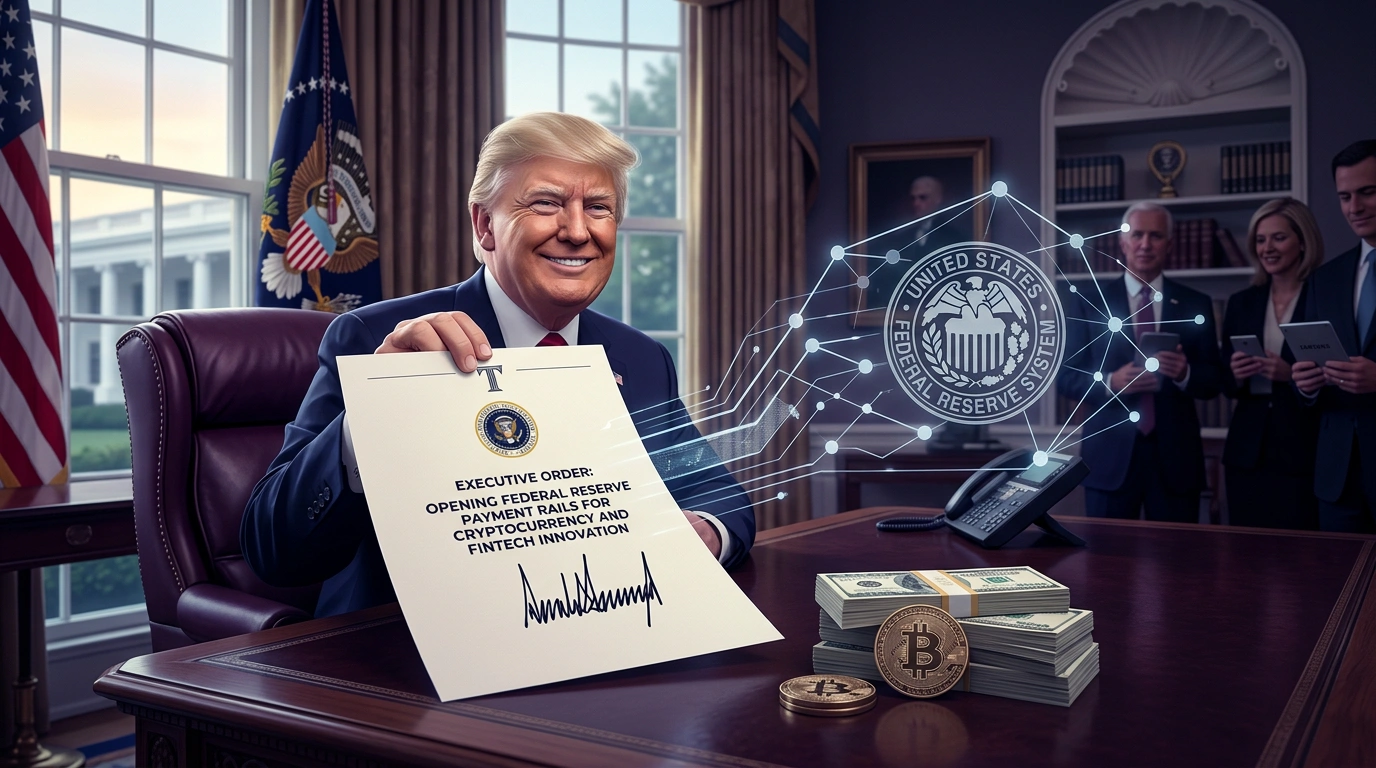
US President Donald Trump signed an executive order directing the Federal Reserve to evaluate the legal framework governing fintech and crypto companies' access to American payment systems. Signed on May 20, 2026, the order sets two key deadlines: 120 days for the Fed to submit a report and 90 days for federal regulators to review barriers blocking fintech firms from banking partnerships.
What the Fed Must Evaluate
The Federal Reserve Board of Governors received three specific directives:
- assess the current legal and regulatory framework for fintech and crypto access to Fed payment systems, including Fedwire, FedACH, and FedNow
- examine whether the Fed has legal authority to grant direct access to those systems for fintech and crypto firms
- prepare options for expanding such access within existing law, subject to appropriate risk management requirements
The order also addresses bank licensing. Federal agencies are directed to review regulations and simplify the application process for eligible fintech firms seeking bank and credit union charters. They must identify rules that may be blocking partnerships between fintech companies and federally regulated institutions, including broker-dealers and investment advisers, and submit proposals for changes.
Timelines and Responsible Agencies
The Fed has 120 days to prepare its report and deliver recommendations to the White House. Federal financial regulators (among them the OCC, FDIC, SEC, and CFTC) must complete their review of partnership barriers within 90 days. The order calls for simultaneous work across all agencies, not sequential.
Background: Debanking and "Chokepoint 2.0"
Crypto and fintech companies have faced bank account denials for years, rarely with official explanations. The problem peaked in 2023-2024. Analysts and companies in the space called the practice "Operation Chokepoint 2.0", a term describing coordinated pressure on the industry through banking channels without formal legislation or court orders. The Cato Institute, a US think tank, documented in a January 2025 report that hundreds of crypto and fintech companies lost bank accounts with no stated reason.
The Trump administration has been unwinding some of those restrictions since the start of the second term. This order goes further: it calls not just for stopping discriminatory treatment, but for building a formal access mechanism through a full regulatory review.
"The United States is a global leader in financial development, driven in part by the rapid growth of financial technology and fintech firms. To foster this financial breakthrough, the federal government must update regulations to allow integration of digital assets and new technology into traditional financial services and payment systems."
- Donald Trump, from the executive order signed May 20, 2026
Implications for Crypto
Companies most frequently denied banking services stand to benefit the most: stablecoin issuers, Bitcoin custodians, and crypto payment platforms. Direct access to FedNow would allow near-real-time settlements without relying on a correspondent bank.
The 120-day review does not guarantee specific changes. The Fed will produce recommendations, but actual access decisions remain with the regulator, and in some cases will require congressional action. For USDT and other dollar-pegged stablecoins, broader payment access could shift the competitive position of issuers in business-to-business settlements.



Comments
Your email address will not be published. Required fields are marked *