


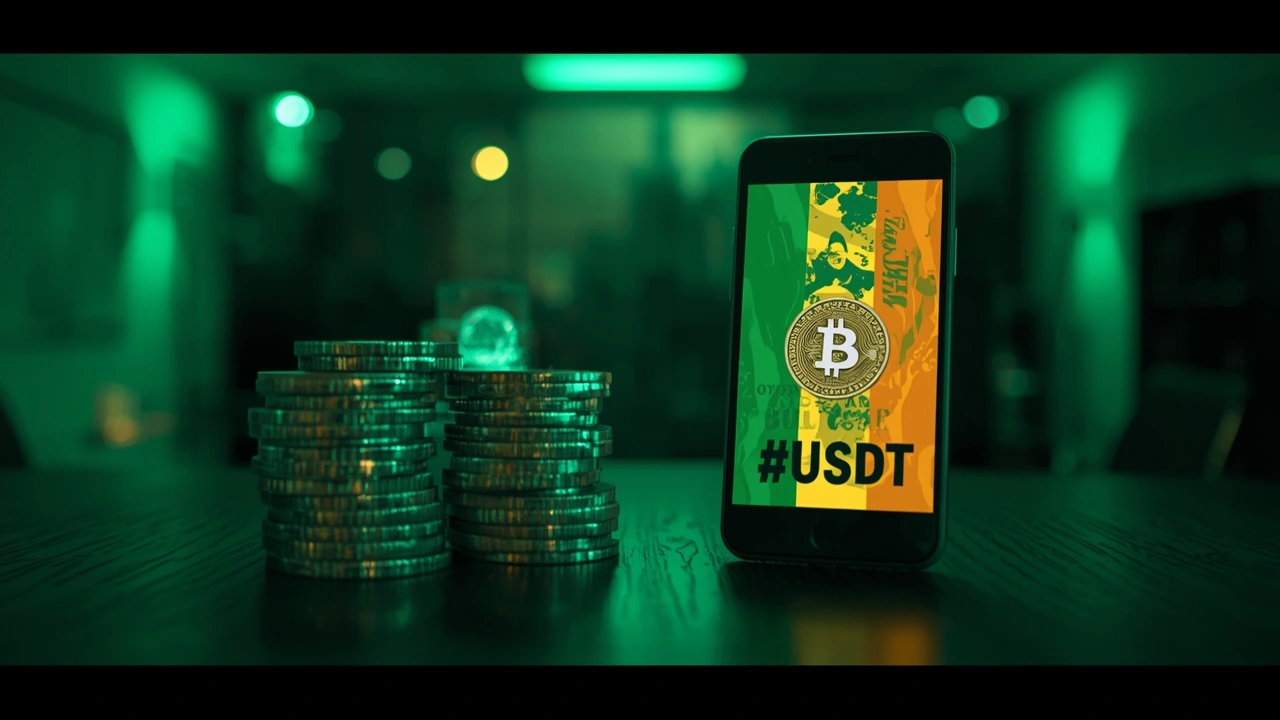
Bolivia's finance ministry said on Monday that the government is weighing whether to recognize USDT as a payment currency alongside the boliviano and the US dollar. The reason is direct: the country has spent more than a year short on physical dollars, and the national currency's rate dropped after 15 years of being pegged.
If the framework passes, Tether's stablecoin could be used for payments, savings and trade without relying solely on the banking system. It would be one of the most notable moves by a Latin American government toward stablecoins in recent years.
What the government is actually proposing
Economy and Public Finance Minister Jose Gabriel Espinoza told a press conference that authorities are assessing a regulatory framework that would let USDT circulate "as just another currency" alongside the boliviano and the dollar. According to the Spanish-language outlet CriptoNoticias, the document is still under review. If adopted, USDT would be officially recognized for everyday transactions, including payments, savings and trade.
The central bank of Bolivia has not issued an official response yet, and the idea had not been publicly discussed at this level before the press conference. That raises the odds the framework will become a matter for parliament rather than a simple ministry decision.
The initiative continues a path set after Bolivia lifted its crypto ban in 2024. President Rodrigo Paz Pereira's administration, in office since late 2025, has pledged to integrate digital assets into the formal financial system. Banks are expected to be allowed to offer clients stablecoin-based products, including dedicated USDT accounts.
Why Bolivia ran short of dollars
From 2011 until earlier this year, Bolivia held a fixed rate, 6.86 bolivianos per dollar for purchases and 6.96 for sales. For years, gas export revenue kept that peg in place. As gas income shrank, the central bank's foreign currency reserves ran low, and holding the rate became impossible.
Pressure on reserves forced the government to abandon the peg. The result was a wider parallel foreign exchange market, where physical dollars trade at a noticeable premium over the official rate. The gap between the two rates fueled demand for dollar alternatives, and USDT is already widely used for payments.
The situation resembles what Ukrainians deal with. When a national currency wobbles, part of people's savings shifts into stablecoins. In Ukraine that plays out simply, people regularly buy USDT with hryvnia to shield their savings from exchange rate swings.
How much crypto already moves through the country
Bolivia ranks among Latin America's leaders in crypto adoption. Chainalysis' 2025 report put the country's crypto transaction volume at $14.8 billion over 12 months. USDT's market capitalization, according to CoinMarketCap, has topped $184 billion. That makes it the largest stablecoin in the world by that measure.
In practice, most USDT transfers in the region run on the TRON network, where fees rarely exceed a few cents. That makes the token cheaper than a bank transfer for people receiving money from relatives abroad or paying for small import shipments.
What neighbors in Latin America have tried
Latin America has spent years searching for its own answers to chronic dollar shortages. El Salvador made Bitcoin legal tender back in 2021, though that experiment targeted bitcoin rather than stablecoins. Argentina, under President Javier Milei, took a different route and liberalized its currency market, effectively leaving the widespread use of dollar stablecoins as an inflation hedge unregulated.
Bolivia's approach differs in that it is not tolerance from the bottom up, but an attempt by the state itself to formalize what the market is already doing on its own. In a region where formal dollarization is often politically unacceptable, recognizing USDT looks like a compromise, since the dollar stays accessible while the country does not formally abandon its own currency.
AML rules and the FATF grey list are slowing the pace
Espinoza added that a rollout would require a solid regulatory framework and strict AML controls, since Bolivia remains on the FATF grey list, the roster of jurisdictions under increased monitoring for gaps in fighting money laundering and terrorist financing.
In practical terms, that means several conditions the government will have to meet at once:
- Transparent tracking of USDT transactions that cross the border.
- Licensing for banks and platforms that will offer stablecoin accounts.
- A balance between fighting shadow-market dollarization and legalizing USDT.
- The risk that the parallel market persists if reform drags on.
Sitting on the FATF grey list already complicates dealings with foreign correspondent banks. Any USDT framework will need to prove to regulators it is closing gaps rather than opening a new one, and making capital flows more transparent instead.
What happens next
The government has not set a firm date, and the document is still under review. If the framework passes, Bolivia would become one of the few Latin American countries to formally open a path for a dollar stablecoin into its payment system after losing control of its own currency's rate. For millions of Bolivians already converting savings into dollars on the parallel market, legal status for USDT would mean an easier way to preserve value. The biggest test for regulators won't be the launch itself but making sure the new framework doesn't turn into a channel for dodging AML rules. The nearest signal to watch will be whether banks back the initiative, since they are the ones who would have to open USDT accounts for clients and report fund flows to the regulator. Without the banking sector on board, the framework risks staying a declaration on paper while the parallel market keeps meeting dollar demand outside the system.



Comments
Your email address will not be published. Required fields are marked *