


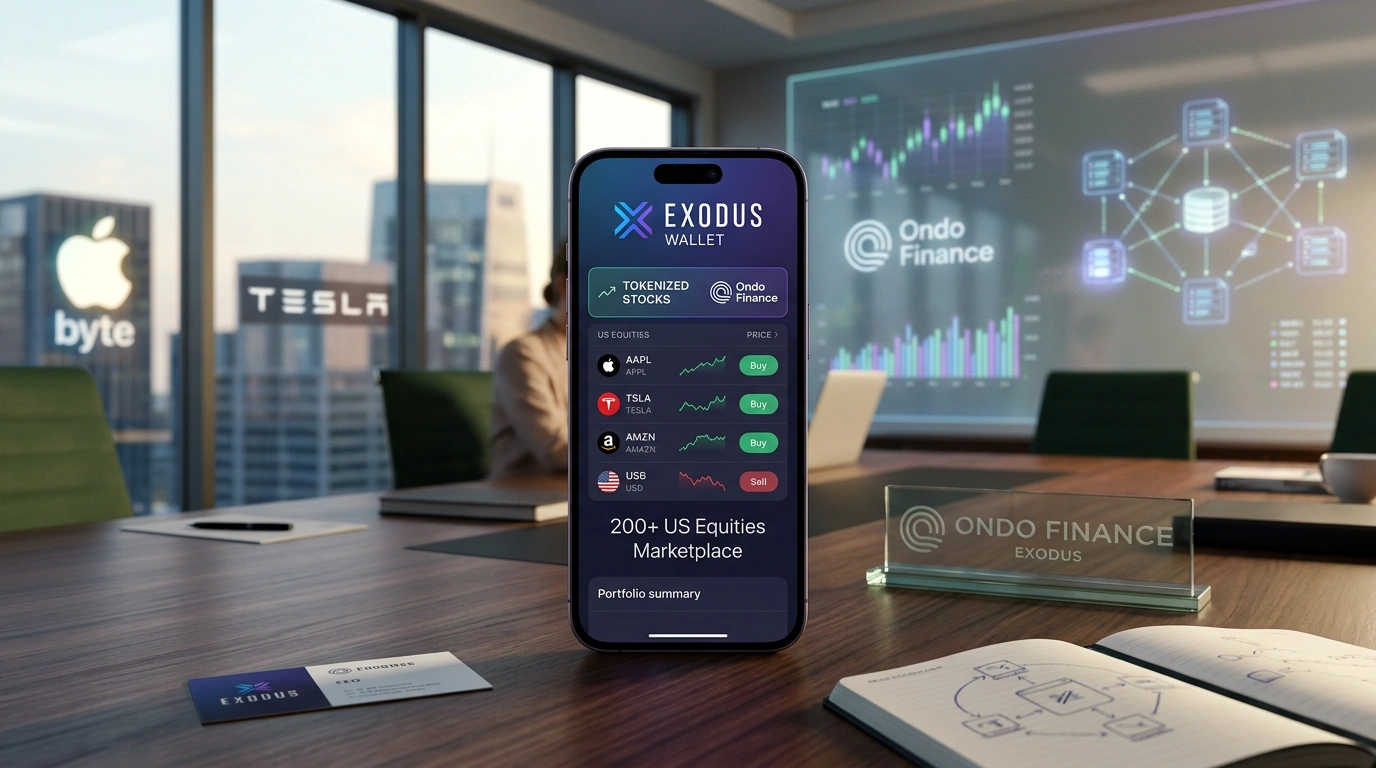
Exodus wallet launched a tokenized stock marketplace in partnership with Ondo Finance on June 12, 2026. More than 200 US equities and ETFs are now available directly inside the wallet interface, with no brokerage account or traditional verification required. For the real-world asset (RWA) tokenization market, it marks one of the biggest pushes toward retail users in the past year.
What are tokenized stocks and how do they differ from regular shares?
A tokenized stock is a digital token on a blockchain that tracks the price of a real share held by a licensed custodian. The token price mirrors the underlying asset's market quote, and trading runs around the clock rather than only during NYSE or Nasdaq hours. Minimum purchase amounts start at a few dollars, with no minimum threshold typical of many brokers.
No brokerage account is needed, no contract signing, no lengthy onboarding. A crypto wallet and a stablecoin are enough to get started. That said, tokenized shares do not carry the same rights as standard equities. Voting rights at shareholder meetings are generally not passed on to token holders. Dividends are either converted into tokens or not paid at all, depending on the provider. Checking the terms of a specific issuance before buying is worth the time.
How does Ondo Finance power the marketplace?
Ondo Finance focuses on tokenizing real-world assets. Its products turn traditional financial instruments into on-chain tokens while keeping them tied to the underlying asset. The mechanics for the Exodus marketplace work as follows:
- Custody: real shares are held by a licensed US custodian in a 1:1 ratio to the tokens issued
- When a user buys a token, the custodian purchases the corresponding real shares on the market during a trading session
- Token prices update in real time during market hours; after the close, prices are locked until the next session
- When a token is sold, the custodian sells the shares and returns the value in stablecoin to the user's address
Settlements are primarily in USDC. Exodus charges no separate custody fee, but the buy-sell spread is built into the marketplace quotes. The feature lives inside the wallet's existing swap interface, so the flow is familiar: pick an asset, enter an amount, confirm the transaction.
Which assets are available and what limits access?
The 200+ tickers cover major tech companies, broad index ETFs, and individual S&P 500 issuers. The exact list depends on the user's country of residence. Exodus published a list of supported regions at launch; users in other markets join a waiting list.
US residents face SEC rules around accredited investors and tokenized securities. Several other jurisdictions apply capital markets regulation to such products as well. Exodus recommends checking the legal status of these instruments in your country before buying.
Why does this launch matter right now?
The tokenized real-world asset market crossed $50 billion in 2026. Most of that volume sits in institutional products with entry thresholds of $100,000 or more. The Exodus-Ondo marketplace brings the minimum down to a few dollars and opens the segment to millions of retail crypto holders.
Earlier attempts did not last. Binance launched tokenized stocks in 2021 and pulled the product within months after regulatory pressure from the EU and Hong Kong. The environment now is different. The SEC under new leadership published several clarifications on tokenized securities, cutting legal uncertainty for providers. At the same time, major banks and asset managers have moved into the RWA market at scale, giving it institutional backing it lacked before.
What comes next for Exodus, Ondo, and the market?
Ondo Finance announced plans to expand integrations with other wallets and DeFi protocols. Exodus says it will grow the list of available tickers after gauging the product's first regulatory and market response. If the launch clears legal hurdles, tens of millions of active Exodus users will have access to US equities without a traditional broker.
For the crypto market, this signals a new phase of tokenization: after Treasury bills, equities are next. Several protocols are already testing tokenized IPOs and derivatives. Competition between crypto-native and traditional finance players for this segment grows each quarter.


Comments
Your email address will not be published. Required fields are marked *