


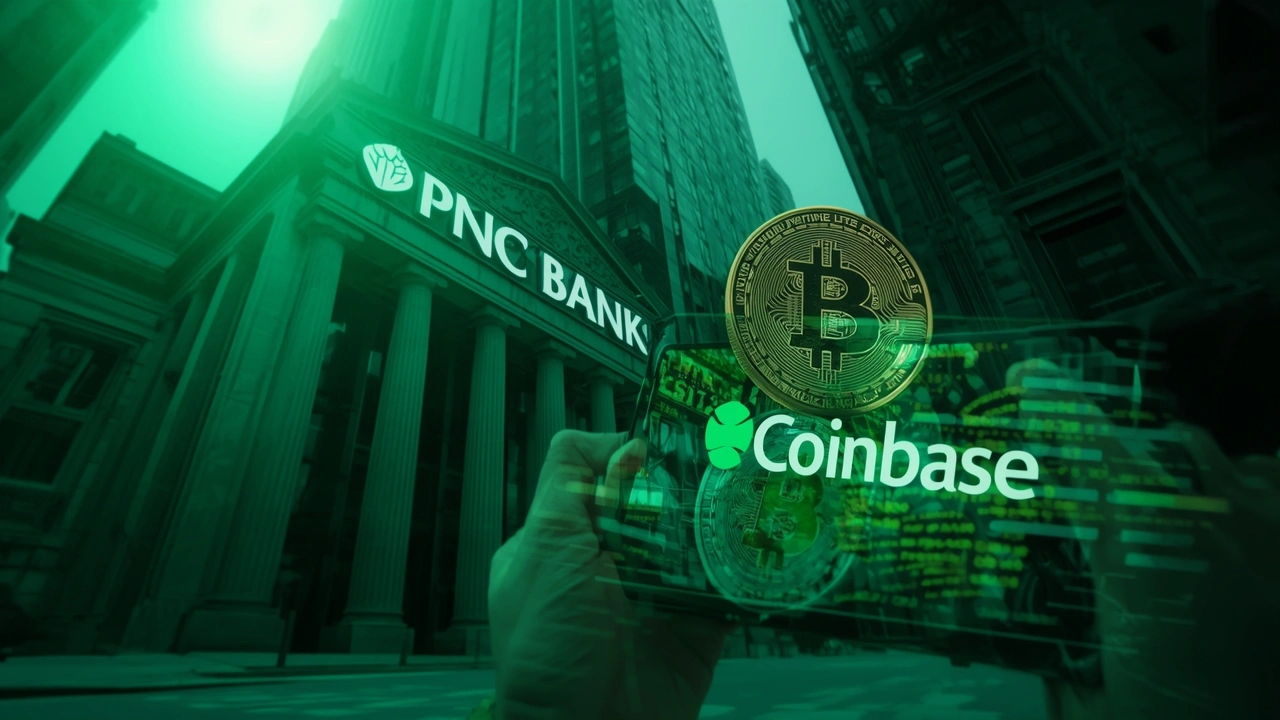
US lender PNC Bank has launched a pilot that lets corporate clients accept USDC through Coinbase. The money lands in their account already as dollars. For a company that means getting paid in a stablecoin without ever holding one.
What exactly launched
The pilot is limited. Only selected corporate and institutional PNC clients can join. They receive USDC on Ethereum through Coinbase Payments products.
After that it runs on autopilot. Each token converts to one US dollar and the sum is deposited into a designated PNC account. The client needs no crypto wallet, no keys, no separate token bookkeeping. The bank said it wants faster access to funds and easier cross-border payments.
What the bank did not say
Details are thin. PNC did not name fees and did not reveal how long settlement takes. The number of clients in the pilot is also unknown. The bank did not answer Cointelegraph's request for comment by publication time.
So the benefit for business is hard to judge for now. If the fee is close to card acquiring, interest will fade fast. If it is clearly lower and the money arrives in minutes, the picture changes.
There are questions the pilot has to answer. Who pays if the token briefly drifts from a dollar? Does conversion work at night and on weekends? What does a payment reversal cost? For a finance chief these are not details but the terms that decide whether the usual process is worth changing.
There is a practical side too. A blockchain payment cannot be recalled with a button the way a transfer in a banking app can. If a client mistypes an address or amount, fixing it is manual work. In a pilot with hand-picked participants that shows up at once, and in a mass rollout it becomes support's main headache.
How it fits the Coinbase partnership
PNC and Coinbase have worked together before. The bank earlier agreed to offer crypto services through the exchange's infrastructure while providing banking services to the exchange itself. In December that led to Bitcoin trading for eligible PNC Private Bank clients.
The new service follows the same path, only now it is payments instead of investing. Citi already has a similar setup. In September it let institutional clients accept stablecoin payments through its Spring by Citi platform, with Coinbase converting them to fiat.
A pattern emerges. Big US banks do not issue their own tokens. They plug in ready-made stablecoins from outside and hide them behind a familiar interface. Whether that lasts is another question.
What the market numbers say
USDC remains the second-largest stablecoin by market cap at $70.5 billion, per DefiLlama. Far ahead sits USDT from Tether at $176.8 billion. In other words, USDC is less than half the size of the leader.
Bank pilots play into USDC's hands. It is issued by US-based Circle, has a clear regulatory position in the US, and is easier to explain to a corporate compliance team. We do not know whether this pilot will add noticeable demand. But the direction is clear: stablecoins are slowly turning into one more way to accept payments.
For an ordinary user this will not change right away. Still, if banks get companies used to settling in stablecoins, demand for swapping such tokens into cash and cards at exchangers will grow too.



Comments
Your email address will not be published. Required fields are marked *