


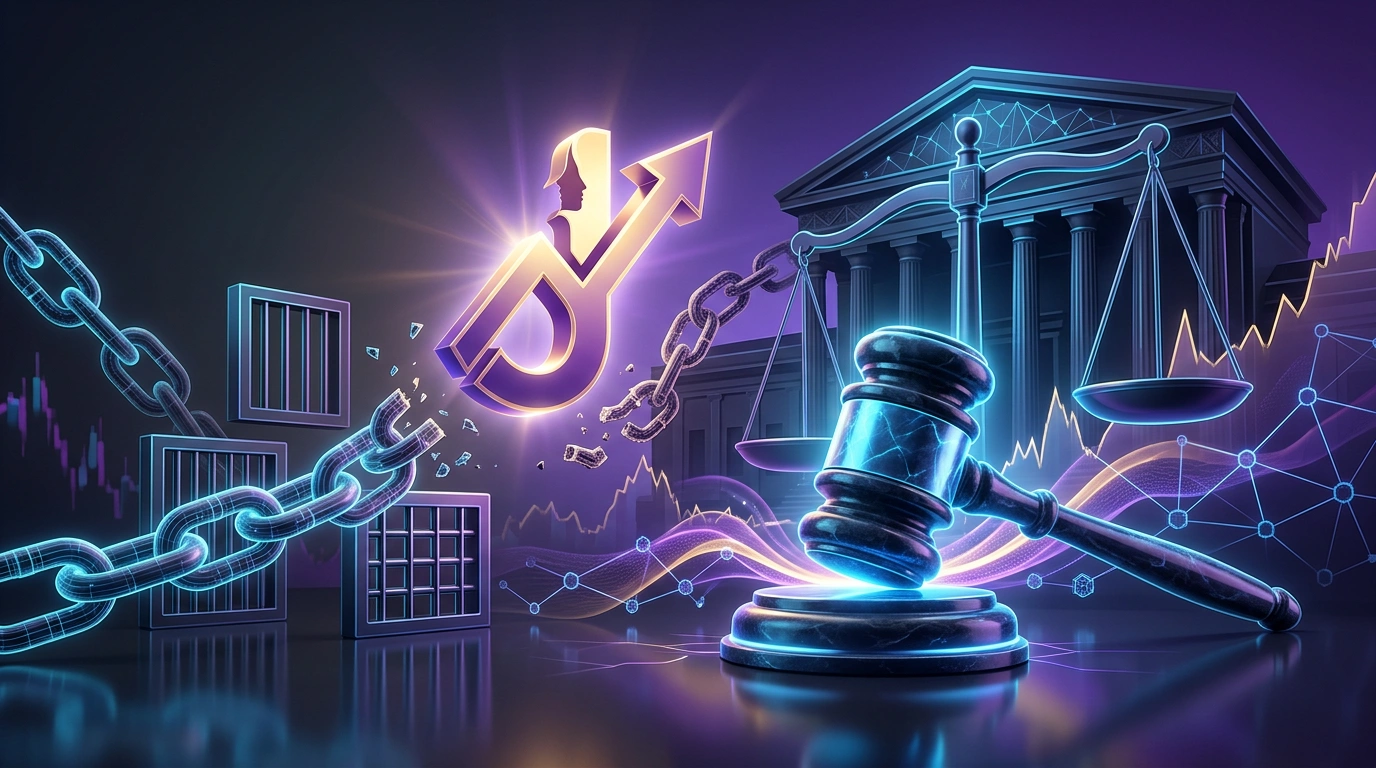
A California federal court has dismissed a class-action lawsuit against Caitlyn Jenner for the second time, ruling that her JENNER memecoin is not a security under US law. Judge Stanley Blumenfeld Jr. found the token failed to qualify as an investment contract. The plaintiffs lost both rounds, after the same judge threw out their first complaint in May 2025.
What the Howey test is and why it decided this case
US courts use the Howey test, developed in 1946, to determine whether an asset qualifies as a security. It requires four things: an investment of money, a common enterprise, an expectation of profit, and that profit depending on the efforts of others. All four conditions must be met at the same time.
The SEC has applied this test to crypto for years. It is exactly what brought many token projects - from 2017-era ICOs to modern DeFi protocols - under securities regulation. In Jenner's case, however, the plaintiffs could not satisfy even the most basic requirements of the test.
Why the judge sided with Jenner
The court found no pooling of investor funds and no structure tying the financial fortunes of JENNER holders together. According to the project's own documents, JENNER is a memecoin on the Ethereum blockchain intended solely for entertainment. The judge accepted this framing as the key factor.
Promotion alone does not create a common enterprise under the law. Judge Blumenfeld wrote in his order that establishing a common enterprise requires either pooling of assets or a structure that links investors' fortunes. Neither was present in this case.
Who lost and how much
The lead plaintiff, Lee Greenfield, a UK citizen, claimed losses of more than $40,000 from buying JENNER. The amended complaint rested on specific promises Jenner had made: once the token hit a $50 million market cap, a 3% transaction fee would fund buybacks, marketing, and donations to Donald Trump's presidential campaign.
Plaintiffs also pointed to a plan to sell fractional ownership in Jenner's Olympic gold medal via tokens. The judge rejected this argument. That announcement came in August 2024, after all of Greenfield's purchases, and the plan was never carried out. The judge ruled it had no bearing on the investment expectations of the plaintiff at the time of purchase.
A precedent for the memecoin market
The ruling sets a clear benchmark. If a token does not pool investor funds and does not promise concrete returns from shared activity, US courts are unlikely to call it a security. Memecoins framed as pure entertainment get legal cover - at least at the federal district court level.
Critics will not stay quiet. This approach leaves retail investors with no real recourse against celebrity promoters. The losses are real. The legal protection is not. Skeptics have long warned that the legal gray zone around memecoins will eventually draw pressure from lawmakers, especially as the scale of losses keeps growing.
Other similar cases in the US
Jenner's case is far from unique. Similar lawsuits have been filed against musicians, influencers, and other public figures who promoted tokens in 2023 and 2024. In most cases, plaintiffs run into the same wall: proving that a memecoin is an investment contract is extremely difficult when the project documents say it is just entertainment.
This is a real legal paradox of our time. Memecoin buyers often put in real money with real profit expectations, but proving that under rules written in 1946 is a steep climb. Congress has yet to pass a dedicated crypto market law, so courts keep applying old tools to new assets.
The regulatory climate and what comes next
Jenner's case plays out as the SEC under the new administration has pulled back significantly from Bitcoin and the broader crypto market. Celebrity memecoin lawsuits face a steeper legal climb than ever before. The Howey test has turned into a solid barrier against such claims.
Plaintiffs could still appeal to a higher court. But cases like this rarely turn around on appeal when the district court judge laid out a detailed ruling. For the market, it is another signal: memecoins live in a legal gray zone, but right now in the US, that gray zone is working in their favor.
Comments
Your email address will not be published. Required fields are marked *