


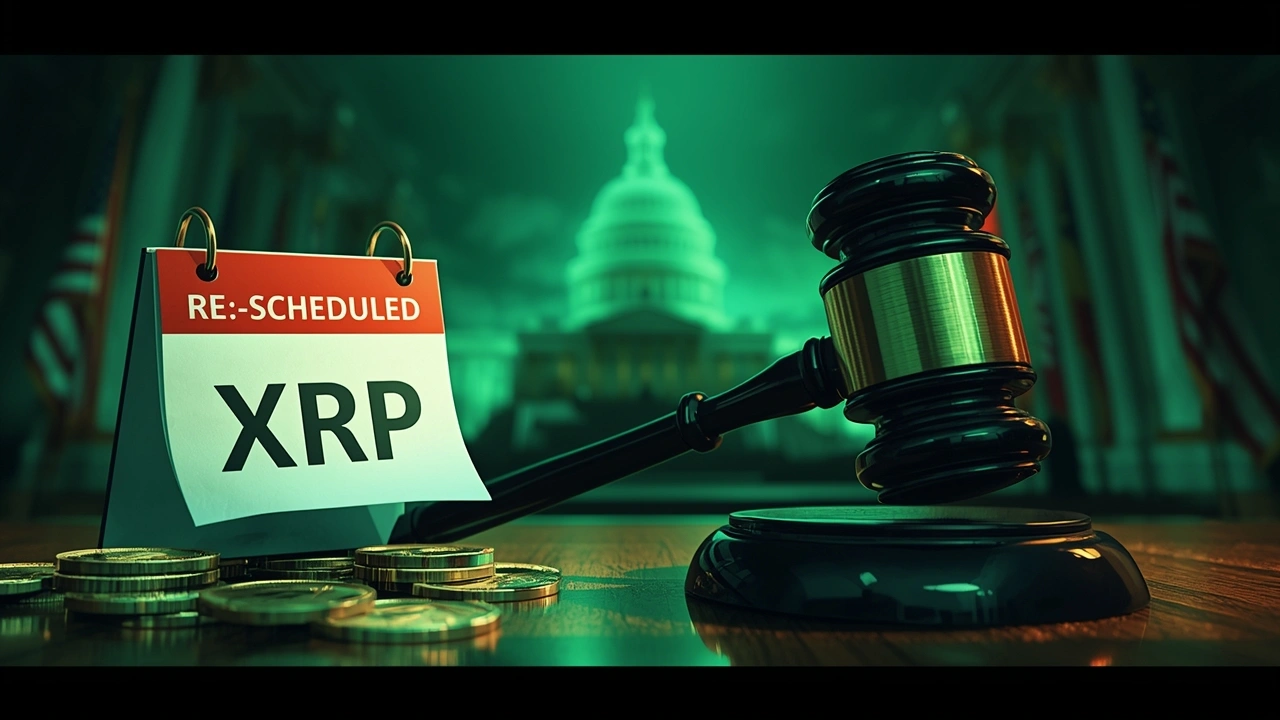
The US Senate has pushed back the first procedural vote on the Digital Asset Market Clarity Act to September, even though the industry was hoping for movement this week. The delay hit prices right away. XRP lost 5.5% over the week, the worst drop among the top 10 coins, while Bitcoin held near $64,300 ahead of the US jobs report.
Why the vote didn't happen this week
Senate Majority Leader John Thune confirmed through a spokesperson that there would be no Clarity Act vote in August, but one is set for the September calendar. The Senate returns to Washington on September 14 and will have three weeks to work through the bill along with other business. Politico first reported Thursday night that a first vote before the break was off the table.
According to several people familiar with the talks, Senate Democrats did not want to vote on Clarity before the midterm elections and were prepared to hold up the rest of the Senate's agenda if the bill wasn't punted to September. The bill needs 60 votes to pass, and as of Friday it's unclear whether it even has 50. Several Republican senators have publicly come out against it, and some Democrats are still pushing the White House for tougher ethics guarantees.
How the market responded to the delay
XRP, whose classification hinges closely on the expected split of authority between the SEC and CFTC, fell 5.5% on the week, the worst performance among the majors. Bitcoin and ether lost less, trading in a tight range ahead of Friday's US employment data.
Traders read the postponement as a sign that regulatory uncertainty around altcoins will stretch on until at least mid-September. Bitcoin looks relatively shielded in this picture. Its status as a commodity is already settled, so a fresh wave of uncertainty touches it less, while Ethereum and especially XRP remain hostage to the very classification question the bill was supposed to settle.
What's still stuck in the bill's text
Both sides have formally agreed on most of the language. The Senate Banking and Agriculture committees have already approved their versions of the text, so the technical groundwork is largely done. The biggest sticking point is an ethics provision tied to President Trump, who disclosed more than $1 billion in income from his crypto businesses in 2025. Democrats and some Republicans, Thom Tillis among them, see the version brokered by Senator Cynthia Lummis as too soft.
Tillis and Senator Ruben Gallego drafted a counterproposal and sent it to the White House in late July. There had been no public response as of Friday. Separately, negotiators are still working through stablecoin yield and rewards rules, Agriculture Committee provisions, and law enforcement concerns. A whole package of smaller issues has piled on top of the ethics fight.
Industry reaction and the stablecoin risk
Digital Chamber CEO Cody Carbone called this week's outcome not what the industry had hoped for, though he added that work toward common ground would continue into September. Crypto Council for Innovation CEO Ji Hun Kim was blunter.
"There has been tremendous progress on the Clarity Act thanks to the efforts of so many. CCI remains committed to ensuring the US enacts comprehensive market structure legislation that protects Americans. Every day without such a framework pushes American users and builders offshore and leaves consumers at risk."
- Ji Hun Kim, CEO, Crypto Council for Innovation, press statement, August 6, 2026
The head of First Digital voiced a similar concern. Prolonged regulatory limbo, he warned, opens a window for Asian financial hubs and revives "regulation by enforcement" instead of clear rules. That's especially sensitive for the stablecoin market, since the Clarity Act was meant to set yield and rewards rules for USDT, USDC, and similar tokens.
- Tokens without a clear commodity or security status stay exposed to fresh SEC lawsuits until September.
- Stablecoin issuers keep operating without federal yield and rewards rules for at least another six months.
- Asian financial hubs get extra weeks to court companies tired of waiting for clarity in the US.
The pause touches Ukrainian traders indirectly but noticeably. Most P2P trades into hryvnia still run through USDT, and while the world's largest stablecoin market goes without a long-term framework, anyone planning to exchange USDT for hryvnia is working under the same regulatory limbo as US exchanges.
What comes next
From here, everything depends on when Thune files for cloture on the bill. If he does it before senators leave town this month, the first procedural vote could happen as soon as Tuesday, September 15. If the filing comes after the Senate returns on Monday, September 14, the vote can't happen before Wednesday, September 16.
Before then, the Senate still has to work through government funding, a Russia sanctions bill, and a block of nominations, including Todd Blanche's nomination for attorney general. The Clarity Act is competing for floor time against all of that, so even the September window doesn't guarantee a quick vote.
For the market, the takeaway is simple. As long as the SEC-CFTC split stays on paper, tokens like XRP will likely react to every new Senate headline harder than Bitcoin or the major stablecoins, and over-the-counter spreads probably won't tighten before mid-September.



Comments
Your email address will not be published. Required fields are marked *