


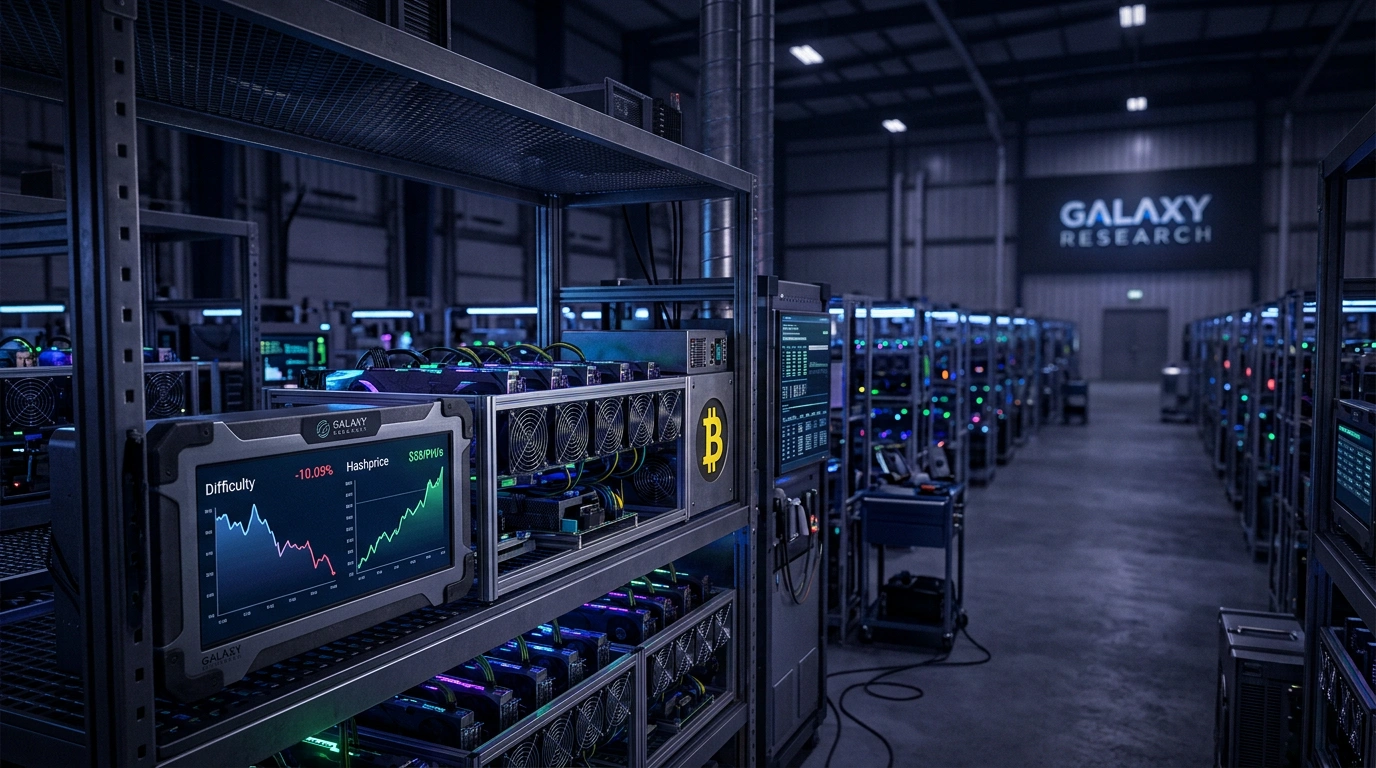
On Sunday, June 15, Bitcoin mining difficulty fell 10.09%, dropping from 138.96 to 124.93 trillion at block 953,568. Galaxy Research confirmed it as the 11th largest downward adjustment in the network's history and the second biggest of 2026. The last comparable drop hit in February, driven by snowstorms and a 25% BTC price crash. This time the reason is simpler: Bitcoin lost around 15% in June, pushing marginal miners offline.
Why Hashrate Fell 23% From Its October Peak
Total network hashrate currently sits at 886 exahashes per second, per Blockchain.com data. It dropped 12% so far in June and is down 23% from its October 2025 peak. That kind of capacity contraction over such a short window does not happen often.
The logic is straightforward. When Bitcoin trades 15% below the breakeven price miners budgeted for, the least efficient rigs move into losses first. Electricity and facility costs stay fixed while dollar revenues shrink with the coin price. Unprofitable fleets shut down.
The latest epoch also ran long: 15.6 days instead of the standard 14. Blocks arrived more slowly because fewer machines were competing for them. The difficulty algorithm responded exactly as designed - the network lowered the target to bring block times back toward 10 minutes.
Hashprice Returns Above $33 per PH/s
Hashprice measures how much a miner earns per unit of computing power per day. Fewer machines competing means each remaining machine earns more. Crypto trader Merlijn Enkelaar calculated that surviving rigs now make around 9% more per machine. Hashrate Index puts the current figure at $33 per PH/s per day.
The $30 mark carries real weight in the industry. Above it, efficient fleets cover electricity and operating costs and move into profit. Below it, different generations of ASICs compete for survival. After today's adjustment, most modern hardware is back in the green.
For publicly traded mining companies, the shift matters beyond daily margins. Below $30 hashprice, firms often sell accumulated Bitcoin to pay bills. Above $30, they can hold instead of selling, which reduces constant selling pressure on the open market.
Which Rigs Survived June
Every significant hashrate drain acts as a filter. Older ASICs with higher energy use per hash are first to turn unprofitable when prices drop. Newer-generation machines hold profitability at much lower BTC prices. The fleet that remains online today is more efficient on average than three months ago.
Publicly listed miners are dealing with the pressure in different ways. Some are shifting capacity toward commercial AI computing, where margins currently beat mining at this BTC price. Others are taking on external financing to avoid selling Bitcoin for dollars at unfavorable prices. Both approaches cut the daily stream of BTC flowing onto the open market.
What Less Miner Competition Means for BTC Price
The direct link between difficulty and Bitcoin price is not obvious. Difficulty is a lagging indicator: it responds to what happened to hashrate over the past two weeks, not to what comes next. A single downward adjustment is not a bullish signal on its own.
The indirect effect is real. Miners who returned to profit after the adjustment sell less. Those who had been forced to liquidate BTC daily to cover bills now have the option to hold or at least cut their selling volume. That pressure does not vanish, but it eases. Bitcoin was trading around $65,891 on June 15, above its June lows.
Next Adjustment Expected June 27
The next difficulty recalculation is expected around June 27. Coinwarz projects a modest 1.69% increase, bringing the target back to around 127 trillion. If hashrate stays stable through end of June, difficulty will inch back up but remain well below spring levels.
Price will decide the outcome. If Bitcoin holds above $63,000-65,000 through June 27, most modern rigs continue running without disruption. If it slides back below $60,000, another wave of shutdowns and a further difficulty drop are plausible scenarios. The balance here is fragile.



Comments
Your email address will not be published. Required fields are marked *