


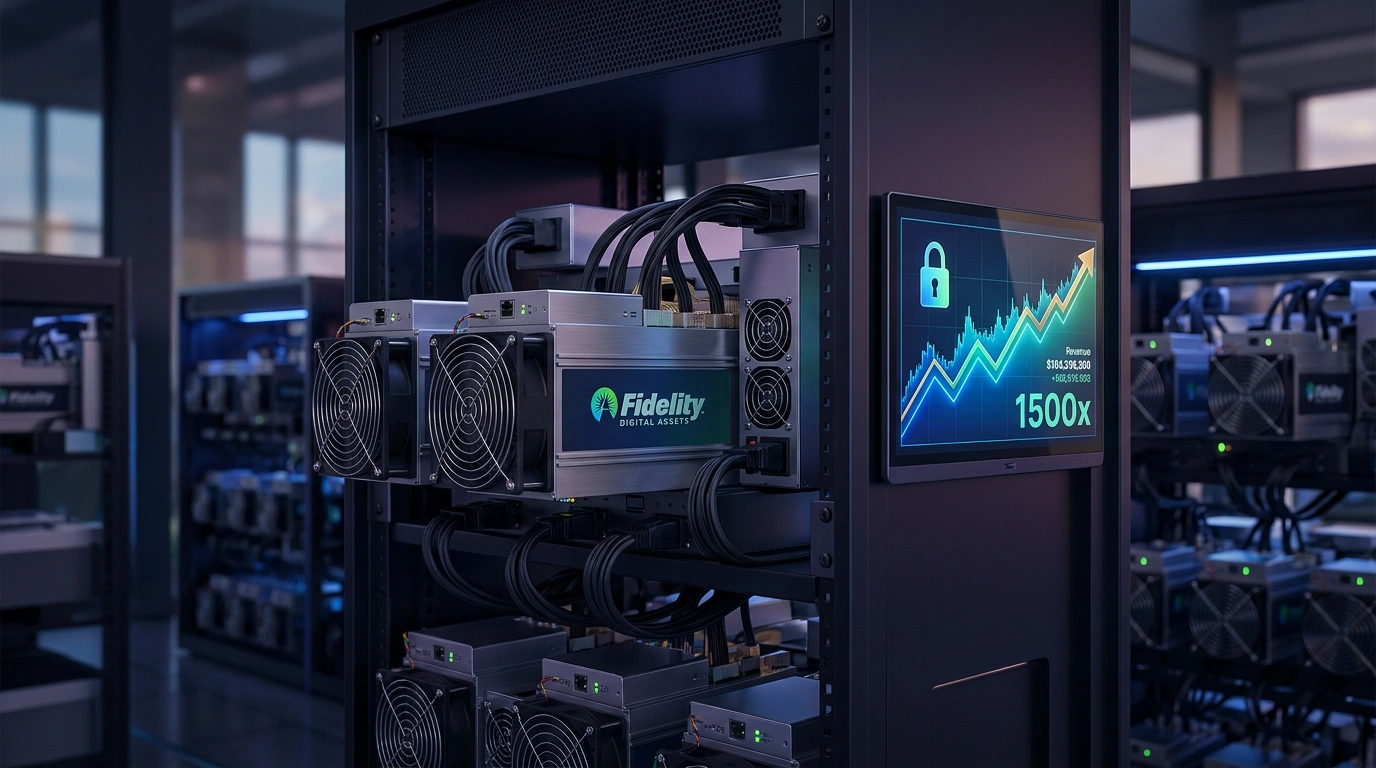
Fidelity Digital Assets published a research report defending Bitcoin's long-term security model. Analyst Daniel Gray pushed back against a common concern: that each halving weakens the network by cutting miner rewards. The data in the report tells a different story. Average daily miner revenue climbed from roughly $26,300 in the first halving cycle to more than $40.2 million today, even as the block subsidy fell from 50 to 3.125 BTC over that same span.
The Criticism: Halvings Erode Miner Incentives Over Time
The critique follows a clear line of logic. Bitcoin is programmed for shrinking issuance: roughly every four years the block subsidy for miners is cut in half. Since April 20, 2024, miners receive 3.125 BTC per block, down from 6.25 BTC in the previous cycle. Eventually the subsidy disappears entirely.
If transaction fees do not fill that gap, hash rate will drop. Lower hash rate means a lower cost for a potential attack on the network. That is the long-term concern: Bitcoin security could weaken as subsidies shrink.
Critics add another layer: transaction fee revenue is volatile. On quiet days fees are negligible. Only during high-demand events (Ordinals in 2023, inscription activity in 2024) did they spike. Relying on unpredictable fee income as a security backstop is risky, skeptics argue.
Fidelity's Answer: Bitcoin's Price Offset Every Subsidy Cut
Gray grounded the Fidelity report in concrete numbers. Average daily miner revenue in the first halving cycle was roughly $26,300. That same figure now exceeds $40.2 million per day.
In Gray's words, despite declining issuance, miner incentives and network security have historically strengthened alongside Bitcoin's price. Fidelity's core argument is not about miner profits. It is about the cost of attack: a higher Bitcoin price makes a 51% attack more expensive because capturing the necessary hash rate costs more in absolute terms.
The report also notes that Bitcoin's security depends on more than block subsidies. Transaction fees, market incentives, and broader economic forces continue to motivate miners to secure the blockchain.
Four Cycles, Four Times the Crash Prediction Was Wrong
The first halving in November 2012 cut the subsidy from 50 to 25 BTC. Bitcoin was trading around $12 at the time. Within a year the price exceeded $1,000. Network hash rate kept rising.
The second halving in July 2016 dropped rewards from 25 to 12.5 BTC. Again, predictions of mass miner exits did not materialize. The third halving in May 2020 cut the subsidy to 6.25 BTC. Bitcoin surpassed $60,000 over the following year. Miners earned record dollar revenues despite receiving fewer BTC per block.
The fourth halving came in April 2024. The subsidy is now 3.125 BTC. Bitcoin reached new highs in the year that followed. Each time the market absorbed the cut without a security crisis, because price appreciation offset the reduced per-block payout in Bitcoin terms.
Transaction Fees as a Second Layer of Protection
The long-term sustainability question remains open. Subsidies will not vanish tomorrow, but within a few decades transaction fees must become miners' primary income source.
There is early evidence the fee market can grow. The Ordinals launch in 2023 and sustained Bitcoin network activity in 2024-2025 showed that fee revenue can expand meaningfully. Layer-2 solutions for Bitcoin, broader stablecoin circulation on-chain, and asset tokenization could all drive steady growth in fee income over time.
Fidelity's current report does not forecast specific future fee levels. Gray's focus is on disproving the argument that today's subsidy cuts already undermine security. Whether fees will fully replace subsidies in the distant future is left for future research.
Public Miners: Long-Term Optimism vs Near-Term Stress
There is a gap between Fidelity's long-term findings and the current reality for publicly traded mining companies. Many describe the present environment as among the most difficult on record: lower post-halving rewards, rising costs, and growing competition are squeezing smaller operations.
Several miners have pivoted toward artificial intelligence and high-performance computing, using existing power infrastructure and data center assets to meet growing AI workload demand. VanEck estimates publicly traded miners could need up to $50 billion in additional capital to complete that AI transition.
Blocksbridge Consulting spells out a key difference: a Bitcoin mine can run with simple buildings and modular ASIC fleets that tolerate fast curtailment. AI and HPC facilities need higher standards for uptime, cooling, electrical redundancy, and client support. Miners staying in Bitcoin continue to sell Bitcoin for dollars and other fiat currencies to cover operational costs.
Where the Debate Stands: Data Favors Fidelity for Now
The Fidelity report does not end the debate. Gray acknowledges the question stays open over a long time horizon. But the available data supports the network's resilience.
Across four halvings, dollar-denominated miner revenue grew more than 1,500-fold. Hash rate hit new records after each cut. The cost of a viable 51% attack on the network remains enormous at current Bitcoin prices.
The next halving is expected around 2028, when the subsidy drops to 1.5625 BTC per block. If Bitcoin maintains its upward trajectory, the network will likely pass that cycle without a security crisis. If prices stagnate for an extended period, the critics' arguments will gain new weight. Fidelity acknowledges that uncertainty directly.



Comments
Your email address will not be published. Required fields are marked *